 1:36
Tesla in winter: 9 practical tips to keep your range up when it gets cold
Cold weather costs every electric car range. With the right settings, you can limit the loss and charge faster. Here is what actually works in a Tesla.
Every electric car loses range in winter. The battery works less efficiently when it is cold, and heating the cabin takes energy. Depending on temperature and trip length, a drop of 20% or more compared with summer is common. These tips help you keep as much as possible.
Before you leave
- 1. Precondition while plugged in. Warm up the cabin and battery from the app while the car is still on the charger. The energy then comes from the grid, not your battery.
- 2. Use Scheduled Departure. Set the time you leave, and the car makes sure it is warm and charged by then, using cheaper night-time electricity where possible.
- 3. Clear snow and ice. Snow on the car adds weight and drag, and can block cameras and sensors that Autopilot needs.
While driving
- 4. Use seat and steering wheel heating. Heating your body directly uses far less energy than heating all the air in the cabin. You can then set the cabin temperature a bit lower.
- 5. Drive a little slower. Air resistance rises sharply with speed; on the highway, a few km/h less makes a noticeable difference.
- 6. Check tire pressure. Cold air lowers tire pressure, which increases rolling resistance. Check it more often in winter.
When charging
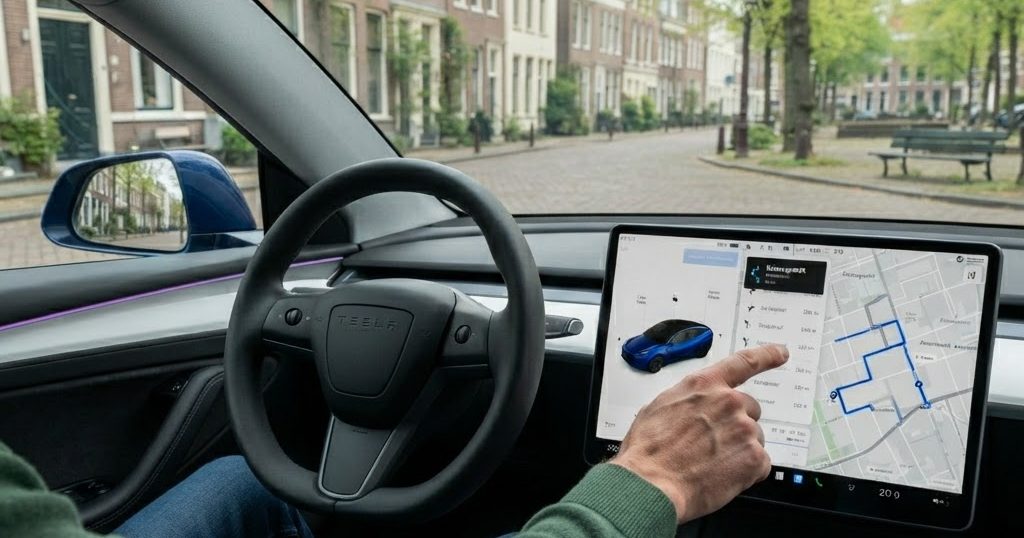
- 7. Navigate to the Supercharger. When you set a Supercharger as your destination, the car warms the battery on the way so it can charge faster when you arrive.
- 8. Charge after driving. A battery that is still warm from driving accepts charge better than one that has cooled down overnight.
When parked
- 9. Watch the energy users. Sentry Mode and Cabin Overheat Protection use energy while parked. Turn them off where you don't need them, especially if you leave the car parked for days.
Good to know
Most Teslas built since around 2021 have a heat pump, which heats the cabin more efficiently than older systems. The range shown on the screen is an estimate; the energy graph in the car gives a more realistic forecast for your current driving. And the loss is temporary: when it warms up, your range returns.