 4 min
Tesla is building its own AI maps for FSD, starting with v15: what changes for speed limits, routes and parking
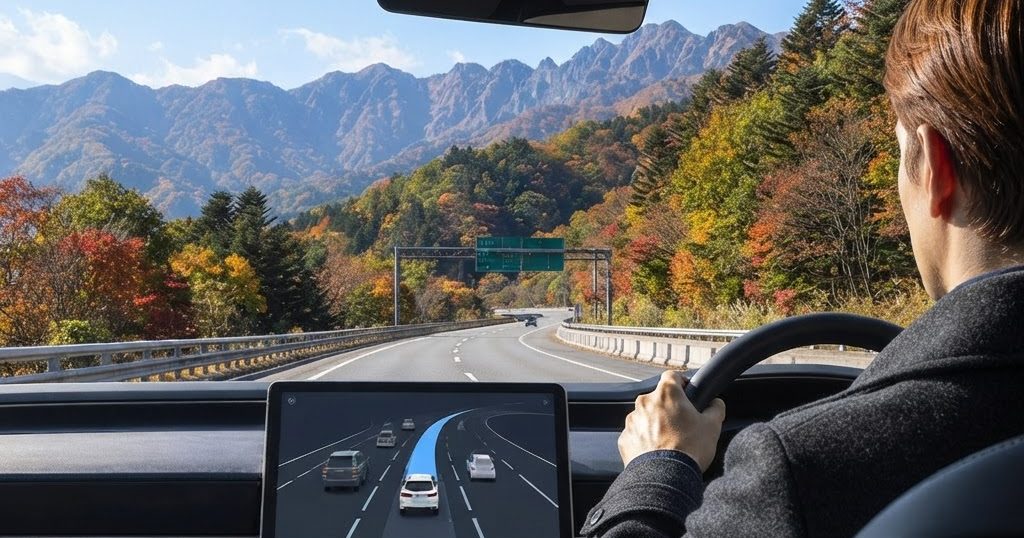
On the Q3 call, Tesla's AI chief said FSD should stop relying on outside maps. A new fleet-trained mapping and navigation system arrives with FSD v15, first for the start and end of trips.
Tesla is going to stop leaning on outside map data for Full Self-Driving. On the Q3 2026 earnings call on Wednesday evening, October 21 (5:30 p.m. ET, 10:30 p.m. UK time), Tesla's head of AI, Ashok Elluswamy, said the company is building its own AI-based mapping and navigation system, and that the first pieces will arrive with FSD v15.
It was a short exchange in the shareholder Q&A, but it touches the part of FSD that owners complain about most: not how the car steers, but where it decides to go, how fast it thinks it may drive, and where it ends up parking.
What Tesla said
A shareholder raised three recurring problems: speed limits, parking and route choice. Elluswamy agreed with the premise, saying Tesla "shouldn't be depending on external people's maps." Instead of switching to a different map supplier, he described an entirely new architecture for mapping and navigation built on AI.
- Fleet-fed: the system is meant to learn from what Tesla's cars collectively see and drive, so improvements come from the fleet rather than from a licensed database.
- Personal: it should also learn the preferences of individual drivers, for example which routes they like.
- Voice: drivers should be able to ask for changes, such as a different route, by voice.
- Timeline: with FSD v15 it will first handle the start and end of a trip. Over the following months it is supposed to take over navigation, parking and destination handling more broadly.
Tesla did not give a date for FSD v15 in customer cars beyond the plans it outlined on the same call, and it shared no technical details on how the maps will be stored or updated.
What Tesla uses today
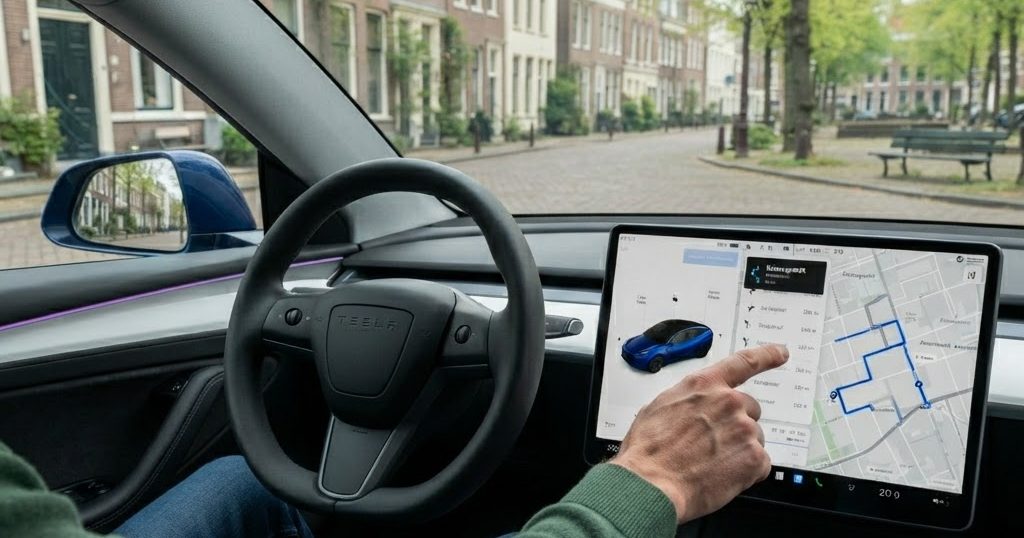
Tesla's in-car navigation currently runs on third-party map data, which according to Not a Tesla App and Teslarati comes from Google: map tiles, street data, satellite imagery, points of interest and traffic. Tesla builds the navigation app and the route planning itself, including routing via Superchargers. Recent updates tried to soften the routing problem with features such as Preferred Routes, added in the 2026 Summer Update, which favors roads you have driven before.
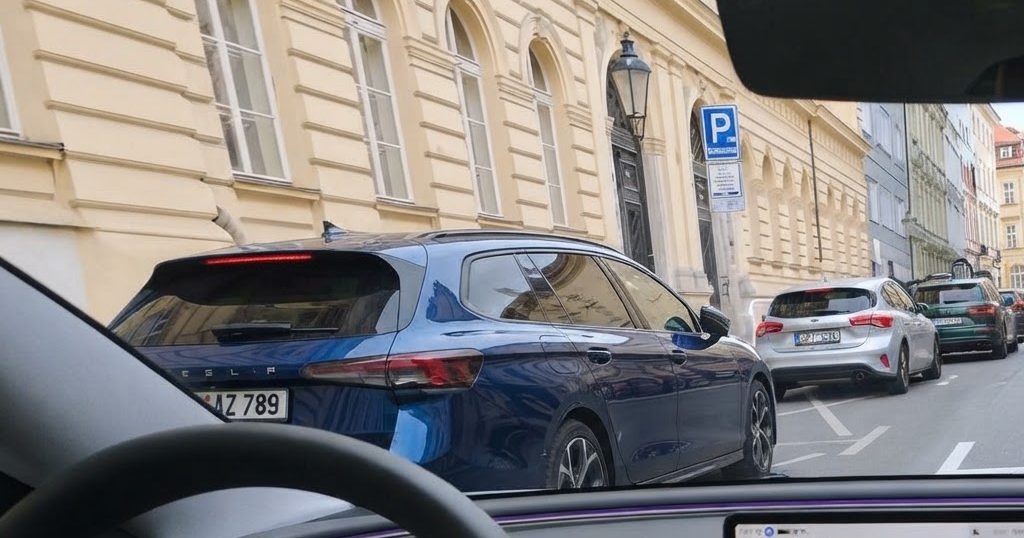
That split explains the complaints. FSD can drive well and still pick a route a local driver would never take, read a speed limit wrong, or stop at the entrance of a parking lot rather than in a sensible spot. Those are map and context problems more than steering problems.
Didn't Musk say maps were a mistake?
Partly, and that is why the remark drew attention. At Autonomy Day in 2019, Elon Musk said Tesla had tried high-precision lane maps and called relying on them a bad idea that makes a self-driving system brittle. Back in 2015, when Autopilot launched, Tesla had talked about building very detailed maps from customer cars.
What Elluswamy described is not obviously the centimeter-precise HD map Musk criticized. It sounds more like a richer, self-built layer of knowledge on top of ordinary navigation: correct speed limits, where parking actually is, which routes people prefer. Electrek points out that building your own maps instead of licensing them is not a contradiction in itself, and that learning maps from a fleet is conceptually close to what Waymo does with its sensor-equipped cars, minus the lidar.
Why it matters
Speed limits are a real weak spot. In a test reported in September, a Belgian road safety group found FSD drove too fast in more than half of the 30 km/h zones it tried, with the screen often showing 50 km/h. In the US, NHTSA is looking into complaints that Tesla robotaxis sped through active school zones. Better map knowledge is a direct answer to that kind of failure.
It also matters for Tesla's bigger plan. On the same call Tesla said unsupervised FSD for owners is targeted for the second quarter of 2027, initially inside its Robotaxi zones. A car without a supervising driver has to pick sensible routes, obey local limits and find a legal place to stop on its own. Owning the map stack gives Tesla more control over all three, and less dependence on a supplier that is also a competitor through Waymo's parent, Alphabet.
What to watch next
- The first FSD v15 release notes, and whether they mention the new trip start and arrival behavior.
- Whether speed limit handling improves, especially in Europe, where FSD (Supervised) is still rolling out and limits vary widely.
- Grok-based voice control for FSD, which would tie in with the voice routing Elluswamy described.
- How quickly Tesla can expand from start and end of trips to full navigation, which it said will take months.
For owners, the short version: the next big FSD version is meant to know more about where it is going, not just how to drive there. Whether it really fixes the speed limit and parking quirks will only become clear once v15 is in customer cars.