 5 min
Inside the new Tesla Roadster: rear-wheel drive, a double-cooled 4680 pack, suction fans and SpaceX cold-gas thrusters
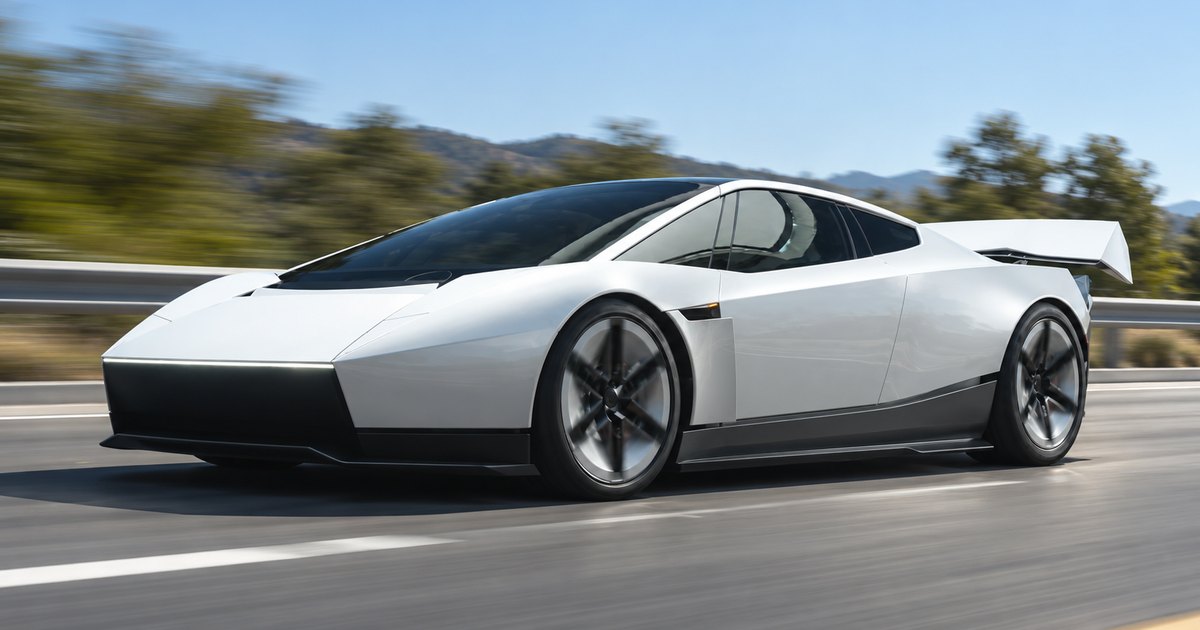
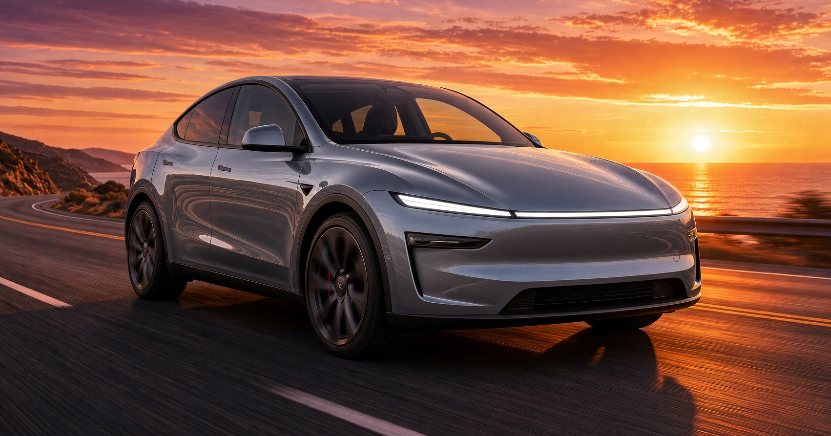
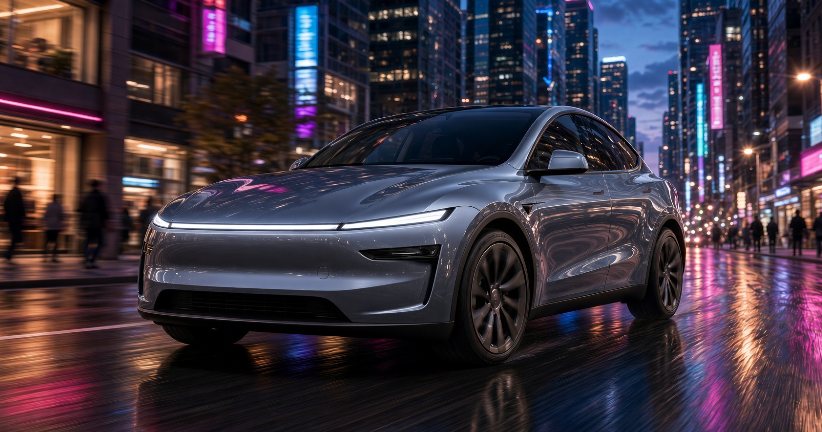
In a detailed walkaround, Tesla engineering chief Lars Moravy explained what sits under the Roadster's skin: two rear motors with over a megawatt, an aluminium-can 4680 battery, Optimus actuators, four suction fans and a 10,000 psi nitrogen system built with SpaceX.
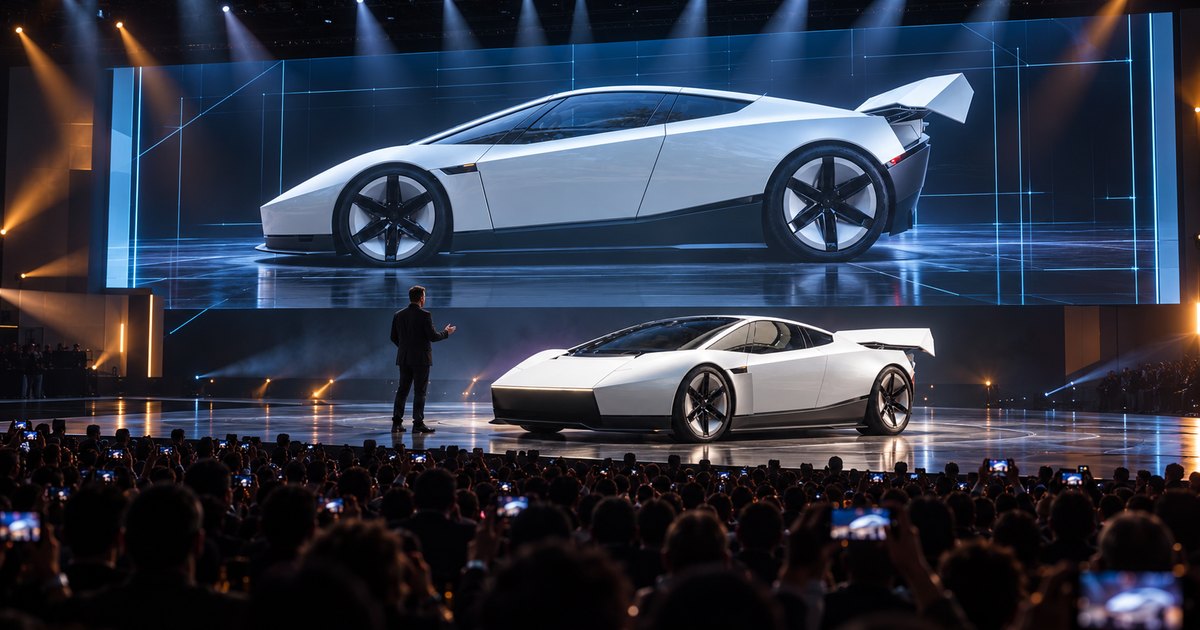
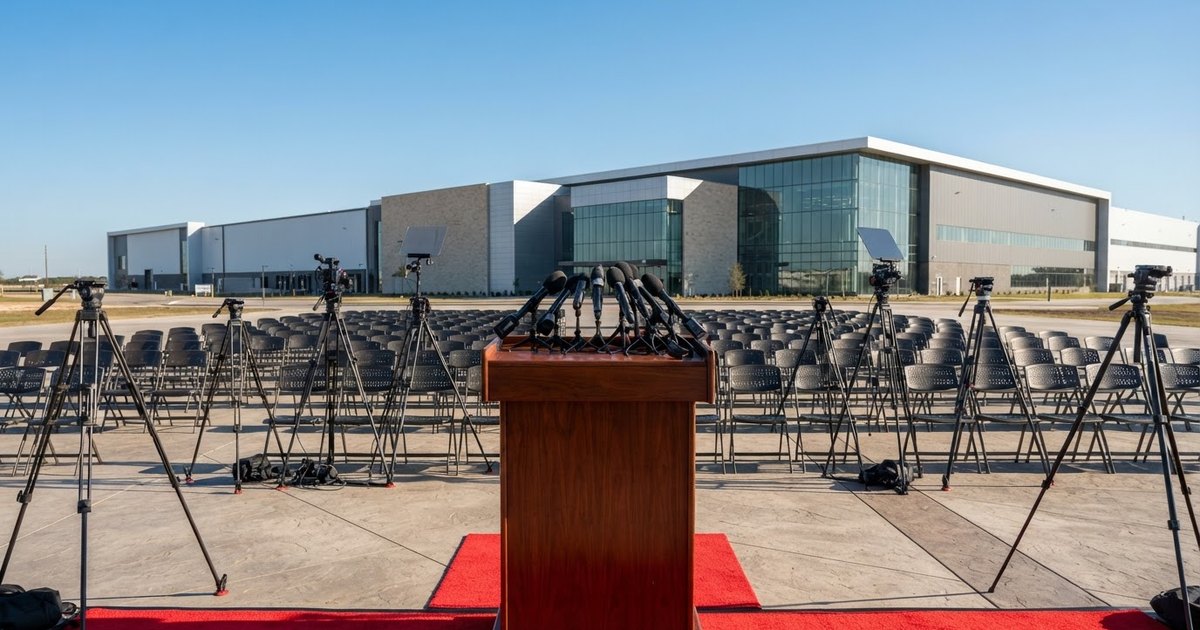
The reveal show near Waco focused on flying and flipping. The engineering behind it got less attention. In a long walkaround filmed for the Hagerty YouTube channel, Tesla's vice president of vehicle engineering, Lars Moravy, took the car apart piece by piece. Here is what he said, in plain terms. Tesla has not published an official spec sheet, and several figures are still described as provisional.
Only rear-wheel drive, but over a megawatt
The first surprise: the new Roadster drives only the rear wheels. Two compact motors sit at the back, each with its own inverter, linked through a planetary gear set with an 8.4:1 reduction and no conventional differential, so each wheel can be controlled on its own. According to Moravy the pair delivers more than one megawatt and over 1,400 Nm of torque, more than the three motors of a Model S Plaid combined, while the drive unit itself is smaller than the Plaid's. Hagerty quotes 1,341 hp for the Performance version.
Moravy said Tesla chose rear-wheel drive on purpose: it wanted a driver's car, with very wide rear tyres to put the power down.
A special 4680 battery with cooling on both sides
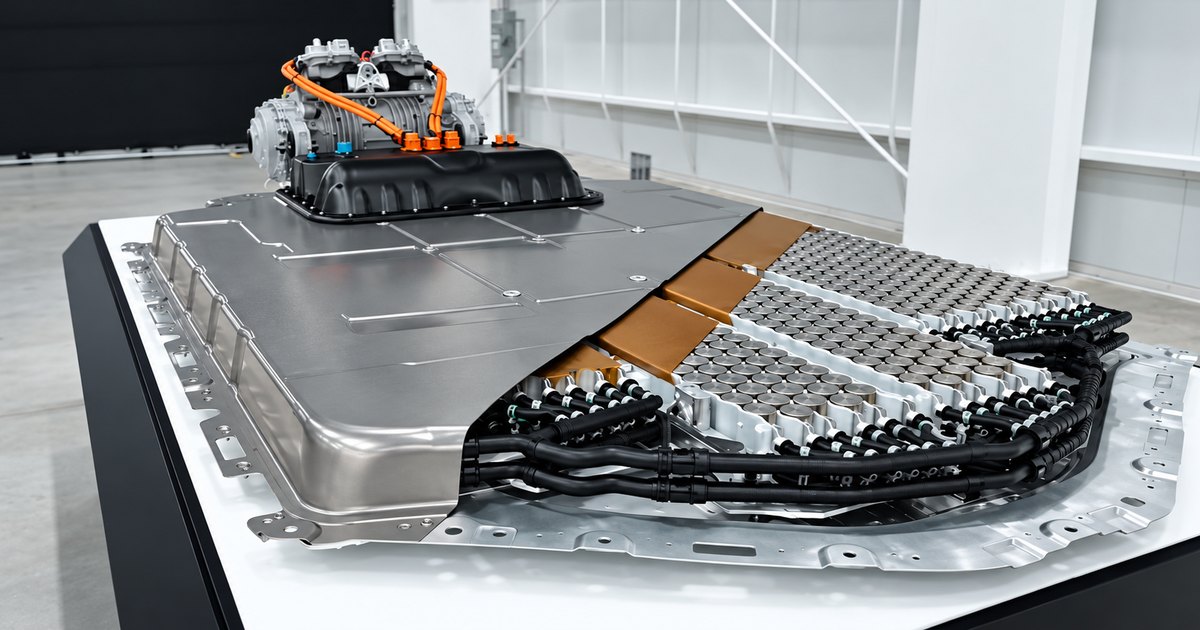
The battery sits under the floor, as in other Teslas, but the cells are a special version of Tesla's own 4680 cell with a chemistry tuned for high power. Two details stand out:
- Aluminium cans instead of steel, which saves weight and sheds heat better.
- Liquid cooling on both sides of each row of cells, with coolant flowing through once from one side to the other. Tesla says this keeps power steady lap after lap instead of fading when the pack gets hot.
The pack has a titanium top plate, welded in different thicknesses, and an aluminium bottom plate for impact protection. The system runs at roughly 800 volts, like the Cybertruck and Semi. Tesla did not give the battery size in kWh, but claims more than 300 miles of range and a 15 to 80 percent charge in about 10 minutes, its fastest-charging pack so far. Moravy's goal is roughly 25 to 30 minutes of full track driving per charge.
Weight is still being finalised. Moravy's ballpark was just under 1,700 kg, light for a car of this size and power.
Aero that hides until it is needed
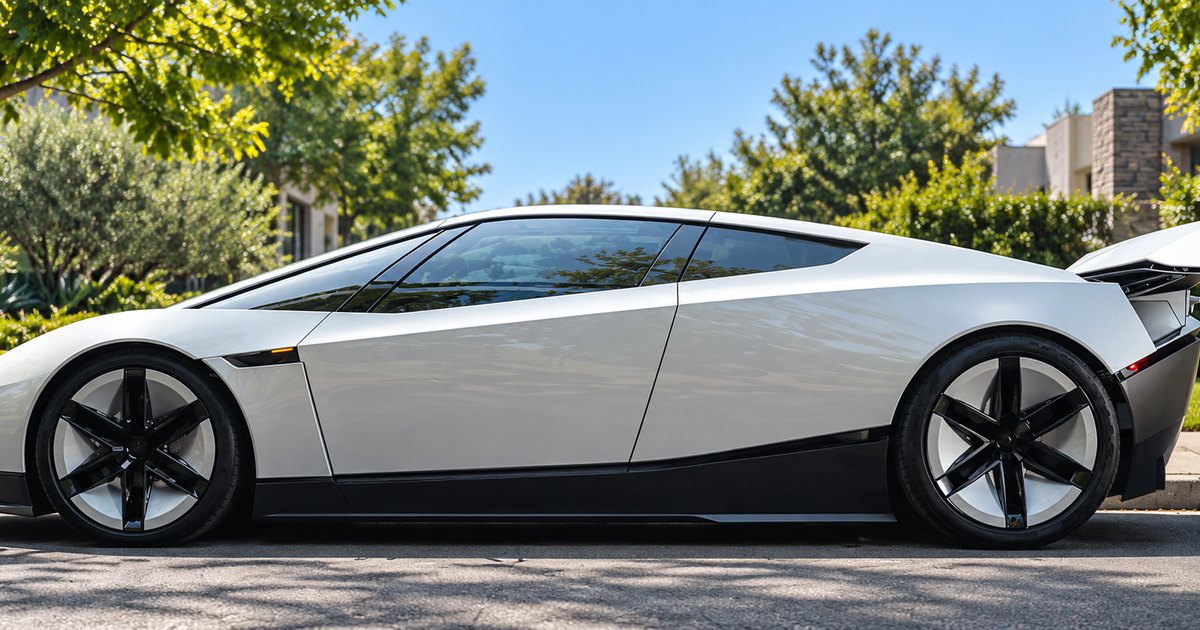
Almost every panel that looks fixed can move. The front hides wings whose leading edges can turn up to 80 degrees, the side panels pop out as barge boards, a vent above the hood opens to release hot air, and the rear wing switches between low-drag and high-downforce positions. That wing is driven by the same leg actuators Tesla uses in its Optimus robot. Above about 200 mph, Moravy said, the system can generate up to 2 g of downforce.
Below about 50 mph wings do little, so the Roadster adds a suction system. Four fans at the back, each around 20 kW and derived from Tesla's heat-pump compressor motor, pull air from under the car while four separate skirts drop to seal it. Moravy said this lets the car hold more than 2 g in corners even at low speed. The skirts are replaceable rubber-and-bristle parts, so this is clearly meant for the track.
The SpaceX part: cold-gas thrusters
This is where SpaceX comes in. Moravy said everything up to the thrusters, including battery, powertrain, chassis, body, seats and the suction system, is Tesla's own work. The thrust and flight packages were developed jointly with SpaceX.
- Thrust version: a 200-litre carbon-overwrapped pressure vessel behind the seats holds nitrogen at up to 10,000 psi. It feeds a pair of rear nozzles through a valve, again moved by an Optimus actuator. The left and right nozzles can be balanced to keep the car straight.
- Flight version: adds another 400 litres of tank, 600 litres in total, plus six more thrusters, one at each corner and two at the front for yaw. It becomes a single-seater.
Tesla chose nitrogen because it did not want to put fuel in a car. Cold-gas thrusters are what satellites and spacecraft use for small corrections. Here they need far more force: Moravy said the system produces more than 80 kN, comparable to a single fighter-jet engine. Refilling is not something owners will do at home. Filling all 600 litres currently takes six to seven hours, and Tesla is working to cut that to about half an hour.
The claimed numbers
- Performance (fans, no thrusters): about 1.6 seconds from 0 to 60 mph, top speed around 210 mph.
- Thrust: about 0.85 seconds from 0 to 60 mph with a one-foot rollout subtracted, according to Hagerty, and a top speed of around 230 mph. Moravy quoted 0.55 seconds, which Hagerty notes is a rollout figure.
- Flight: the version from the jumping and flipping demos.
A cheaper base model is still in development. Tesla has not announced prices.
Inside: two seats, fixed seat bases, steer-by-wire
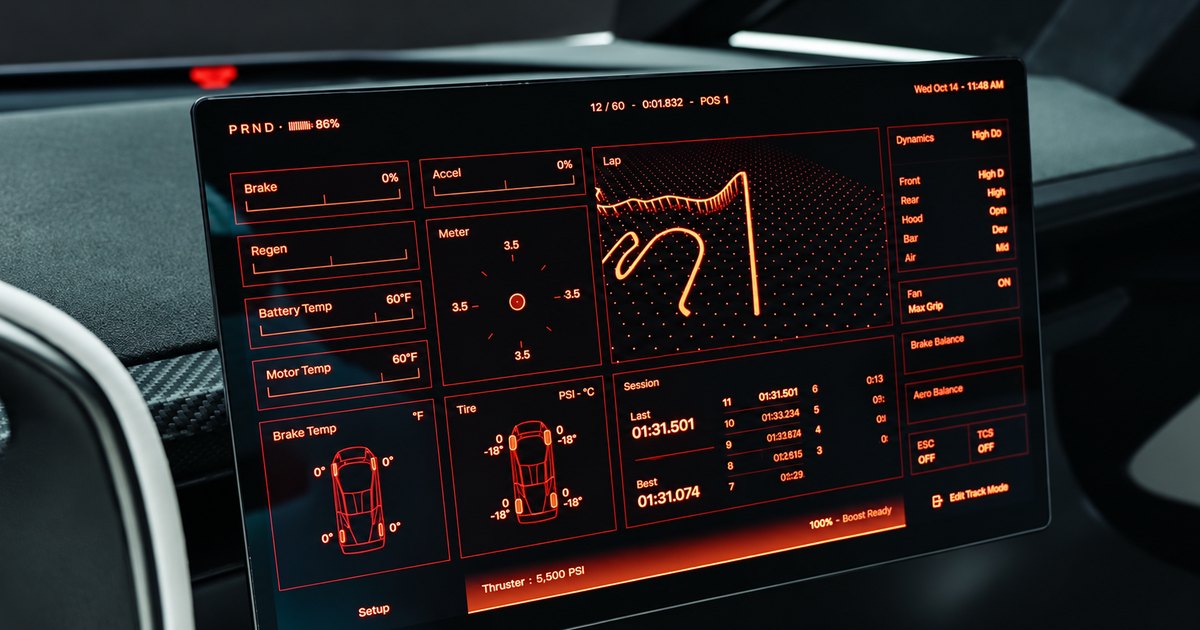
The original plan for a 2+2 is gone: the new Roadster has two seats. The seat bases are fixed and the pedal box moves instead, as in some hypercars. The roof panels come off, which explains the Roadster name. Steering and braking are both by wire, controlled with a yoke, and the central screen is angled towards the driver. Moravy said four or five prototypes exist now, with a larger build planned early next year.
What it means
None of these figures has been independently tested, and some, such as weight and acceleration, are still described as provisional. It is also unclear how a road car with a 10,000 psi nitrogen tank and thrusters will be approved for public roads. Still, the walkaround shows that the Roadster is more than a stunt: it gathers Tesla's work on 4680 cells, 800-volt drive units, Optimus actuators and heat pumps in one car, with a SpaceX system on top.
Sources (3)
Images are illustrations; some are made with AI.