 4 min
Does a Tesla Powerwall pay off in the Netherlands once net metering ends in 2027?
Dutch net metering ends on 1 January 2027, and Tesla now sells both the Powerwall 3 and the three-phase Powerwall 3P in the Netherlands. Here is what changes, what a battery can realistically save and when it makes sense.
For years, Dutch solar owners have had a uniquely generous deal. Under the salderingsregeling, or net metering scheme, every kWh they sent to the grid was simply subtracted from what they bought, at the full retail price including taxes. That ends on 1 January 2027. At the same time, Tesla is pushing its home batteries in the Netherlands: the single-phase Powerwall 3 has been available since summer 2025, and the three-phase Powerwall 3P since this year.
What changes on 1 January 2027
- No more netting: solar power you export is no longer offset against power you buy. You pay the full price for every kWh you import, and you get a separate feed-in payment for every kWh you export.
- Minimum feed-in payment: from 2027 up to and including 2030, suppliers must pay at least 50% of the bare supply rate, the price before energy tax and VAT. After 2030 suppliers can set the rate freely.
- Feed-in costs stay: many suppliers on fixed contracts charge extra costs for exporting. New rules published in September require them to show these costs on the invoice in euros per kWh from 1 January 2027, so households can work out their net feed-in income. Costs caused by the 50% minimum payment may not be passed on as feed-in costs.
The result is a big gap between what you pay for a kWh and what you get for exporting one. That gap is what a home battery tries to close: store solar power at midday, use it yourself in the evening.
What Tesla offers in the Netherlands
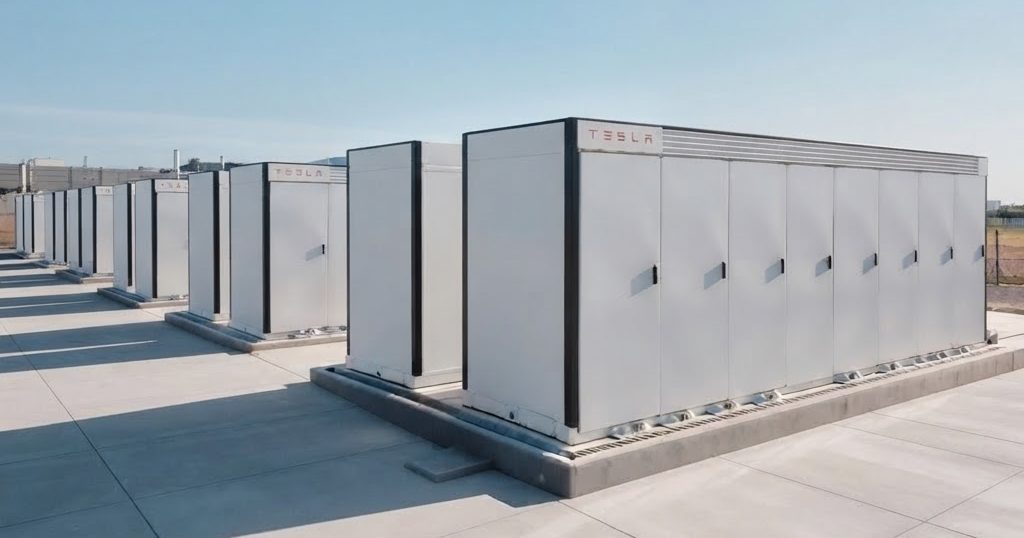
Tesla sells its batteries through certified installers, not directly. There are two options:
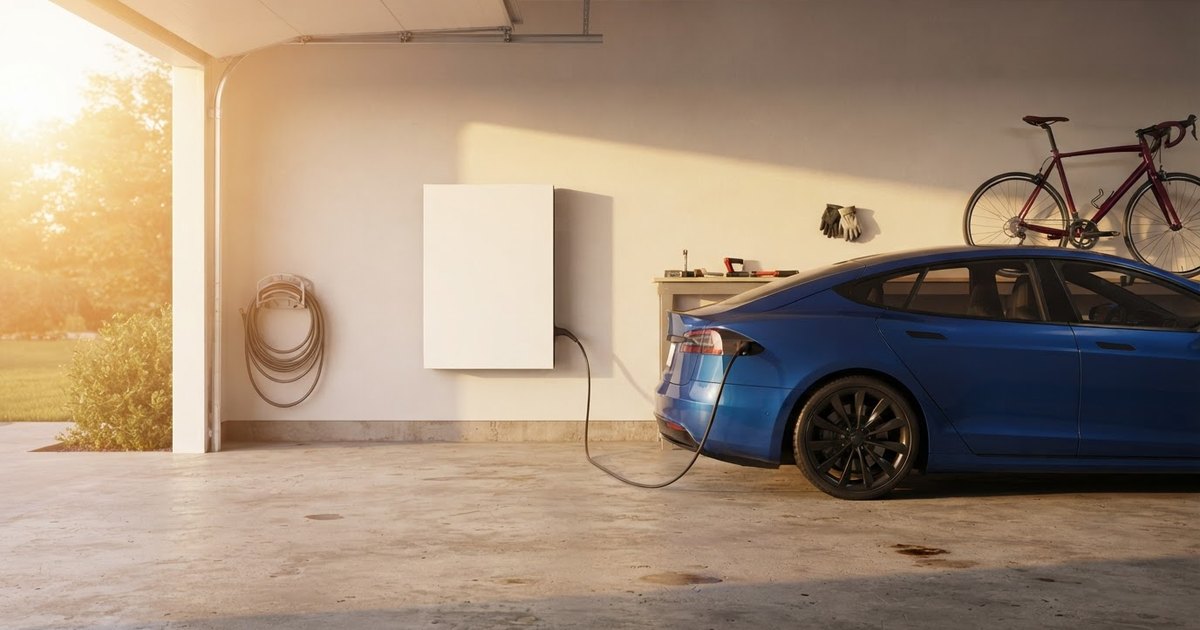
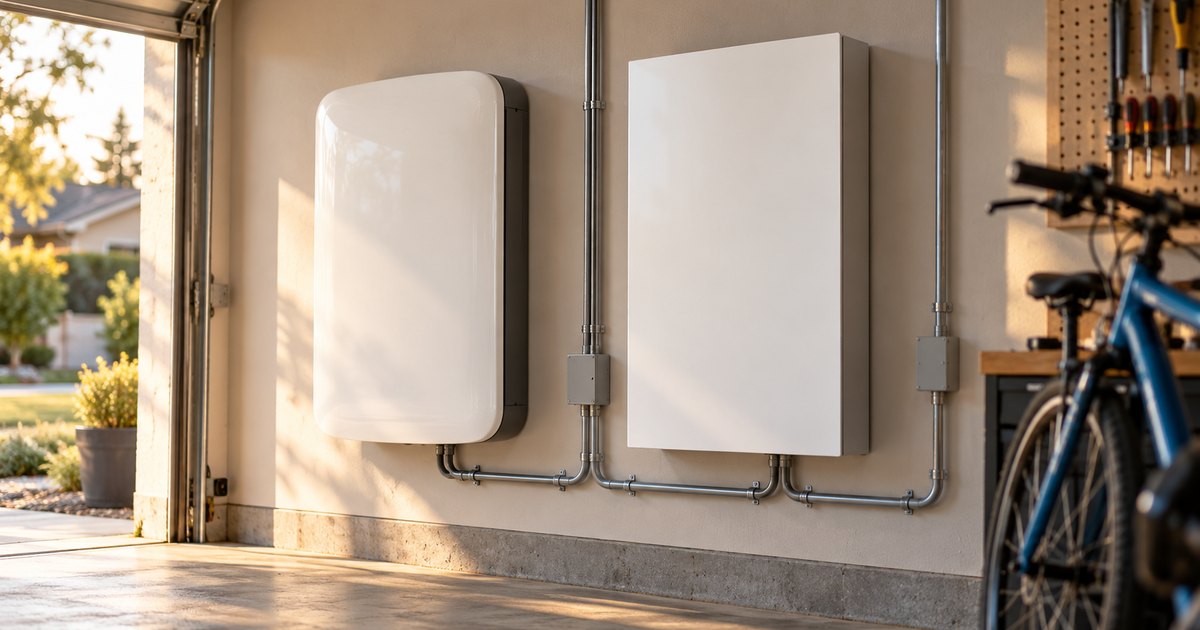
- Powerwall 3: single-phase, 13.5 kWh usable, with a built-in solar inverter.
- Powerwall 3P: three-phase, which suits many Dutch homes. Tesla quotes 15.4 kW continuous and 21 kW peak output and says one unit can back up more than 95% of Dutch households during an outage, including heat pumps and EV chargers. It has four solar inputs, works with new or existing panels and is rated from -20 to 50 °C.
Both come with Tesla Home software, including Opticaster, which decides when to charge, use or export based on consumption, solar output and local prices. Owners can also set up a dynamic energy contract through the Tesla app. The Dutch warranty is 10 years with 80% capacity retention, according to De Belegger.
Tesla does not publish a Dutch list price; the price comes from an installer's quote. Tesla's own rebate of up to €900 for the Powerwall 3 has also ended: orders had to be placed by 30 June 2026, and the 3P was never included.
What a battery can realistically save
Tesla's Dutch site claims savings of up to 89%, or about €1,850 a year. That figure covers solar panels and a battery together, and is based on a specific example household. It says little about what the battery adds on its own.
Investment site De Belegger recently ran its own scenarios for the extra savings from a Powerwall in 2027, after the end of net metering:
- Low: about €84 a year (1,000 kWh stored, low price gap).
- Middle: about €354 a year (2,000 kWh stored, €0.28 avoided purchase price, €0.06 feed-in income lost).
- High: about €788 a year (3,000 kWh stored, large price gap).
Its conclusion is sobering. For an example extra investment of €8,000 over ten years, you would need roughly €986 a year in savings to earn a 4% return. Even the high scenario falls short. These are one outlet's assumptions, not Tesla data, but they show how much the outcome depends on your own numbers.
When it makes more sense
- High self-use potential: lots of solar, and evening demand from a heat pump or electric car.
- A dynamic contract: the battery can also charge when grid prices are low and avoid buying when they are high. On dynamic contracts the feed-in price follows the market, which Zonneplan says has averaged around 5 to 7 cents per kWh.
- High feed-in costs: if your fixed contract charges a lot for exporting, using your own power becomes more valuable.
- Backup: if a three-phase backup supply has real value to you, the Powerwall 3P offers something few rivals match. That benefit is hard to price.
What to watch for next
Ask for a full quote that includes installation and any changes to your meter box, and compare it with your own expected savings, not the headline figure. Check how your supplier calculates feed-in costs once they appear per kWh from January. And keep in mind that the 50% minimum only runs until 2030, after which feed-in payments could fall further, which would make storing your own power more attractive.
Sources (4)
- De Belegger — De Powerwall bespaart minder dan Tesla's reclame belooft
- Solar Magazine — Eigenaren zonnepanelen weten eindelijk waar ze aan toe zijn: terugleverkosten moeten vanaf 2027 per kilowattuur op factuur
- Solar Magazine — Nieuwste versie van Tesla's thuisbatterij nu in Nederland verkrijgbaar: Powerwall 3P geschikt voor driefase-aansluiting
- Zonneplan — Terugleververgoeding vanaf 2027
Images are illustrations; some are made with AI.