Tesla's Robotaxi app code hints at letting owners add their own cars to the fleet3 min

Tesla's Robotaxi app code hints at letting owners add their own cars to the fleet

Robotaxi ·

A teardown of Tesla Robotaxi app version 26.10 found code for enrolling privately owned Teslas in the ride-hailing network, chosen by VIN. It also reveals rider features such as AR car finding and rear-seat controls. Nothing is confirmed yet.

For years, Elon Musk has said that Tesla owners will one day be able to send their car out to earn money as a robotaxi. New code in Tesla's Robotaxi app suggests the company has started building the plumbing for that idea. A teardown of app version 26.10.0, shared by the X account @tesla_app_ios and reported by Tesla North on October 23, found strings that describe how owners could enroll their own vehicles.

Tesla has not commented, and none of this is an announced feature. App code often contains work in progress that changes or never ships. Still, the timing lines up with what Tesla said on its earnings call two days earlier.

What the code shows

The most interesting part is a per-car enrollment system. According to the teardown:

  • Enrollment by VIN: the app can target a specific car by its vehicle identification number. An owner with more than one Tesla could choose which car joins.
  • Status stages: each car moves through stages labelled pending review, active, dispatched and unenrolled.
  • A dedicated endpoint: the code references a robotaxi enrollment call for individual vehicles.

What the strings do not say matters just as much. There is nothing about which cars would qualify, how revenue would be split between Tesla and the owner, or who would carry liability if something goes wrong. There is also no launch date.

New features for riders

The same build, which Tesla dated Monday, October 19, contains several features aimed at passengers:

  • Find My Car: an augmented reality view that uses the phone camera, ultra-wideband and Bluetooth to point you towards your ride and show the distance.
  • Incident reports: riders can describe a problem and give the nearest cross street.
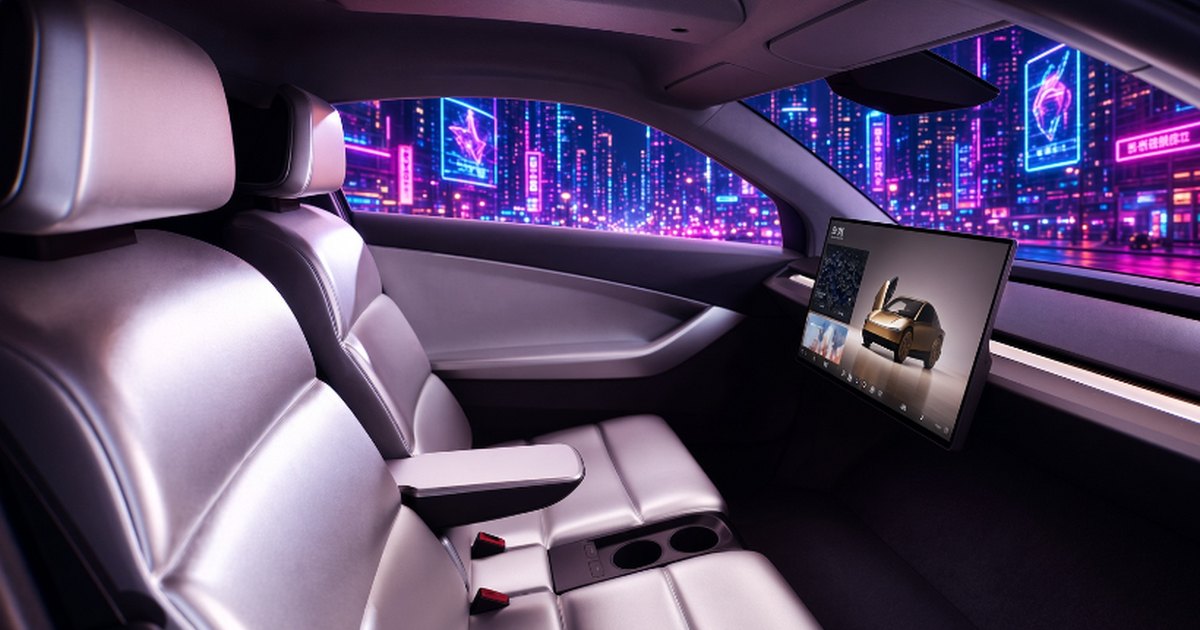
  • Rear cabin controls: seat recline and folding, rear seat heating and ventilation, and second-row climate, all from the phone.
  • Group rides: shared trip status and a shared media queue.

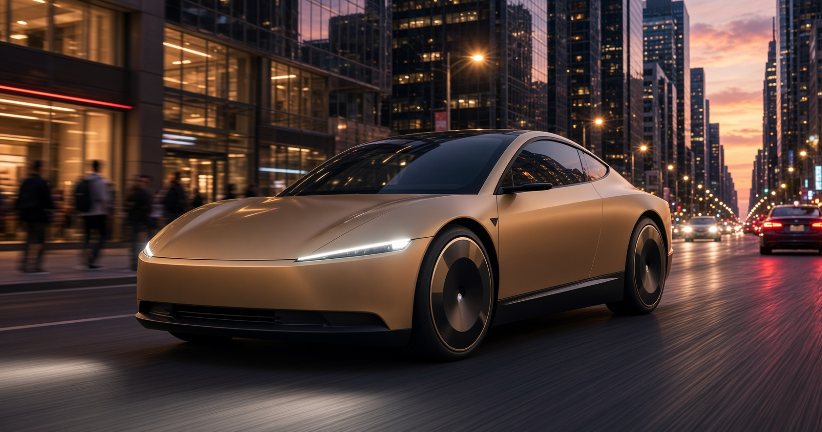
The rear-cabin controls fit the Cybercab, which has no front controls for a driver and is designed entirely around passengers. The code also mentions a separate shuttle fleet with fixed stops and a set of Palo Alto locations, which hints at a campus shuttle near Tesla's engineering headquarters. Whether any shuttle route is live is not clear.

How this fits Tesla's plans

On the third-quarter earnings call on October 21, Ashok Elluswamy, Tesla's head of AI software, said the first customer cars could join the robotaxi network without supervision around the second quarter of 2027. He described the remaining work as bringing customer vehicles into the same geofences and fleet management that Tesla uses for its own driverless cars. A per-car enrollment flow is exactly the kind of tool that step would need.

Tesla's own fleet is growing in the meantime. The service runs in several US cities, the Cybercab has been carrying paying passengers in Austin since early September, and Tesla said on the same call that it hopes to deliver the first Cybercabs to customers by the end of 2026. Musk added that most Cybercabs will stay Tesla-owned and be sold as a transport service.

Why it matters

If owners can add their cars, Tesla could grow its network without buying every vehicle itself, and owners could earn money from a car that otherwise sits parked most of the day. That has been part of the Tesla investment story since at least 2019. But it raises hard questions that the code does not answer: insurance, wear and cleaning, what happens after a crash, and how much of each fare the owner keeps.

What to watch next

Watch for Tesla to publish eligibility rules or a revenue split, for the enrollment screens to become visible to users, and for FSD version 15, which Tesla has linked to unsupervised driving in customer cars. Until Tesla says more, treat this as an early sign of intent, not a feature you can sign up for.
Sources (2)
11 kW

A 22 kW charger won't charge your Tesla any faster

Most Tesla models charge at home at up to 11 kW AC.

Read why →
4 min

How to ride a Tesla Robotaxi: the app, the seven cities, prices and what to expect

Planning to try a driverless Tesla? Here is a practical guide to the Robotaxi app, where the service runs, what a ride costs, how the Cybercab differs from a Model Y, and the limits to know before you go.

4 min

Tesla Robotaxi reaches COTA for the US Grand Prix and now runs until 1 a.m. in Austin

Ahead of the Formula 1 weekend, Tesla's Robotaxi app in Austin added the Circuit of the Americas to its service area and pushed last call to 1 a.m. Here is what changed and why race weekend is a real test.

3 min

NHTSA proposes optional cyan lights for driverless cars and rewrites lighting rules for vehicles like the Cybercab

The US safety regulator wants to let self-driving cars carry up to eight steady cyan lamps that show no human is watching the road, and to drop steering-wheel-based lighting rules for cars without manual controls. Here is what the proposal says and what it means for Tesla.

3 min

The Cybercab's first reported crash: a 5 mph drive into a flooded pothole in an Austin parking lot

Federal crash data show the first reported incident involving Tesla's Cybercab: a low-speed drive into a water-filled pothole in August, with a safety monitor aboard and no one hurt. Here is what the report says, and why it is not in Tesla's own safety numbers.

3 min

Tesla's first Robotaxi safety report: 3.1 million driverless miles, zero injuries, and four new cities

Tesla has published its first Robotaxi safety report, claiming 3.1 million miles without a safety monitor and no injuries. It also names Las Vegas, Phoenix, Jacksonville and San Antonio as the next cities. Here is what the numbers show, and what they leave out.

2 min

Where Tesla Robotaxi operates now: six cities without a safety driver

From Austin to Tampa, Tesla's Robotaxi service is live in six US cities without a safety driver, plus the Bay Area with one. Here is the full list and what is coming next.

3 min

NHTSA reviews claims that Tesla Robotaxis speed through school zones: about 1,000 Model Y and Cybercab cars covered

US safety regulators have opened a defect petition review after a complaint that Tesla's driverless Robotaxis ignore lower speed limits in active school zones. No crashes or injuries are reported, but a formal investigation is possible.

3 min

A Tesla Cybercab loses a door panel in a Philadelphia crash, revealing its testing far from Texas

Photos from South Broad Street show a gold Cybercab with its driver-side door skin torn off after a low-speed collision. It is unclear who was at fault or who was driving. The crash confirms that Tesla is testing Cybercabs in Pennsylvania, where it has no self-driving permit.

2 min

Tesla asked for eight more weeks to answer NHTSA on the Cybercab. It got 30 days

The US regulator has moved Tesla's deadline to October 30. Its 21 questions cover everything from mirrors and brakes to why Tesla never applied for an exemption.

2 min

Tesla takes the Cybercab on tour in Japan: Tokyo, Osaka and Nagoya

After its Austin launch, the Cybercab heads to Asia for a series of public displays. There are no rides or sales in Japan yet; it is about putting the robotaxi in front of the public.

2 min

Tesla Cybercab specs explained: battery, range, weight and why it skips AC charging

A small battery, a light body and DC-only charging: the Cybercab's numbers show a car built for one job. Here is what is inside and what it tells us about Tesla's robotaxi plans.

2 min

More than 73,000 people raise their hand to buy Cybercabs for fleet use

Tesla opened an interest form for businesses that want to buy and run Cybercab fleets. The number of clicks is big, but it is a signal of curiosity, not a pile of orders.

2 min

US safety regulator probes how Tesla certified the Cybercab, one day after launch

NHTSA has opened an audit into Tesla's claim that the steering-wheel-free Cybercab meets every federal safety standard. Here is what the agency wants to know and why it matters.

2 min

Tesla Cybercab launches in Austin: a low-key event, then the first paid rides

Tesla's two-seat robotaxi without steering wheel or pedals made its debut in Austin. The launch itself was modest, but paying riders can now hail one through the Robotaxi app.

3 min

Tesla Robotaxi expands to Dallas and Houston, its first new cities after Austin, without a safety monitor

Tesla has started its Robotaxi service in Dallas and Houston, the first expansion beyond Austin and the Bay Area. The service areas are small and Tesla shared few details, but the cars run with nobody in the driver's seat.