 4:41
Italy backs EU-wide approval of Tesla FSD after Salvini's call with Musk, putting the 65% vote bar within reach
Italy's transport minister says Rome supports a swift EU approval of Tesla Assisted Driving. With Germany already on board, Tesla now has a path past the EU's population rule, but only just.
Italy's transport minister and deputy prime minister, Matteo Salvini, said on Thursday, October 29, that Italy supports a swift EU approval of Tesla Assisted Driving, the European name for FSD (Supervised). He posted the message on X after what he called a positive conversation with Elon Musk, who replied with a short thank-you. Italy is the third most populous country in the EU, with about 59 million people, roughly 13% of the bloc. Germany already said in early October that it backs a quick European approval. Still, a minister's post on social media is not an approval, and Tesla owners in Italy cannot switch the system on today.
So does this mean Italian Teslas get FSD now?
No, not yet. Salvini did not announce a national procedure, and Italy has not recognized the provisional approval that the Dutch vehicle authority RDW granted on April 10. Tesla's application is still being reviewed by Italy's Ministry of Infrastructure and Transport, and the ministry had not issued a press release about the call. That makes Salvini's message a political signal for the EU process rather than a green light at home. That EU process is decided by a population rule that has so far worked against Tesla.
Why does Italy's support matter so much?
Because of the 65% rule. An EU-wide approval needs a qualified majority in the Technical Committee on Motor Vehicles: at least 15 of the 27 member states, and together they must represent at least 65% of the EU population. Here is roughly how the numbers stack up:
- the ten countries that already allow the system hold about 14% of EU residents
- all 23 countries outside the big four together hold about 42%
- adding Germany brings that to about 61%
- adding Italy as well lifts it to about 74%
For the first time, Tesla has a path above the 65% bar on paper. But that path only works if almost every smaller country votes yes too.
So can Tesla win without France and Spain?
In theory yes, but with little room to spare. With Germany and Italy on board, the remaining support could lose only about nine percentage points of population before falling below 65%, and Tesla would still need at least 15 countries in favor. France, the EU's second largest country, has not taken a position; its transport ministry started its own road tests on September 2. Spain is waiting for the EU decision instead of recognizing the Dutch approval nationally. A no or an abstention from one or two mid-sized countries could still tip the balance. And the support Tesla has won so far came with conditions.
What did Tesla change to win Germany over?
The name and the speed rules. Germany's transport ministry backed a quick approval on October 6 after reaching an agreement with Tesla on several points. The European version differs from the US one in a few ways:
- it is sold as Tesla Assisted Driving instead of Full Self-Driving
- speed limits and speed offsets were part of the deal with Germany
- the driver stays legally responsible at all times
- approval is expected to cover only cars with HW4 hardware, so older HW3 cars would likely need Tesla's planned upgrade
Even with those changes in place, nobody has set a date for the vote yet.
What should we watch for next?
The vote date, France and Musk's own deadline. A vote is expected in December at the earliest, but no meeting has been scheduled. France's stance is now the biggest open question, because a yes from Paris would give Tesla a much safer margin. It is also worth watching whether Italy turns words into action by recognizing the Dutch approval before the EU vote, as ten smaller countries have done. On Tesla's earnings call on October 21, Musk said he would be surprised if EU-wide approval took longer than the first quarter of 2027. Keep in mind this remains a Level 2 system: it can steer, brake and accelerate, but the driver must watch the road and be ready to take over at any moment.
Sources (3)
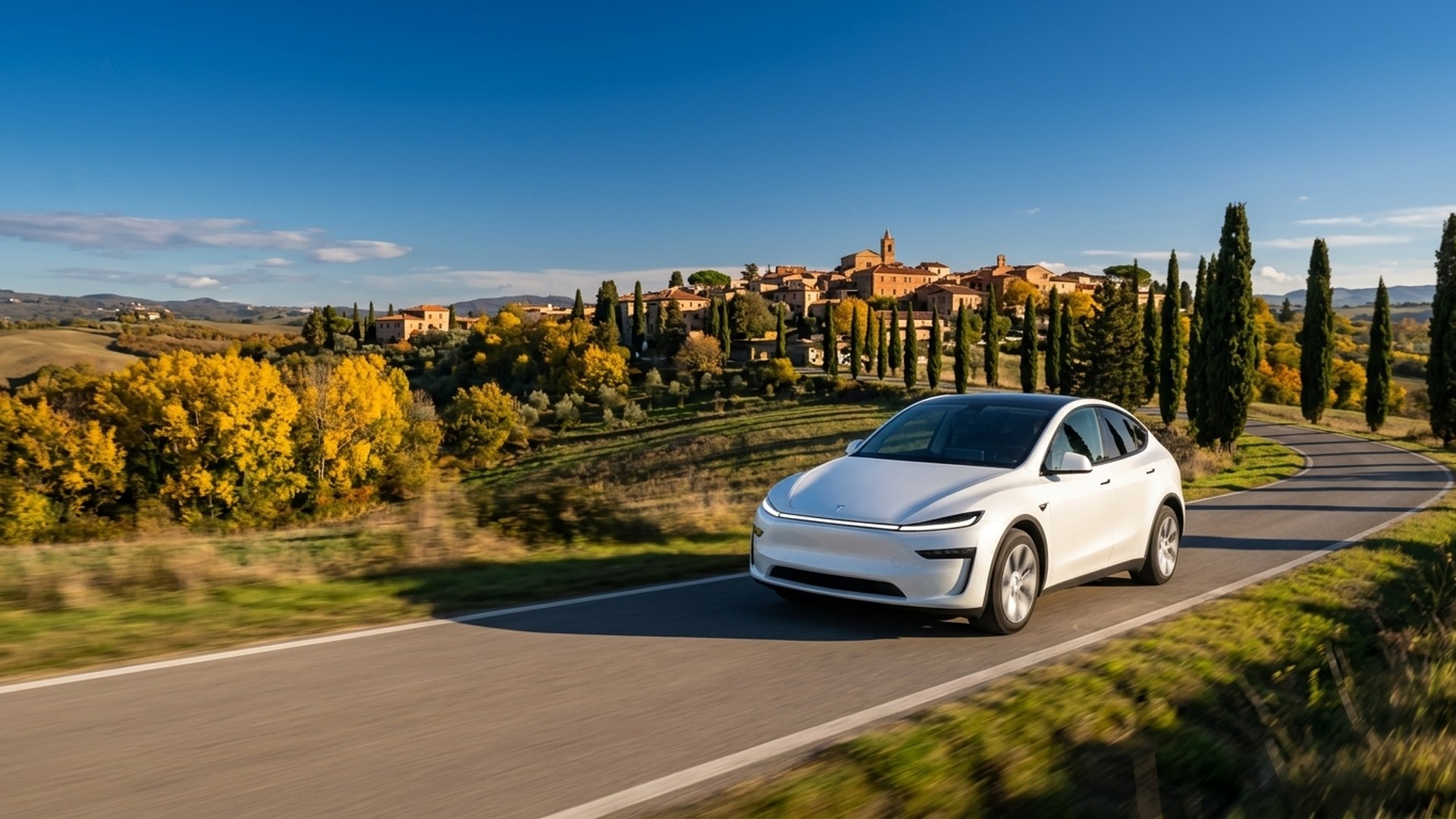
Images are illustrations; some are made with AI.