 3 min
Tesla's own data shows Autopilot or FSD was engaged in fatal New Jersey median crash
A 2021 Model Y crossed the median of Route 55 in Vineland in August and hit an SUV head-on, killing its 68-year-old driver. Police said the Tesla 'lost control'; Tesla's federal crash report now marks its driver assistance as verified engaged.
A fatal crash in New Jersey that police described as a driver losing control now has a new detail: Tesla's own data shows that Autopilot or Full Self-Driving (Supervised) was engaged. The information comes from Tesla's report to the US safety regulator NHTSA, as found and matched by Electrek.
What happened
On Saturday morning, August 22, at about 8:31 a.m., a Tesla was driving south on Route 55 in Vineland, Cumberland County, near milepost 34.6. According to the New Jersey State Police, the car lost control, left the left side of the road, crossed the grass median and hit a tree. It then entered the northbound lanes and struck a Chevrolet SUV head-on.
The driver of the SUV, Phillip Eastman, 68, of Springfield, Pennsylvania, was killed. He had recently been sworn in as a school board member in Springfield and had coached youth and high school ice hockey for decades. The Tesla driver and a passenger in the SUV were taken to hospital with moderate injuries.
At the time, police did not name a cause and did not link the crash to any technical problem. No charges were filed, and the investigation remained open.
What Tesla's report says
Under NHTSA's Standing General Order, carmakers must report serious crashes in which a Level 2 driver assistance system was in use within 30 seconds of impact. Tesla's report on this crash shows:
- Vehicle: a 2021 Model Y.
- Automation status: "Verified Engaged", meaning Tesla's own telematics confirmed Autopilot or FSD was active.
- Timing: logged at about 8:29 a.m. local time, within two minutes of the police time.
- Speed: a pre-crash speed of 37 mph, which Electrek considers low for that road and possibly a single data snapshot.
- Source: Tesla said it learned of the crash from media reports.
Tesla redacted the crash description, the software version and whether the road was within the system's intended operating area, calling them confidential business information. Electrek says Tesla does this for almost all of its reports.
What the data does not prove
It is important to be precise. "Engaged within 30 seconds" is a reporting trigger, not proof that the system was steering when the car left the road. The driver may have taken over or been overriding it. Because the software version is redacted, it is also unclear whether this was basic Autopilot or FSD (Supervised). And Tesla's report is based on telematics, not on the full event data recorder or camera footage.
Electrek has asked the New Jersey State Police for the crash report and the vehicle data, and whether investigators received Tesla's raw data or only Tesla's interpretation.
Why it matters
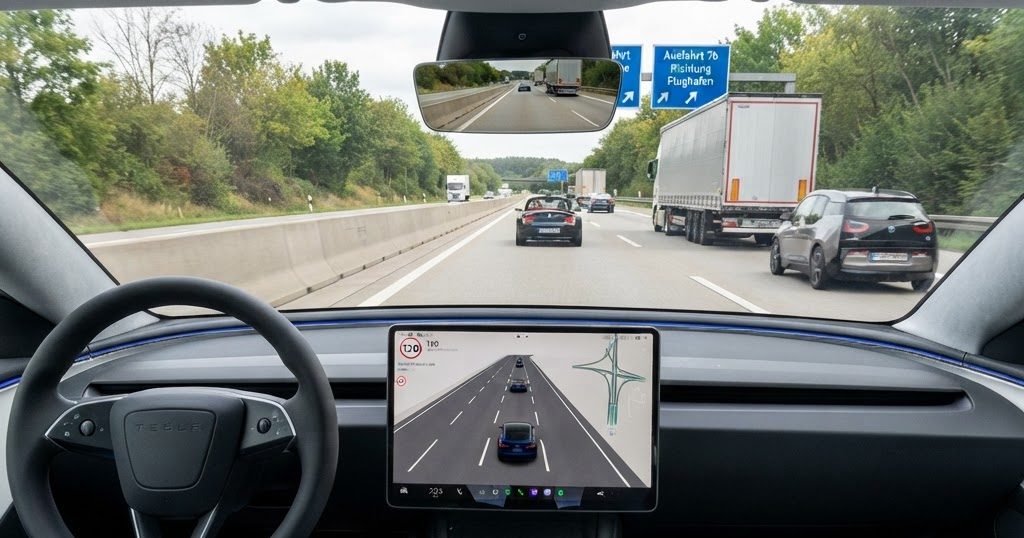
Both Autopilot and FSD (Supervised) are Level 2 systems: the driver must watch the road and be ready to take over at all times. Critics argue that redacted reports and police statements that only mention a loss of control hide how often driver assistance is involved in serious crashes. Tesla is already under NHTSA investigation over how it reports such crashes. Electrek counted four fatal crashes with Autopilot or FSD reported for July alone.
For families and investigators, the bigger issue is access to data. Unlike in aviation, there is no independent body that routinely examines the full data from a car with driver assistance after a fatal crash.
What to watch next
Watch whether New Jersey State Police release their crash report and whether it addresses the driver assistance system, and whether NHTSA's ongoing review of Tesla's crash reporting leads to changes in what Tesla must disclose. Civil legal action from the victim's family is also possible, but none has been reported so far.