 3 min
NHTSA escalates Tesla FSD sun glare and fog probe to 3.2 million vehicles
US safety regulator NHTSA has upgraded its investigation into how Full Self-Driving handles poor visibility to an engineering analysis, the last step before a possible recall. Here is what it found so far.
The US National Highway Traffic Safety Administration has stepped up its investigation into Tesla's Full Self-Driving (Supervised) in poor visibility. The agency's Office of Defects Investigation (ODI) has upgraded the case to an engineering analysis, numbered EA26002, covering an estimated 3,203,754 vehicles. That includes the Model S, Model X, Model 3, Model Y and Cybertruck.
An engineering analysis is the deepest stage of an NHTSA defect investigation. It usually comes before the agency either closes a case or asks for a recall.
What the investigation is about
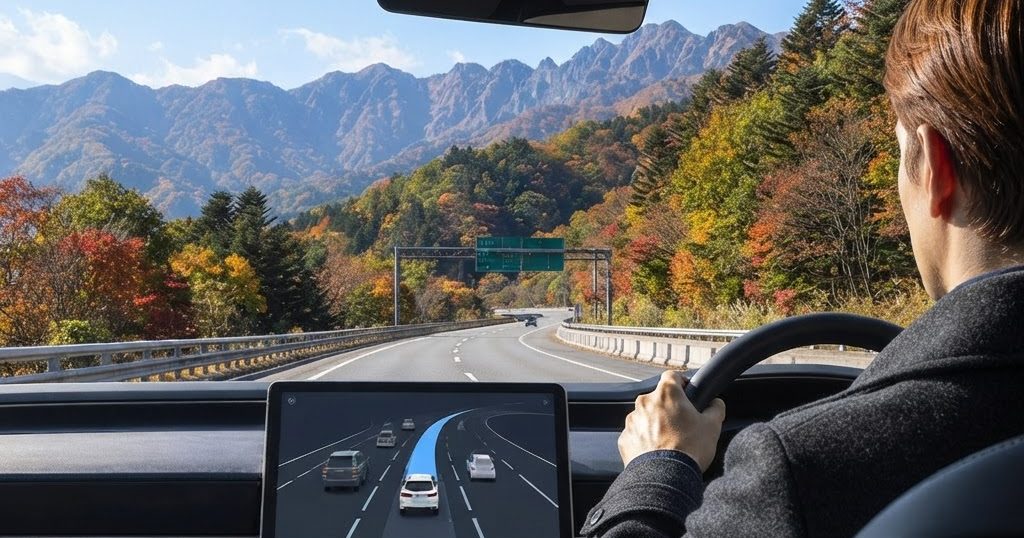
The probe looks at FSD's so-called degradation detection system. Its job is to notice when the cameras cannot see well, for example because of sun glare, fog or dust in the air, and to warn the driver in time to take over.
According to NHTSA, that does not always happen. In the crashes it reviewed, the system "did not detect common roadway conditions" that impaired the cameras, and did not warn the driver until just before impact. In several cases the car lost track of, or never detected, the vehicle ahead of it.
The key facts
- Origin: the case began as preliminary evaluation PE24031 in October 2024, after four crashes in reduced visibility.
- A fatal crash: one of those four killed a pedestrian on an Arizona highway on November 28, 2023.
- More incidents: the count has grown to nine, including that fatality and one injury. NHTSA is looking at six more possibly related incidents.
- Possible under-reporting: Tesla told the agency that data and labeling limits meant it could not consistently identify crashes in which the system was degraded. NHTSA says this could have led to under-reporting over part of the period.
Tesla's side
Tesla filed its required crash report on the fatal Arizona crash on June 27, 2024, roughly seven months after it happened. The next day, according to NHTSA's summary, Tesla started developing an update to the degradation detection system.
NHTSA says it still does not know when that update reached cars or which vehicles got it. Tesla's own analysis suggests the updated system "may have affected" three of the nine identified crashes, had it been installed at the time.
Tesla has said it began improving the degradation detection system in mid-2024, shortly after it submitted data on the fatal crash.
Why it matters
The case goes to the heart of Tesla's approach. Since 2021 the company has relied on cameras rather than radar, and FSD sees the world almost entirely through those cameras. If the system cannot reliably tell when its vision is compromised, the driver may not know it is time to step in.
It is also not the only open file. NHTSA has a separate probe, PE25012, into FSD reports of running red lights and driving into the wrong lane, which already counted dozens of incidents. A further inquiry looks at how Tesla reports crashes to the agency.
None of this means a recall is certain. An escalation means NHTSA wants a closer technical look, not that it has reached a verdict.
What happens next
- More questions for Tesla: investigators will ask for more data, study more crash reports and test how well the visibility updates work.
- Timing: NHTSA aims to finish engineering analyses within about 18 months, although many take longer.
- Possible outcomes: anything from closing the case without action to a recall. For Tesla, a recall would most likely be fixed with an over-the-air software update rather than a visit to a service center.
For FSD owners, nothing changes today. The system remains a supervised driver-assistance feature, and the driver is responsible at all times, especially when the sun is low or the weather turns.