 3 min
Tesla no longer owns most of America's fast chargers: Superchargers slip to 49.3% of US ports
A new Paren report shows Tesla's share of US DC fast-charging ports fell below half in Q3 2026, even though Tesla still builds more chargers than anyone else. Here are the numbers and what they mean for drivers.
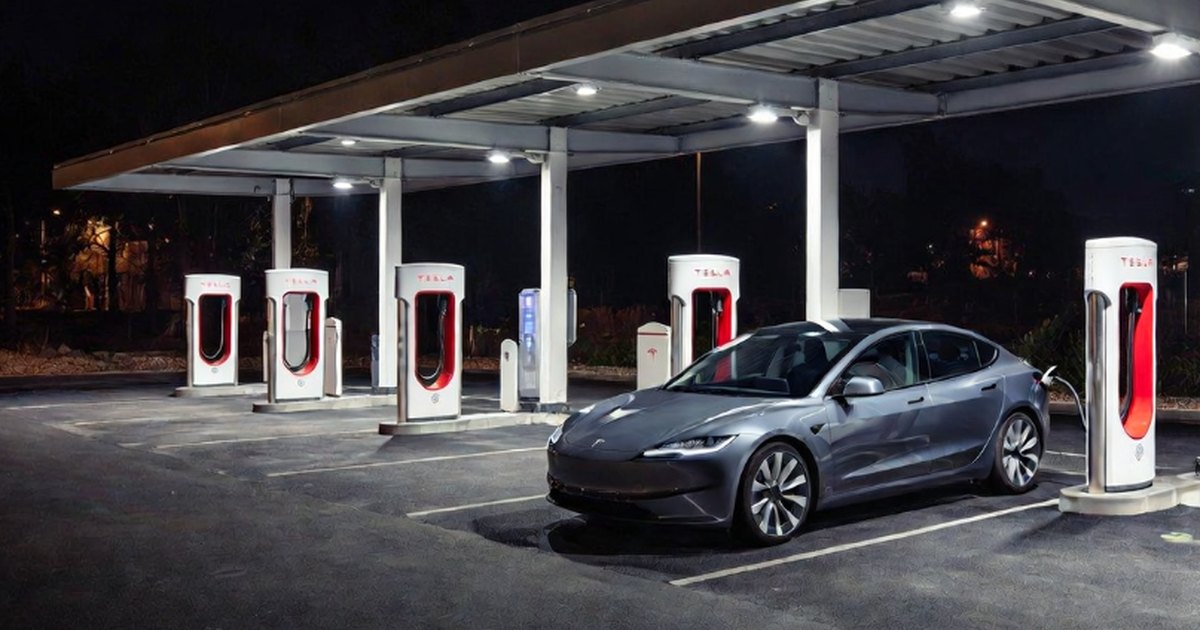
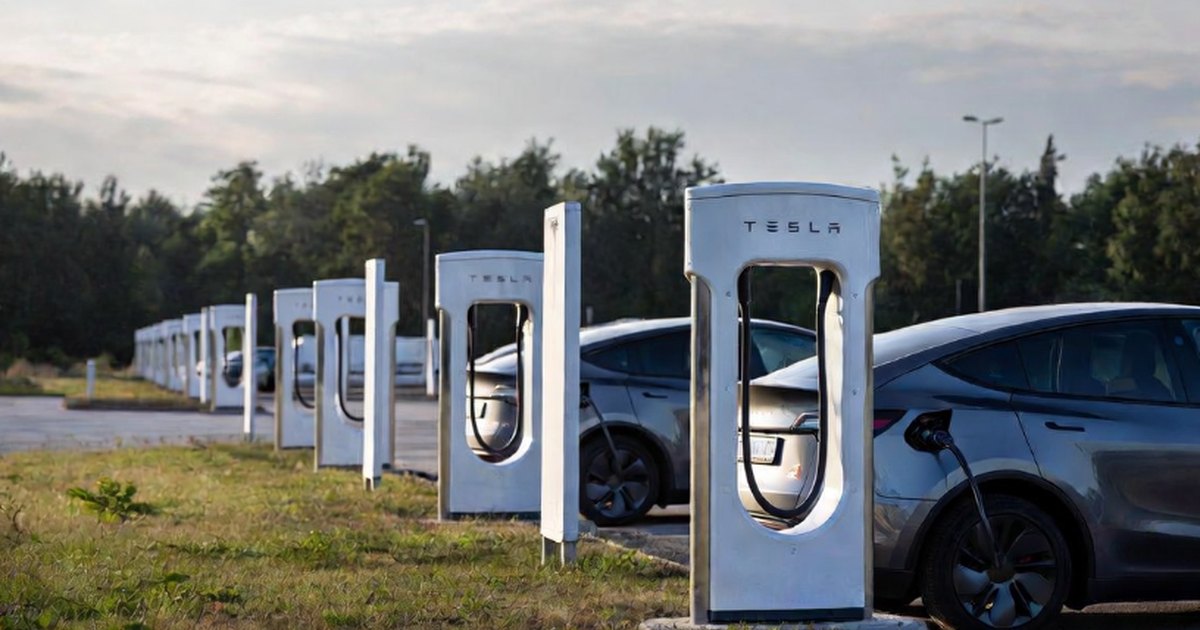
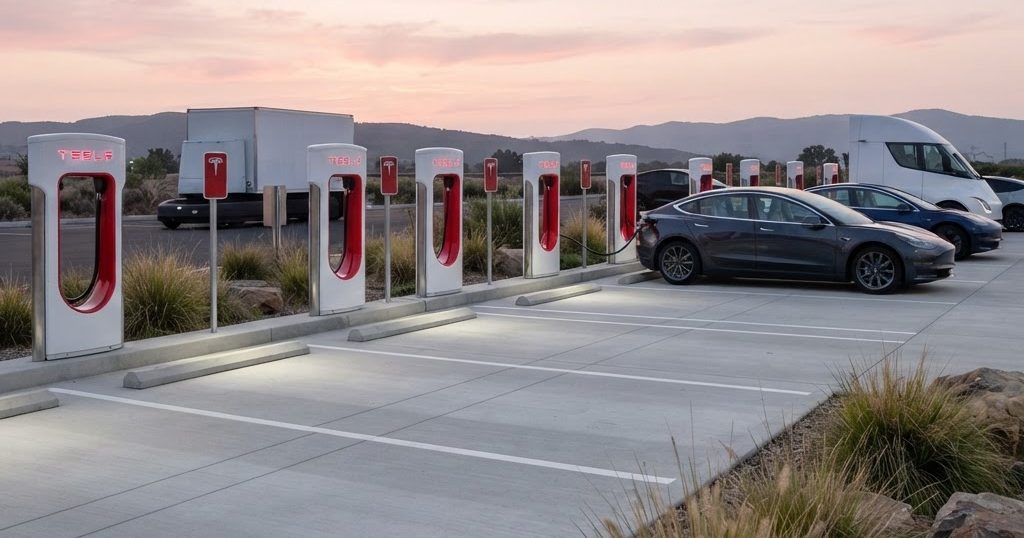
For years, more than half of all public fast chargers in the United States carried a Tesla logo. That is no longer true. According to the third-quarter 2026 report from charging data firm Paren, published on October 13, Tesla's Supercharger network now accounts for 49.3% of US DC fast-charging ports, down from 54.3% a year earlier.
The drop is not caused by Tesla slowing down. It is the result of everyone else speeding up.
The key numbers
- The US passed 80,000 fast-charging ports for the first time: 80,964 ports at 14,614 locations at the end of September.
- In Q3 alone, 4,106 new ports opened at 664 new stations.
- Tesla added 1,287 Supercharger stalls in the quarter, or 1,411 when its Supercharger for Business sites are included. That is about a third of all new ports, still more than any other operator.
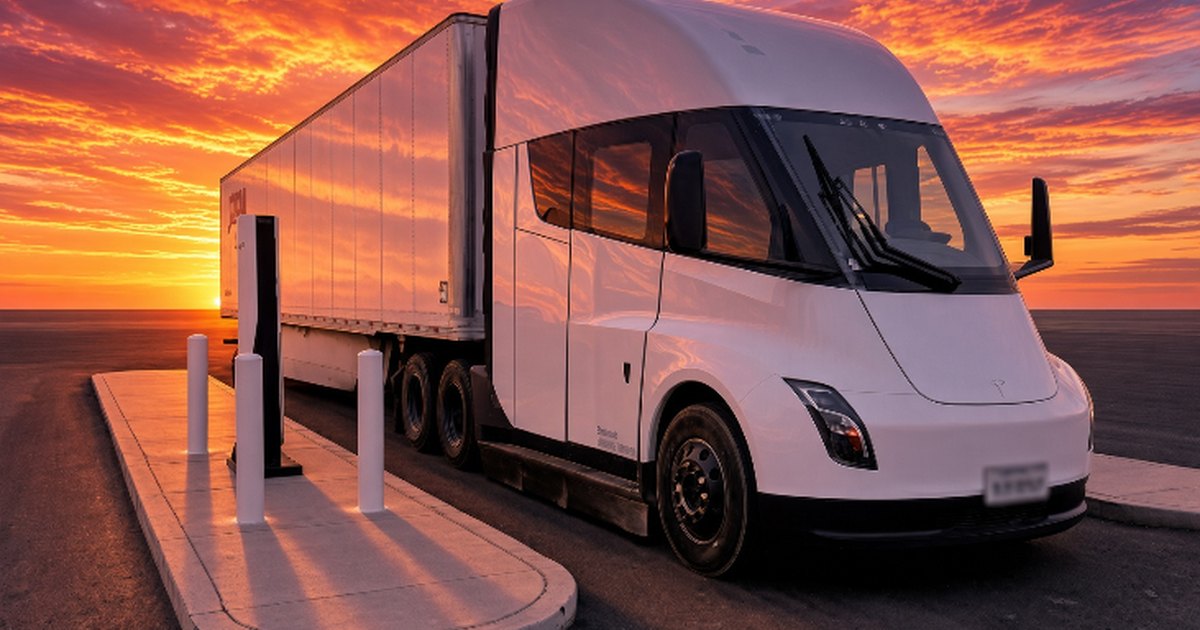
- Tesla opened 26 sites with 303 stalls that can deliver up to 500 kW from V4 cabinets. Its 500 kW footprint now stands at 42 sites and 487 stalls.
- Over the past year Tesla added roughly 5,700 ports, but rival networks together installed more than twice that number, Drive Tesla Canada reports.
Who is catching up
The fastest-growing challengers are building big, high-power sites that look a lot like Superchargers. Ionna, the joint venture backed by several automakers, added 378 ports rated at 400 kW or more in Q3, more than doubling its pace from the second quarter. Walmart added 344 ports in the same power class. Vialynk had its best quarter so far, and bp pulse and Electrify America opened some of the largest non-Tesla stations, with 20 or more ports each.
Power levels are rising across the board. Of all new ports in Q3, 73% were rated at 250 kW or more, up from 60% a year earlier. Excluding Tesla, the figure was 61%.
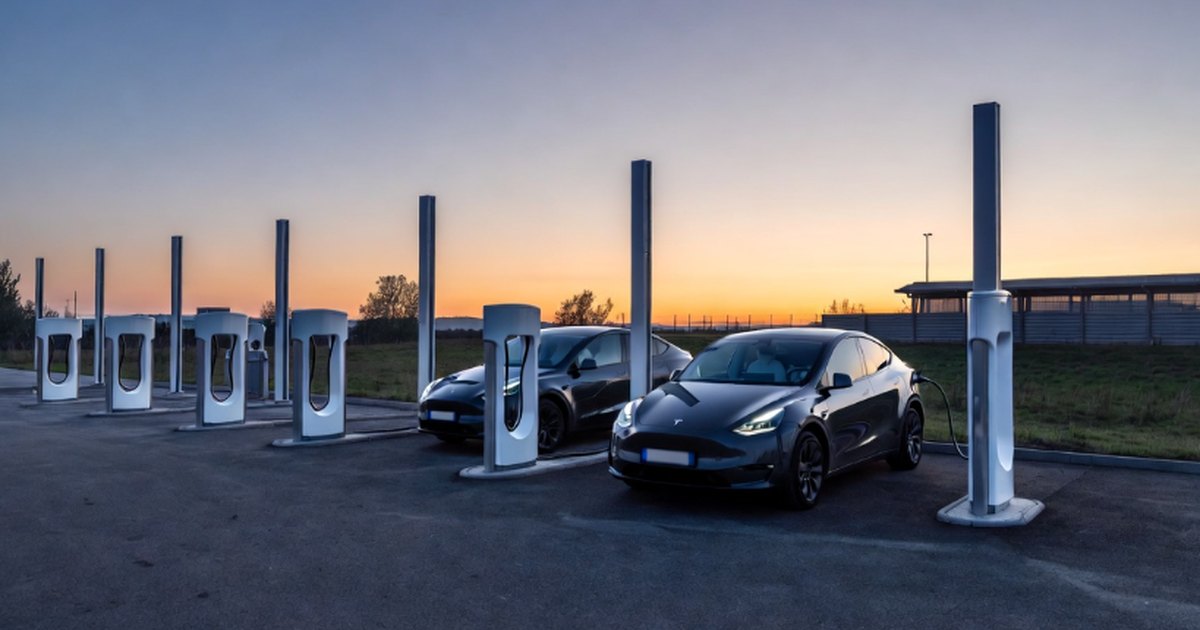
Another trend favours Tesla's design: rival operators are fitting more Tesla-style plugs. About 23% of the connectors that non-Tesla networks installed in Q3 used the NACS standard, up from 9% a year earlier, according to the report.
Busier, but not fuller
Demand keeps growing. Paren counted 50.4 million fast-charging sessions in the US in Q3, up 26% from a year earlier, with a record 17.6 million in July. Yet because so many new ports opened, average utilization barely moved: 15.9% in Q3 versus 15.8% in Q2. It has stayed between 15.7% and 16.5% for five quarters in a row. Los Angeles was the busiest metro area at 31.8%.
Reliability also improved slightly, with a national score of 93.9 out of 100. In 50 of 52 states and territories, the score was 90 or higher.
Why it matters
For Tesla owners, a smaller market share does not mean fewer Superchargers. The network is still growing by more than a thousand US stalls per quarter, and Tesla remains the largest builder. What changes is the competitive picture. Tesla's charging network has long been one of the strongest reasons to buy a Tesla. As other networks add large, reliable, high-power sites, that advantage gets smaller.
For drivers of other brands, the trend is good news. More choice and more NACS plugs mean more places to charge, whether at a Supercharger or at a rival station.
For Tesla, the network is also a business. Non-Tesla cars now charge at Superchargers in large numbers, and every competing station that opens nearby is a station that can win those customers.
What to watch next
- Whether Tesla speeds up its V4 rollout of 500 kW stalls in response to 400 kW sites from Ionna and Walmart.
- Pricing: Paren also found that Tesla's average price for non-members rose this year, which could matter more as drivers get alternatives.
- The fourth-quarter report, which will show whether rivals keep up their pace through the winter.
Sources (3)
- EV Infrastructure & Energy News — US fast charging network surpasses 80,000 ports in Q3 2026, Tesla's market share dips below 50%
- Drive Tesla Canada — Tesla Loses Majority Share of U.S. Fast-Charging Market as Rivals Accelerate Expansion
- MGRID — US Fast Chargers Pass 80,964 Ports, But Utilization Stays Flat at 15.9%