Falcon Heavy flies its first spy satellite mission, from the pad that once sent a Tesla Roadster into space3 min

Falcon Heavy flies its first spy satellite mission, from the pad that once sent a Tesla Roadster into space

SpaceX ·

SpaceX's Falcon Heavy launched the classified NROL-97 mission for the National Reconnaissance Office, its 14th flight. The two side boosters landed back at Cape Canaveral. Here are the details, and why this rocket is forever linked to Tesla.

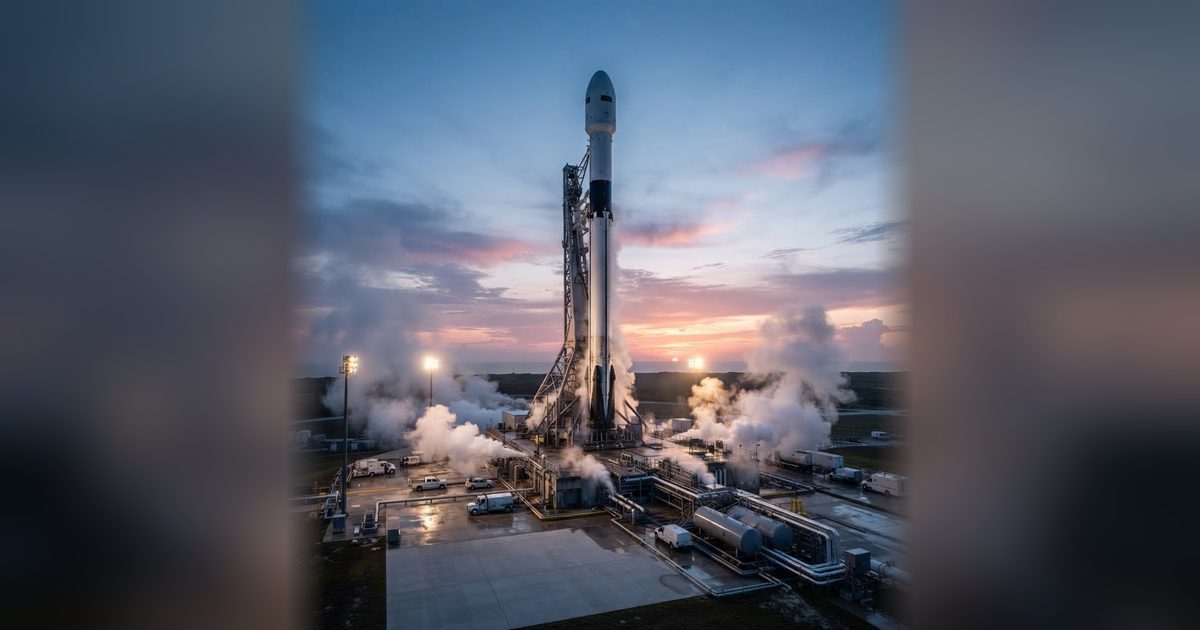
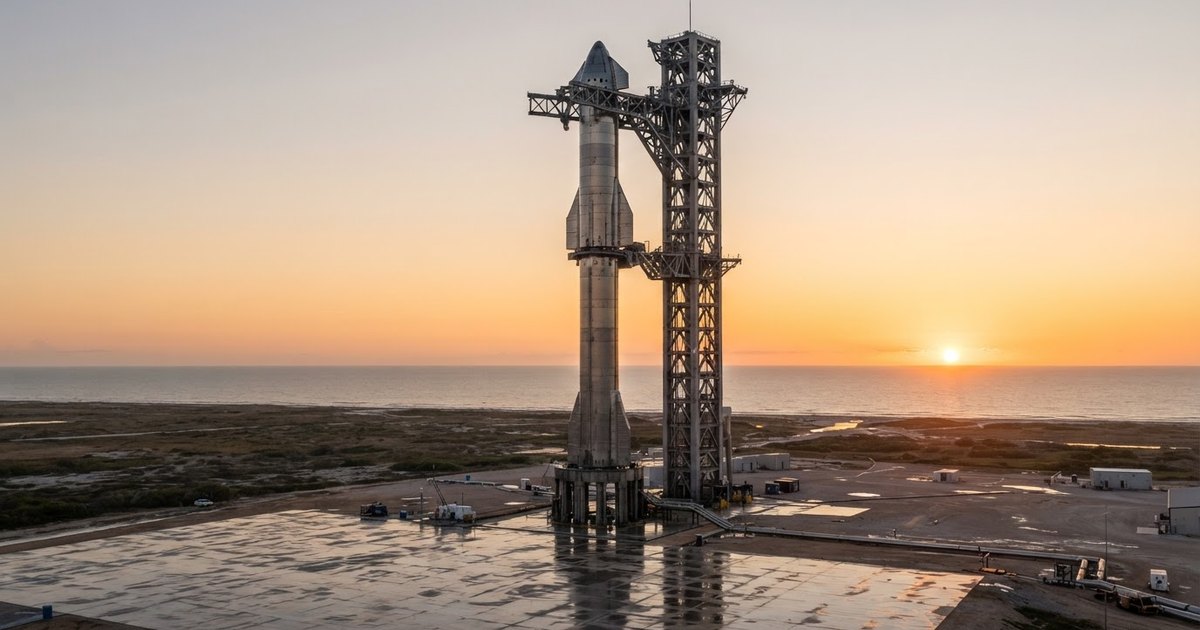
SpaceX's most powerful operational rocket has flown its first mission for America's spy satellite agency. A Falcon Heavy lifted off from Launch Complex 39A at NASA's Kennedy Space Center in Florida at 11:54 p.m. Eastern time on Thursday, October 1 (03:54 UTC on October 2), carrying the classified NROL-97 mission for the National Reconnaissance Office (NRO).

The key facts

  • Flight number: the 14th Falcon Heavy launch.
  • Payload: classified. The NRO did say that the payload fairing had already flown once, on the NROL-95 mission in July.
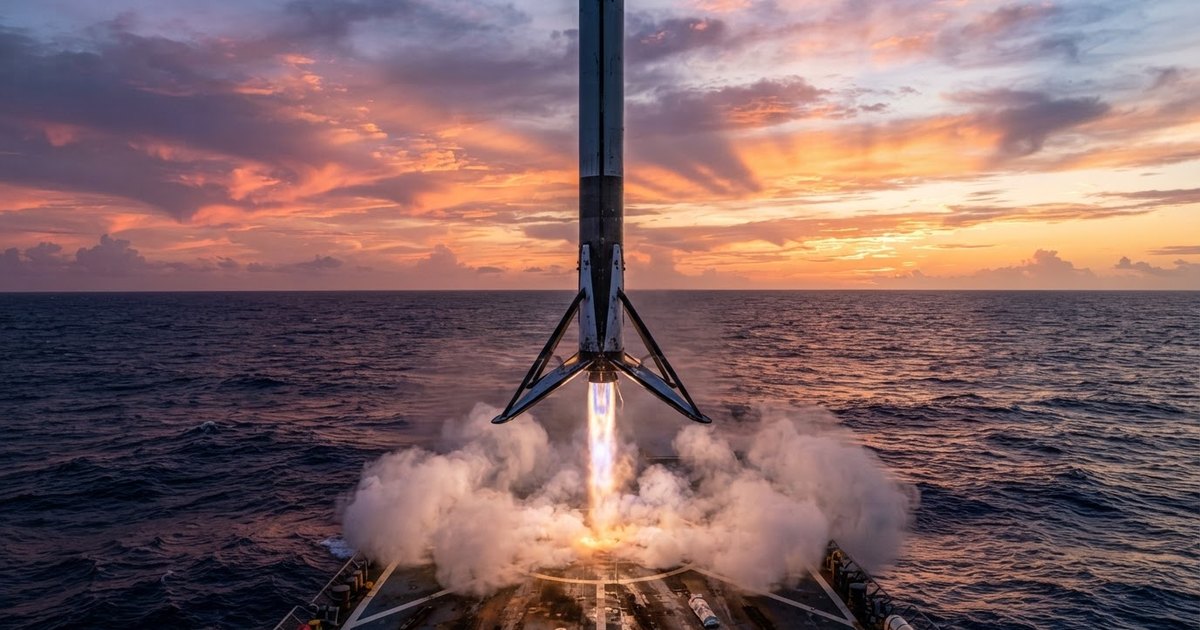
  • Side boosters: B1104, on its second flight, and B1072, on its fourth. Both landed back at Landing Zones 1 and 2 at Cape Canaveral Space Force Station.
  • Core stage: B1106, flying for the first time, was expended rather than recovered, as is common on demanding missions.
  • Turnaround: the two side boosters had flown only about a month earlier, on the launch of NASA's Nancy Grace Roman Space Telescope.

A new kind of contract

NROL-97 was the first NRO mission bought under the National Security Space Launch Phase 3 Lane 2 contract, a competitive program awarded in 2025 for the most demanding US military and intelligence launches. Flying it on a Falcon Heavy, with reused side boosters and a reused fairing, shows how far reusability has moved into national security launches, which used to rely on brand-new rockets.

It also capped a remarkable day. SpaceX had planned three launches within about 13 hours: the Crew-13 astronaut flight from Florida in the morning, the Transporter-18 rideshare from California around midday Pacific time, and Falcon Heavy at night. With two side boosters returning to land, Central Florida could hear up to three sonic booms that day.

The Tesla link: a Roadster in orbit around the Sun

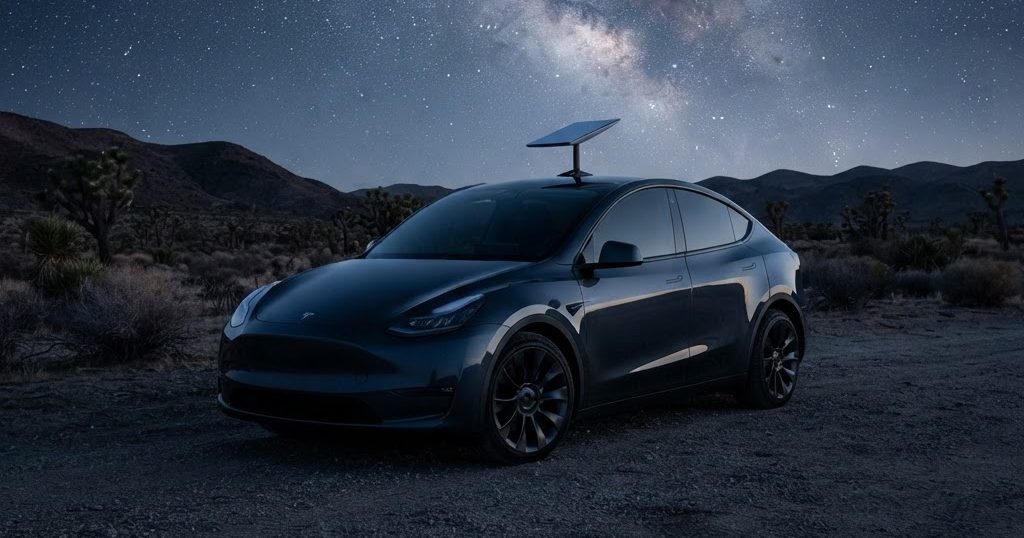
Falcon Heavy will always be connected to Tesla. On its very first flight, on February 6, 2018, from the same pad 39A, the rocket carried Elon Musk's own 2010 Tesla Roadster as a test payload, with a mannequin in a SpaceX spacesuit, called Starman, in the driver's seat.

The car is still out there. It travels on an elliptical orbit around the Sun that crosses the orbit of Mars, taking about 1.5 years per lap. It passed relatively close to Mars in October 2020, and its next close approach to Earth is expected in 2047. In January 2025 it was briefly logged as a new asteroid before astronomers recognised it as the Roadster.

The launch was a marketing stunt as much as an engineering test, but it worked: images of a cherry-red Tesla floating above Earth became some of the most widely shared pictures of the decade, and they tied the two brands together in the public mind.

Why it matters

Falcon Heavy flies rarely, but each flight that lands its boosters and reuses hardware strengthens SpaceX's position in the market for heavy government launches. That business is part of what makes SpaceX's finances so different from Tesla's, and it matters to Tesla shareholders as the two companies grow closer through shared technology, deals and Tesla's small stake in SpaceX.

What to watch next

  • Further NRO and Space Force missions under the Phase 3 contracts.
  • How quickly SpaceX can turn the side boosters around again.
  • Whether Starship, which reached orbit for the first time days earlier, eventually takes over heavy missions from Falcon Heavy.
Sources (3)
11 kW

A 22 kW charger won't charge your Tesla any faster

Most Tesla models charge at home at up to 11 kW AC.

Read why →
4 min

Why the Cybertruck and Starship are both made of stainless steel: the shared metal behind Tesla and SpaceX

Tesla's pickup and SpaceX's rocket share more than an owner. Both use cold-worked stainless steel developed by a materials team that worked for both companies. Here is how that came about.

3 min

SpaceX wants a million AI satellites in orbit: why most Terafab chips, and Tesla's AI7, are meant for space

SpaceX has filed for up to one million computing satellites and shown its first design, AI1. Here is the plan, the obstacles, and how Terafab and Tesla's chip roadmap tie into it.

3 min

The Mars window is opening, but Starship and Optimus are staying home: why SpaceX chose the Moon first

Musk once promised Starship would leave for Mars at the end of 2026 with Tesla's Optimus on board. That window is here and no rocket is going. What changed, and what it means for Optimus.

2 min

SpaceX on the stock market: the record IPO explained, and what it means for Tesla shareholders

SpaceX listed on Nasdaq in June 2026 in the largest IPO ever. The price, the valuation, Musk's voting control, and the ways Tesla is tied to its sister company.

2 min

SpaceX's Q3 2026 results: revenue nearly triples and a $4.4 billion profit, a day before Tesla

SpaceX reported its second quarter as a listed company just before Tesla's results. The key numbers, what drove them, and why they matter for the Tesla-SpaceX merger debate.

3 min

Up to 1.3 billion SpaceX shares can be sold from today: the biggest unlock since the IPO, and why Tesla investors are watching

Two trading days after its Q3 results, SpaceX's largest lock-up release lets employees and early investors sell up to 1.3 billion shares. Here is how the schedule works, what comes next and how it ties into the Tesla merger talks.

2 min

Terafab explained: why Tesla and SpaceX want to build their own chip factory

Terafab is a planned chip complex in Texas, shared by Tesla and SpaceX, with an initial $16.8 billion budget. Here is what it should make, why Musk says he needs it, and the risks.

3 min

Tesla, SpaceX, Starlink, xAI and The Boring Company: how Musk's companies fit together

With merger committees now studying a Tesla-SpaceX deal, it is worth knowing where Musk's companies already overlap. From chips and batteries to Starlink and Grok, here is the map.

4 min

Tesla and SpaceX form special committees to study a merger, Musk calls it 'a good idea'

On SpaceX's earnings call, Elon Musk confirmed both companies have set up committees of independent directors to explore a combination. No terms are agreed, and Tesla shareholders would face a high approval bar.

4 min

SpaceX will try to catch Starship itself on Flight 15: what is planned for November, and why Tesla investors care

On its third-quarter call, SpaceX confirmed that Flight 15 will try to catch both the Super Heavy booster and, for the first time, the Starship upper stage with the launch tower. Here is what we know.

2 min

Will Tesla and SpaceX merge? What Barclays expects, and what is actually confirmed

A Barclays note suggests a Tesla-SpaceX deal could be announced before Tesla's December shareholder meeting. Nothing has been agreed. Here is the scenario and the facts.

3 min

SpaceX launches Google's first AI-in-space satellite: a rival to its own orbital data center plans

SpaceX's Transporter-18 rideshare carried 130 payloads, including the first prototype for Google's Project Suncatcher, which will test Google's AI chips in orbit. Here is what Google is trying, how it compares with SpaceX's own plans, and the Tesla angle.

3 min

SpaceX Crew-13 reaches the space station in about eight hours, after a ride to the pad in 'Lucky 13' Teslas

Four astronauts launched on SpaceX's Crew Dragon Grace on October 1 and docked with the ISS in record time for NASA. As on every NASA crew flight with SpaceX since 2020, they rode to the rocket in Tesla cars.

4 min

Starship reaches orbit for the first time and releases 26 Starlink V3 satellites, despite an engine failure

On Flight 14, SpaceX's Starship lost an engine on the way up, still made it to orbit, deployed its first real satellites and came down early near Hawaii. Here is what happened and why it matters for Tesla.

4 min

Starship V3 flies for the first time: the ship hits its target, the booster crashes into the Gulf

SpaceX's first third-generation Starship launched from a new pad in Texas, deployed 22 dummy satellites and splashed down in the Indian Ocean. The Super Heavy booster failed to relight its engines.