Each Tesla battery holds thousands of small cells
The first Tesla ran on 6,831 laptop cells; a Cybertruck stores twice the energy in 1,344. Why Tesla builds packs from small cylinders, what makes the 4680 different, and whether it matters when you buy.
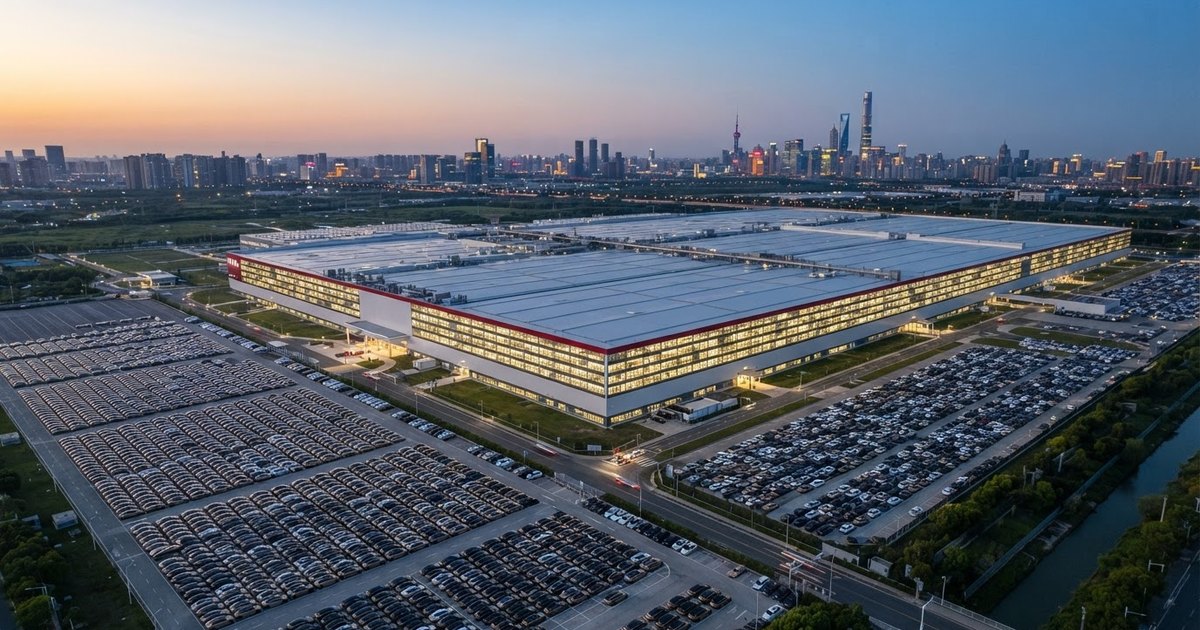
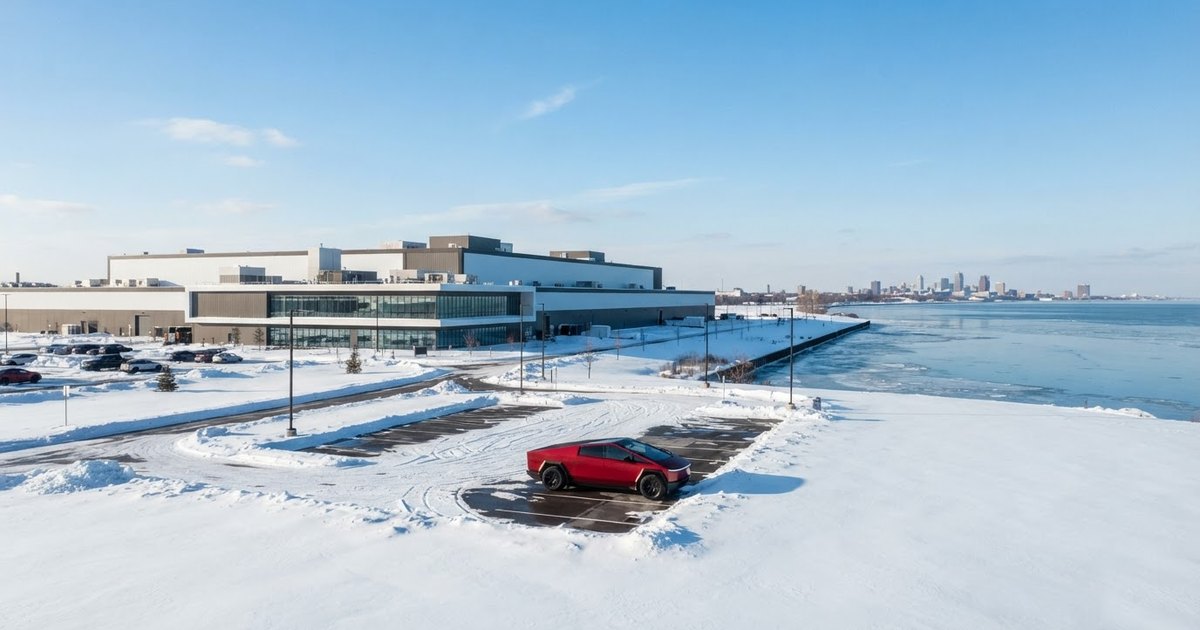
The first Tesla ran on 6,831 laptop-style battery cells, each roughly the size of a finger. Eighteen years later, a Cybertruck stores more than twice as much energy in just 1,344 cells. In November 2026, Tesla's cell manufacturing director Michael Guilfoy announced a "massive expansion" of the 4680 cell plant at Giga Texas, which he expects to become the largest battery cell factory in North America. Yet even the newest Tesla packs are built from more than a thousand small steel cylinders, not from a few big blocks. That choice looks odd, and it goes back to a shortcut the very first Roadster took.
Why did the first Tesla use laptop cells?
Because in the mid-2000s, laptop cells were the cheapest and best-tested lithium-ion cells you could buy in huge numbers. The Roadster's pack held 6,831 cylindrical cells of the kind used in laptop computers, 18 mm wide and 65 mm long: the format known as 18650. Together they stored about 55 kWh. Factories in Asia were already turning out enormous numbers of them, so quality was predictable and prices kept falling. Tesla did not have to invent a cell, only a way to make thousands of them work as one battery.
Critics expected those packs to wear out fast. They did better than that: a Plug In America study of Roadster owners projected that the average pack would keep 80 to 85% of its capacity after 100,000 miles, more than Tesla's own early guidance of about 70% after roughly 50,000 miles. The Model 3 later moved to a slightly larger cell, the 2170 (21 by 70 mm). Even then, a Model 3 Long Range pack holds about 4,400 of them, according to a comparison by teardown expert Sandy Munro. Every step up in size still left thousands of cells in each car, and that has a reason beyond price.
So why not build one giant battery cell?
Because a big cell is harder to cool and releases far more energy when it fails. Every cell turns part of its energy into heat when it charges and discharges. A thin cylinder has plenty of surface for that heat to escape, and in a Tesla pack the coolant runs right past the cells. In one huge cell, the heat in the middle has a long way to travel. Safety is the other half of the story: when one small cell overheats and fails, it releases only the energy of that one cell, and its steel can helps stop the problem from spreading to its neighbours.
Many other carmakers choose large flat pouch cells or box-shaped prismatic cells instead, because fewer, bigger cells need fewer parts and connections. It is a trade-off, not a law of nature. Thousands of small cells come with a cost of their own: each one needs its own steel can, its own electrical connections and its own spot in the pack, and all of that adds weight, factory steps and money. The ideal cell is as big as possible without overheating, and finding that sweet spot is what Tesla went after next.
What makes the 4680 cell different?
It is a much fatter cylinder, 46 mm wide and 80 mm tall, designed so that its size does not turn into a heat problem. Tesla presented it at its Battery Day in September 2020. The cell has about 5.5 times the volume of a 2170, and Tesla claimed five times the energy and six times the power. The trick is the missing tab. In a normal cell, the current leaves the rolled-up electrode through a small metal strip, so electrons travel a long way along the foil to reach it. In the "tabless" 4680, the whole edge of the foil is connected, which makes the path much shorter. Musk said a large tabless cell has a shorter electron path than a smaller cell with tabs. A shorter path means less heat, and that lets the cell grow.
Bigger cells also mean fewer cans and connections. The Cybertruck shows the result: its 123 kWh pack holds 1,344 cells, about 91 Wh each. That is roughly eleven times the energy of one Roadster cell, partly from size and partly from fifteen years of better chemistry. Tesla also planned to make the pack part of the car's structure and to coat its electrodes with a dry powder process that skips the liquid solvent and the drying ovens. On paper it all added up to much cheaper batteries. Building it at scale turned out to be the hard part.
Why did the 4680 take so long?
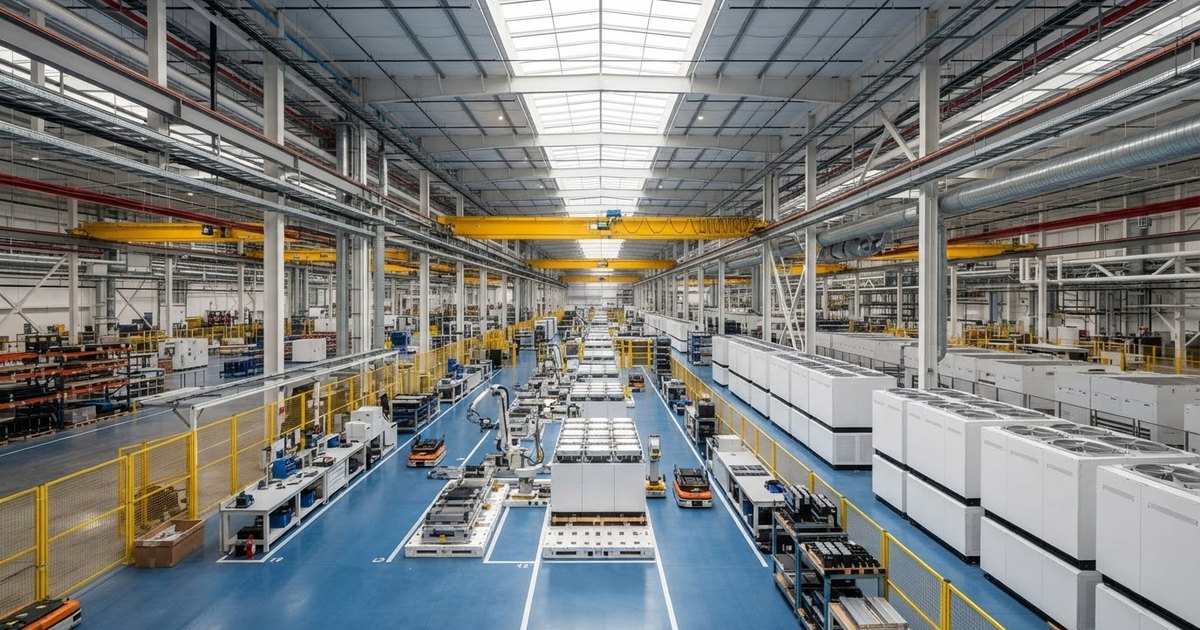
Because a new cell is easy to design and very hard to mass-produce. At Battery Day, Tesla targeted a 56% lower cost per kWh, mainly through the dry electrode process. Musk admitted the machine for it was "close to working, but not with a good yield." That warning proved accurate. In August 2021, Tesla said battery supply was one reason the Cybertruck would slip to 2022. By October 2023, Tesla had built 20 million 4680 cells in Texas in total; IEEE Spectrum calculated that the pace at the time was enough for only about 2,000 Cybertrucks a month. Dry-coating the cathode proved the most stubborn step.
The picture has changed since. Tesla's Q3 2026 update lists more than 40 GWh a year of installed 4680 capacity in Texas, for the Cybertruck, the Cybercab, the Semi and some Model Y versions. Guilfoy's claim that the plant will soon lead North America is a forecast, not yet a fact, and installed capacity is not the same as cells actually built. For buyers, the cell inside the car is a different question altogether.
Does the cell size matter when you buy a Tesla?
Not directly: what you notice is range, charging speed, weight and price, and the cell format is only one ingredient of those. At Battery Day, Tesla said the 4680's design alone would add about 16% range; the bigger gains it promised, up to 54% in total, depended on new materials and on building the pack into the car. A Tesla with 2170 cells is not worse by definition, and a big vehicle still needs a heavy battery whatever the cell: the Cybertruck's pack weighs about 721 kg.
- Myth: more cells means a weaker battery. The number of cells mostly tells you which format is inside, not how good the pack is.
- Myth: a bigger cell means more range. Range comes from the total energy in the pack and how efficiently the car uses it.
- What really protects you is the battery warranty and how you charge, not the shape of the can.
From the Roadster's laptop cells to the Cybertruck's 4680s, Tesla has followed one rule: use as many small cans as safety needs, and as few as cost allows. That is why, eighteen years on, the answer is still a cylinder. It just got a lot fatter.
Sources (5)
- Tesla North — Tesla Giga Texas plans major 4680 battery expansion
- electrive — Tesla Battery Day: 'tabless' 4680 cell and in-house production
- IEEE Spectrum — Is Elon Musk back in 'production hell' with Tesla's 4680 battery?
- InsideEVs — Here's what the Tesla Cybertruck's battery passport reveals
- Charged EVs — Plug In America research: Tesla Roadster battery longevity exceeds projections
Images are illustrations; some are made with AI.