Tesla now leads German private EV switchers
Tesla took 10.1 percent of private German switches from a combustion car to a pure electric car in the first nine months of 2026, up from 4.5 percent a year earlier. HUK-COBURG's E-Barometer, published on 26 November 2026, puts the brand first for the first time.
Tesla took first place for the first time among private drivers in Germany who left a combustion car for a pure battery-electric car. In the first nine months of 2026 the brand's share of those switches was 10.1 percent, up from 4.5 percent a year earlier. HUK-COBURG, Germany's largest car insurer, published the figures in its E-Barometer on 26 November 2026 in Coburg. n-tv, auto motor und sport and schmidtisblog.de each reported the 10.1 percent, the rise from 4.5 percent, and the first-place result. That percentage records which brand a private switcher chose. It is not a sales total, and the count leaves several kinds of car out.
Who counts in the E-Barometer?
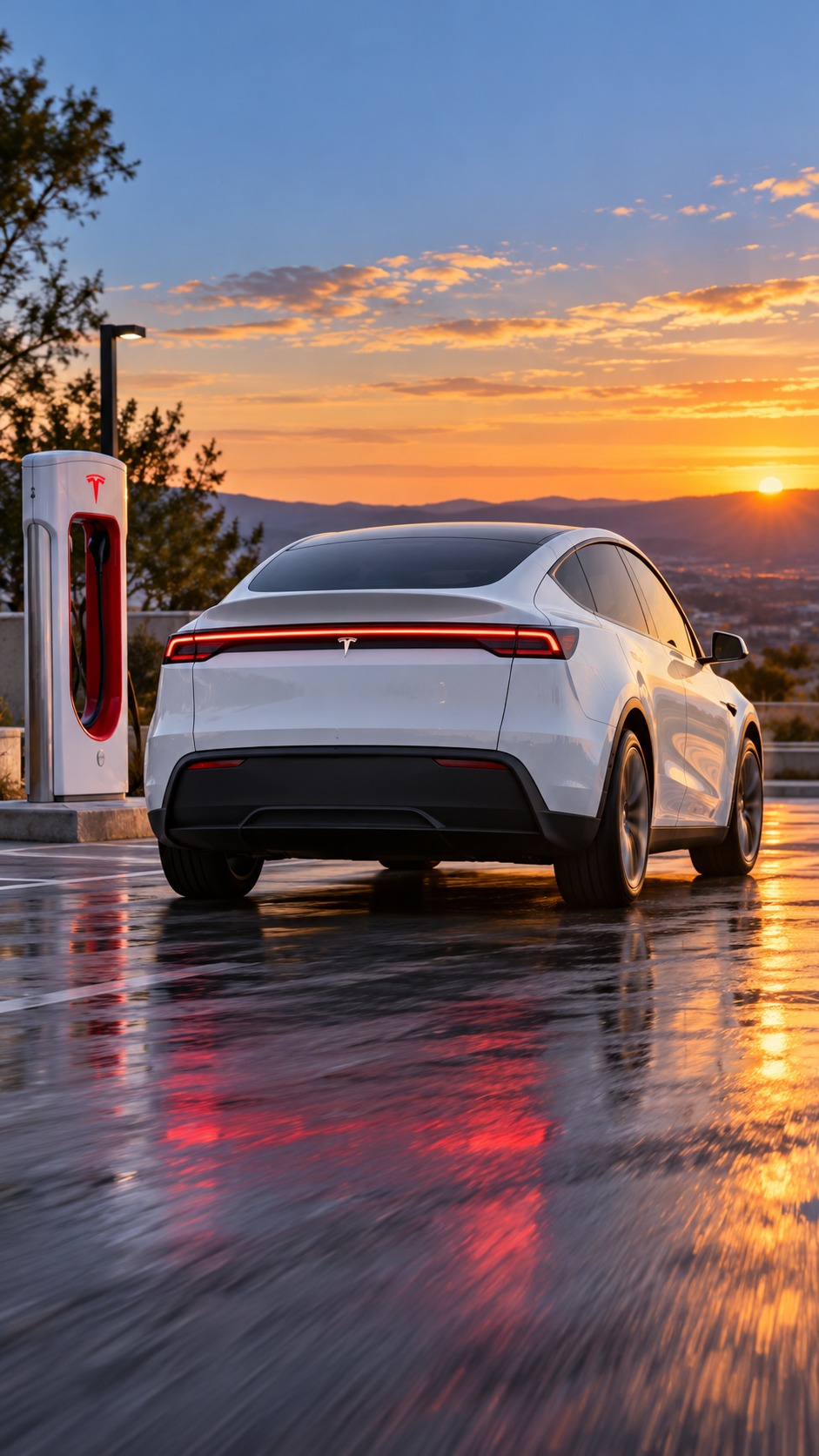
Private owners only, and only a move from a combustion car to a pure battery-electric car, new or used. HUK-COBURG draws the E-Barometer from a base of more than 14 million insured vehicles. n-tv and auto motor und sport both set out that base and the limits on it. Company cars, rental fleets and hybrids stay out. What remains is a private owner replacing a combustion car with a pure battery car, and that battery car can be new or used. The figure beside a brand is that brand's share of those switches. It is not the brand's share of every car sold in Germany, and it is not a count of vehicles delivered. The photos on this page are library photos of a Model Y, of Giga Berlin and of a delivery hall, separate from the cars in the count. Where the 10.1 percent sits depends on the brands beside it.
So which brands finished behind Tesla?
Skoda was second at 9.8 percent, BMW third at 7.1 percent, and Volkswagen's share halved. n-tv, auto motor und sport and schmidtisblog.de report the three moves. A year earlier Skoda's 14.1 percent stood above Tesla's 4.5 percent. In these nine months Skoda's 9.8 percent stands just under Tesla's 10.1 percent. Volkswagen's 4.5 percent, halved from 9.7 percent, is the share Tesla held a year earlier. The nine-month list looks like this:
- Tesla: 10.1 percent of private switches, up from 4.5 percent, and first place for the first time.
- Skoda: 9.8 percent, down from 14.1 percent.
- BMW: 7.1 percent, down from 9.9 percent.
- Volkswagen: 4.5 percent, halved from 9.7 percent.
- Opel: 4.6 percent, up from 2.5 percent.
Opel rose alongside Tesla, and that rise sits next to Volkswagen's drop.
What did Opel's share do?
It nearly doubled, from 2.5 percent to 4.6 percent. n-tv and schmidtisblog.de both report that rise. Opel ended the nine months at 4.6 percent, and Volkswagen ended them at 4.5 percent. The two shares sit next to each other after moving in opposite directions: Opel up from 2.5 percent, Volkswagen down from 9.7 percent. Tesla's move in the same months was from 4.5 percent to 10.1 percent. These shares answer which name a switcher picked. A separate figure answers how often a private driver made the switch at all.
So how often did a private driver make that switch?
In the third quarter of 2026, a private driver replaced a combustion car with a pure electric car in 11.5 percent of vehicle changes. Across 2025 that rate was 5.5 percent. The HUK-COBURG press release and schmidtisblog.de both give 11.5 percent for the quarter and 5.5 percent for the whole of 2025. The 11.5 percent is a share of vehicle changes in three months. Tesla's 10.1 percent is a share of brand choice across nine months. The quarterly rate covers private vehicle changes in that quarter. The nine-month ranking covers only the switches, and only the brand picked inside them. HUK points to a policy change as one reason drivers moved.
What does HUK cite behind the rise?
The state purchase subsidy for electric cars, reintroduced in Germany from early 2026. The HUK-COBURG press release and n-tv both report that the insurer cites that subsidy as a driver. The same two sources report a sharp change among older drivers. Drivers aged 65 and older switched to a new electric car three times as often in the third quarter of 2026 as in 2025. Their share was 28 percent in the quarter, against 9.4 percent in 2025. The 28 percent belongs to drivers aged 65 and older, and it is their rate of switching to a new electric car. It is not Tesla's 10.1 percent of private switches in the first nine months, and it is not the 11.5 percent of vehicle changes in the quarter. The age figure is also limited to a new electric car, while the brand ranking counts new and used pure battery cars together.
Tesla's first place in the E-Barometer is a first for the brand in this count. The 10.1 percent covers the first nine months of 2026 and stands where 4.5 percent stood a year earlier. Each share is a brand chosen by a private owner who left a combustion car for a pure battery car, drawn from HUK-COBURG's book of more than 14 million insured vehicles, with company cars, rental fleets and hybrids left out.
Sources (4)
- HUK-COBURG — E-Barometer, published 26 November 2026
- n-tv — Privatleute steigen öfter auf E-Autos um, aber nicht auf deutsche, 26 November 2026
- auto motor und sport — Tesla at 10.1 percent of switchers in the 2026 HUK E-Barometer, 26 November 2026
- schmidtisblog.de — HUK E-Barometer on VW, BMW and Tesla
Photos: TrendingTesla library photos of a Model Y, Giga Berlin and a delivery hall. Not photographs of the HUK-COBURG E-Barometer or of the switches it counts. Other images are illustrations; some are made with AI.