Neuralink gets FDA approval for pivotal ALS trial
On 25 November 2026 the FDA approved Neuralink to launch the LINK Pivotal Study in people with severe paralysis from ALS. The approval covers the trial and does not authorize sale of the implant.
The US Food and Drug Administration has approved Neuralink to launch the LINK Pivotal Study. Neuralink calls it the first pivotal trial for an implantable brain-computer interface in the United States. The study will evaluate the safety and effectiveness of the Neuralink system in people with severe paralysis due to ALS. The company announced the decision on 25 November 2026, and MobiHealthNews reported it the same day. The approval lets the trial start. It does not authorize commercial marketing of the device.
What does the approval cover?
The launch of this study, and not a sale of the implant. Neuralink's update and the MobiHealthNews report describe the same decision. The FDA approved the company to launch the LINK Pivotal Study. Neuralink says this is the first pivotal trial of an implantable brain-computer interface in the United States. It looks at people with severe paralysis due to ALS, amyotrophic lateral sclerosis. A pivotal trial is the stage that generates the evidence regulators use for a market-approval decision. This study is that step, before a possible future market application. The line the two sources draw on the device is the same: the trial may proceed, and the device may not be marketed.
Neuralink did not disclose a target enrollment, a study duration, or the clinical sites.
So what is still unpublished?
How many people the study wants, how long it runs, and which clinical sites will take part. Those three blanks are in both accounts. What is public is that enrollment is open now. Neuralink directs people to a patient registry at neuralink.com/trials/device-control/. An open registry is a way in. It is not a headcount, a calendar, or a list of sites. Someone may ask to be considered. The size of the pivotal group is not on the page.
The registry also does not spell out the result the study is built to show.
What will participants be asked to do?
Control digital devices through thought, in ways that show up as more independence in daily life. Both sources put the aim there. The trial evaluates safety and effectiveness together. Effectiveness, in that shared account, means thought control of digital devices, with the focus on functional outcomes that improve independence day to day. The study also keeps assessing long-term safety and reliability, and it does that across multiple clinical sites. Multiple is as far as the site list goes. The long-term check is part of the study itself. A participant is there so the trial can see whether the system is safe to live with, and whether controlling a device by thought changes how independently that person gets through the day.
The test uses one implant, and that implant reads a specific kind of intention.
What does the N1 implant read?
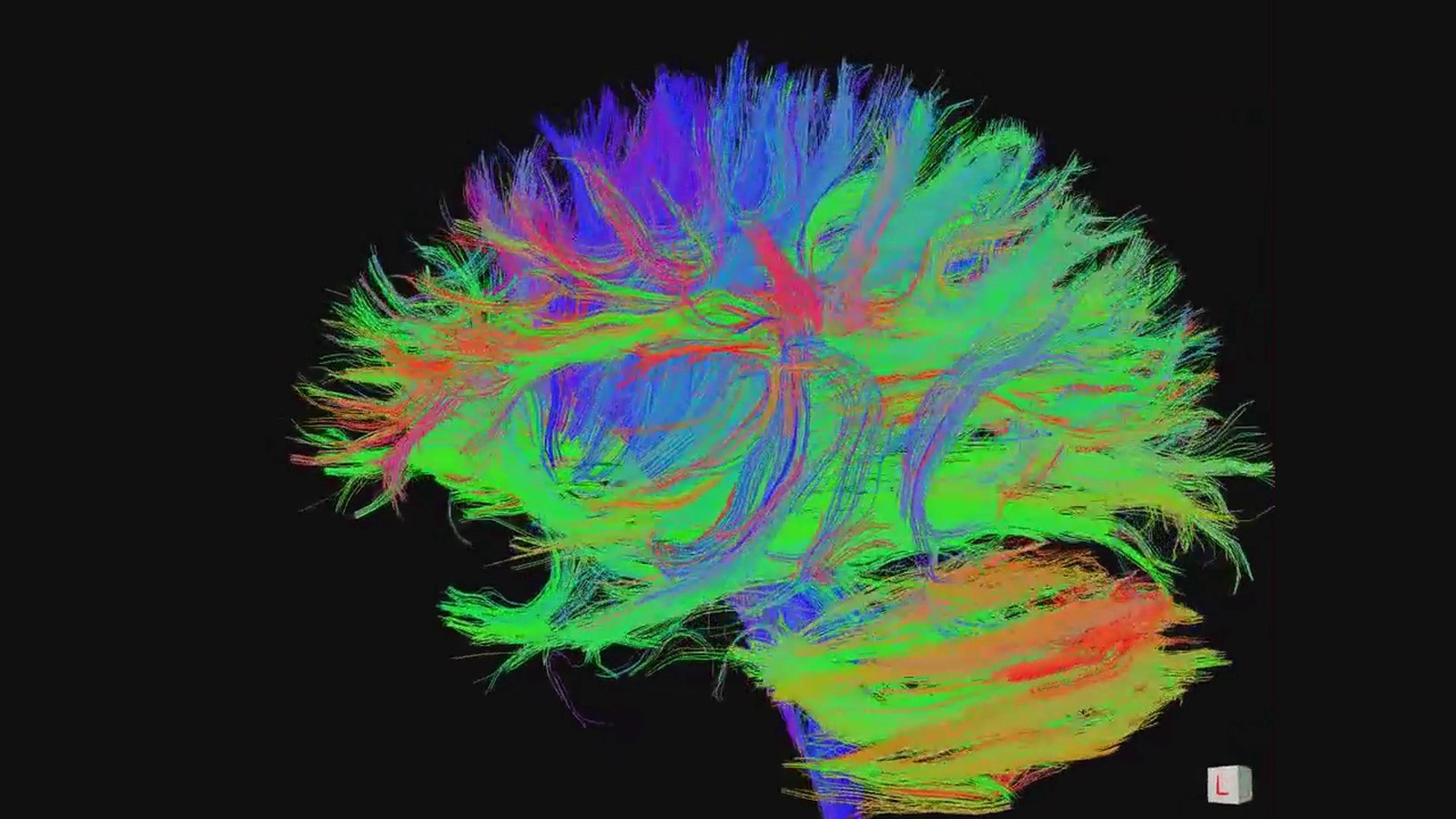
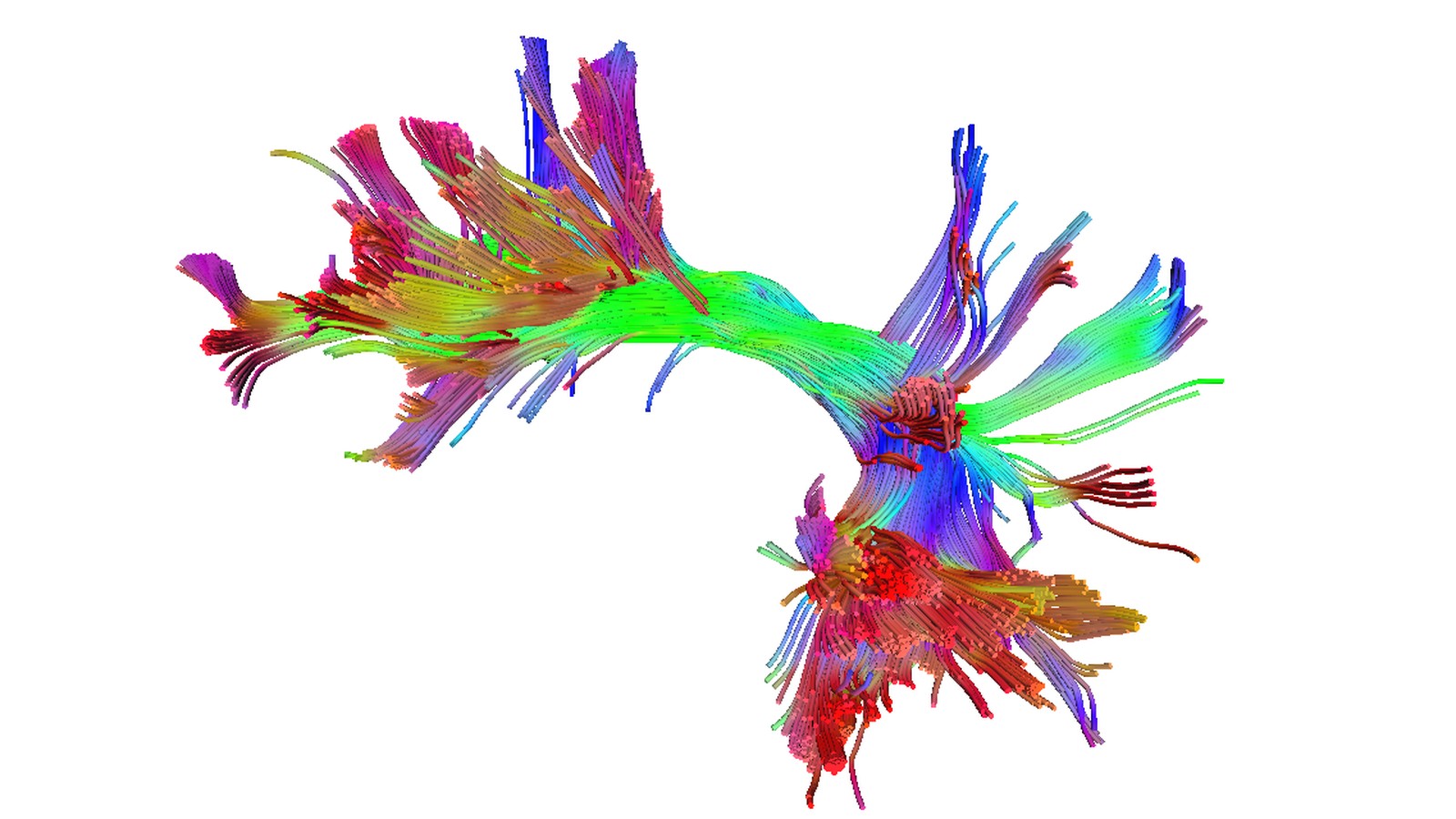
Intended movement, through electrode threads in the brain region that plans movement. Neuralink and MobiHealthNews describe the same hardware. The N1 sits in the skull. Electrode threads extend from it into the region of the brain that plans movement, and the system decodes that intended movement. The decoded signal is what a participant uses when trying to control a digital device. The images on this page are diffusion pictures of nerve fibers in a human brain, from research shared under a Creative Commons licence. They are not scans of a participant, and they are not a photograph of the implant or of the decision. The N1 here is the device inside a study the FDA has allowed to launch.
People have already lived with the implant. This pivotal study is the next stage of that work.
So who has already been implanted?
More than 30 participants, in early feasibility studies in the United States, Canada and the United Kingdom. The LINK Pivotal Study builds on that work. Those participants have used the implant to communicate with family, to pursue higher education, and to play video games. The company and MobiHealthNews both report those uses. The figure counts people implanted in the earlier studies. It is not the enrollment target for this pivotal trial, and it is not a count of devices for sale. Earlier coverage of the program sits in Neuralink enrolled 21 people in its trials and Neuralink opens a US trial after stroke. A pivotal trial produces the evidence regulators use for a market-approval decision. This study is that step, before a possible future market application. Enrollment is open. The target, the duration and the sites remain unpublished.
Sources (2)
Photos: Fang-Cheng Yeh, Timothy D. Verstynen, Yibao Wang, Juan C. Fernández-Miranda and Wen-Yih Isaac Tseng, PLoS ONE (2013), CC BY 2.5, via Wikimedia Commons. Tractography panel of the arcuate fasciculus. Not a scan of a trial participant and not the implant; jgmarcelino, CC BY 2.0, via Wikimedia Commons. Diffusion tractography of nerve fibers in a human brain, from a 3-tesla MRI. Not a scan of a trial participant and not a photograph of the decision. Other images are illustrations; some are made with AI.