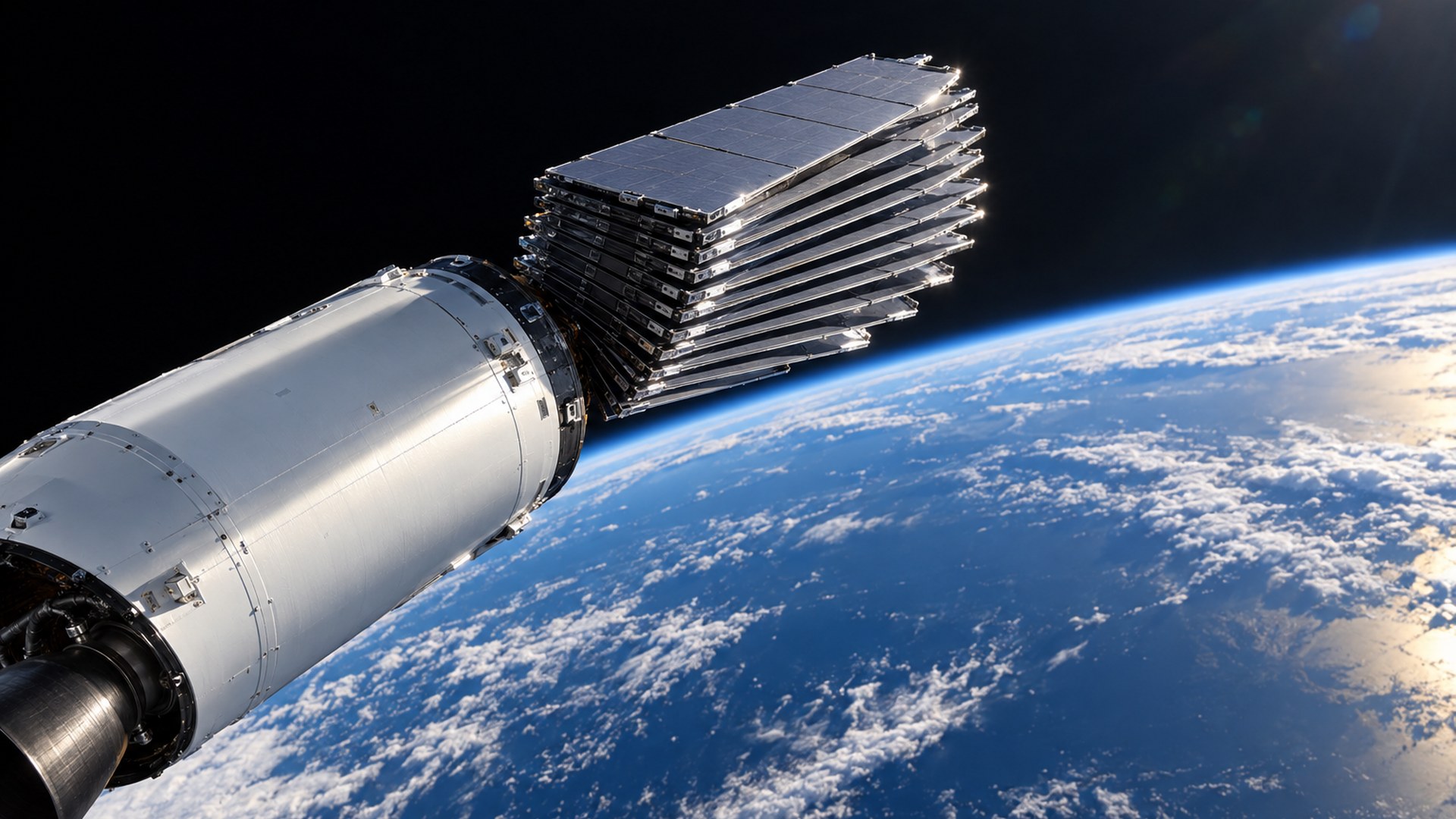
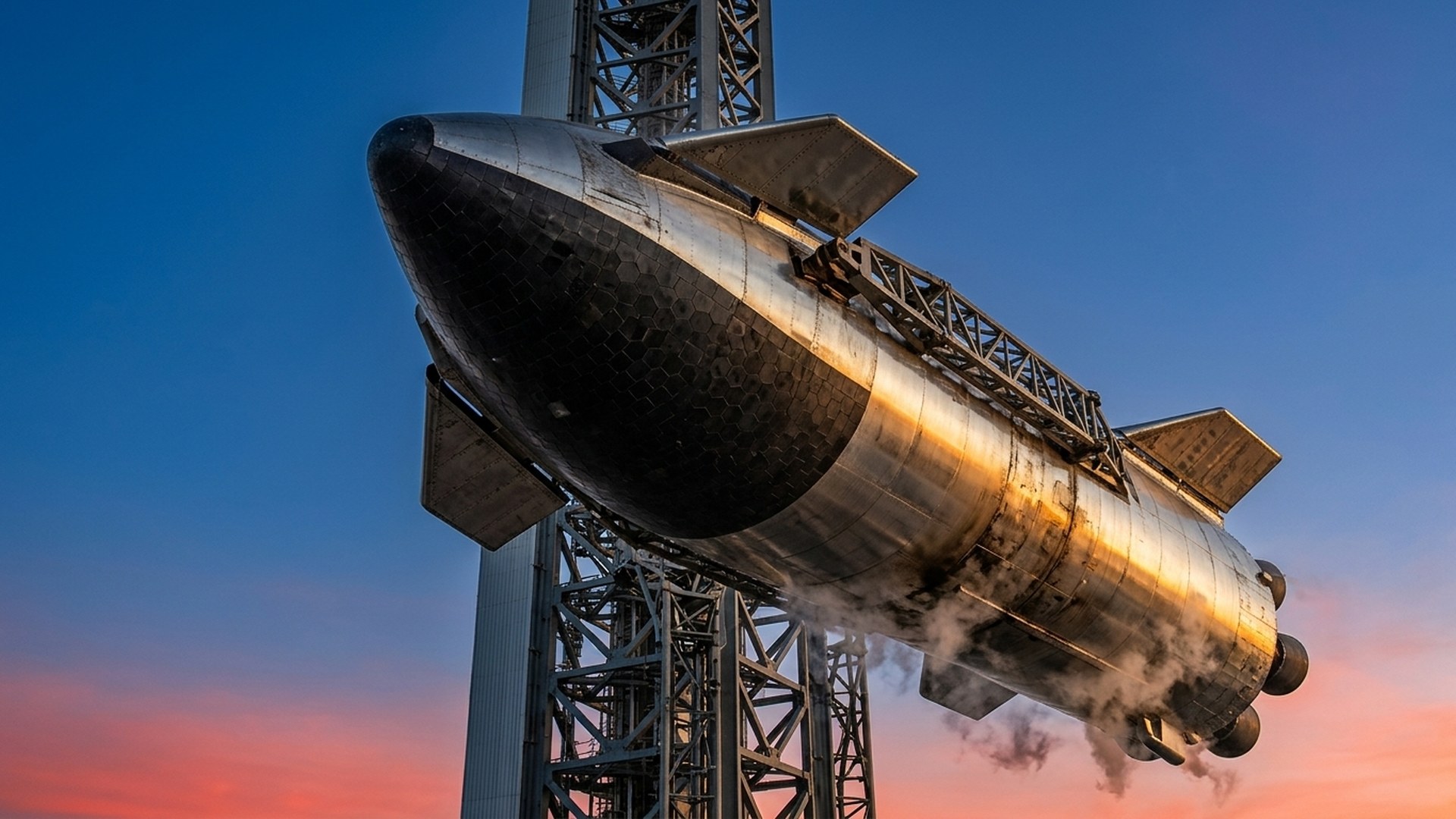
SpaceX landed its first orbital rocket in 2015
In 2015 SpaceX crashed two boosters on its landing ship and lost a whole rocket before a Falcon 9 first stage finally flew back and landed upright in Florida. The story of that first landing, and why it still matters for Starship.
On the evening of 21 December 2015, a SpaceX engineer spoke the line the company had been chasing for years: "The Falcon has landed." Minutes earlier, a Falcon 9 had lifted off from Cape Canaveral with 11 Orbcomm satellites. Its first stage separated high above the Atlantic, turned around, fired its engines to fly back towards Florida and settled upright on a concrete pad called Landing Zone 1. For the first time, the main stage of a rocket that sends cargo into orbit had come home in one piece. Getting there took two crashed landings, a lost rocket and six months on the ground, and in mid-2015 nobody could say whether SpaceX would ever pull it off.
Why did SpaceX want its rockets back at all?
Because every launch threw away the most expensive part of the rocket. The first stage holds most of the engines and most of the tanks, and until 2015 no first stage of an orbital rocket had ever flown itself back to a landing: almost all of them fell into the ocean and were lost. Elon Musk had argued for years that fully reusable rockets could cut the cost of spaceflight by a factor of 100, a claim he tied directly to his goal of making a city on Mars affordable. That was an ambition, not a result. First SpaceX had to prove a booster could survive the trip back: falling from far above the thickest air, slowing on its own engines and touching down gently on a small target. Its first try, on a ship at sea, ended badly.
So what went wrong on the first attempts?
The boosters found the target, but they hit it too hard. On 10 January 2015, after launching a Dragon cargo capsule to the International Space Station, a Falcon 9 stage reached SpaceX's floating drone ship in the Atlantic and slammed into the deck. Musk explained the next day that the grid fins, the four small lattice "waffle irons" that steer the stage as it falls, had run out of hydraulic fluid just before touchdown. His verdict on Twitter: "Close, but no cigar this time." The next rocket carried 50 percent more fluid.
In April 2015 it went wrong in a different way. The next booster touched down on the ship but with too much sideways speed, tipped over and was destroyed. Musk blamed a valve in the engine that had stuck, so the control system could not react fast enough. Then SpaceX lost a whole rocket.
What did the June 2015 explosion change?
It grounded Falcon 9 for six months and forced SpaceX to come back with a better rocket. On 28 June 2015, a Falcon 9 carrying supplies to the space station broke apart on its way up. The investigation pointed to a faulty steel strut in the upper stage. It was the first Falcon 9 that SpaceX lost on the way to orbit.
SpaceX came back with an upgraded version, later called Falcon 9 Full Thrust: its propellant chilled far below normal temperatures so more fits in the tanks, a stronger structure, and better landing legs and grid fins. Musk called it "a significantly improved rocket". Its first mission carried Orbcomm's satellites to a low orbit, which left spare propellant in the booster, enough to try something new: landing on solid ground.
How did a booster fly itself back to Florida?
By turning around in space and running a series of engine burns back to the coast. After separating at an altitude of about 75 kilometres, the first stage flipped, relit engines to head back towards the Cape, steered through the air with its grid fins and fired once more to land as its four legs unfolded. Meanwhile the upper stage carried on and released all 11 satellites about 14 minutes after launch.
Musk greeted the stage with "Welcome back, baby!" A month earlier, Blue Origin's New Shepard had landed after a suborbital hop to just over 100 kilometres, and Jeff Bezos now tweeted "Welcome to the club!" But New Shepard went straight up and down, while the Falcon booster had just helped push a payload towards orbital speed, a much harder trip back. Then SpaceX did something few expected with the rocket that made history.
So what happened to the first booster that came back?
It never flew again. SpaceX found no damage on the stage, known as B1019, and test-fired it on its pad in January 2016. One of the outer engines showed fluctuations in thrust, possibly from swallowed debris, Musk said. SpaceX decided to keep it on the ground, and since August 2016 it has stood upright outside the company's headquarters in Hawthorne, California, as a monument.
The boosters after it did the real work. SpaceX first flew a used booster again in 2017, and by August 2026 one booster, B1067, had lifted off for the 37th time. The same idea is now being pushed one step further.
Why does that night still matter for Starship and for Tesla?
Because Starship is trying to finish what Falcon 9 started: bringing back the whole rocket, not just the bottom half. SpaceX has already caught several Super Heavy boosters with the arms of its launch tower, and for Starship Flight 15, scheduled for mid-November 2026, it plans to catch both the booster and the ship. Musk has called a successful ship catch "the first time that there's been full recovery of an orbital class rocket". Until it works, that remains a goal, not a fact.
For Tesla fans the pattern is familiar: build, fail, fix and try again, the same approach Musk has used in Tesla's factories, and SpaceX's own filings mention a possible combination with Tesla. The booster in Hawthorne is a reminder that the first landing was not a lucky shot. It cost two crashes, one explosion and a rebuilt rocket.
Sources (7)
- Space.com: Wow! SpaceX lands orbital rocket successfully in historic first
- Space.com: SpaceX rocket landing failed after grid fins ran out of hydraulic fluid
- Wikipedia: Falcon 9 flight 20 (Orbcomm OG2 M2)
- SpaceNews: SpaceX lands Falcon 9 first stage after Orbcomm launch
- NBC News: Jeff Bezos welcomes Elon Musk 'to the club' after rocket landing
- BGR: SpaceX Falcon 9 booster flies for the 37th time
- Teslarati: SpaceX's next Starship flight set to make history on Friday the 13th
Images are illustrations; some are made with AI.