Starship uses 33 engines instead of one
The Soviet N1 failed with 30 engines and Apollo's giant F-1 took years to tame. Here is why SpaceX's Super Heavy uses 33 Raptors, and why it works where the N1 did not.
The Soviet Union put 30 engines under its Moon rocket, and all four launches failed. SpaceX puts 33 under Starship's Super Heavy booster, and its 15th test flight is even meant to end with both stages caught by the launch tower. Same idea on paper, a very different result. Super Heavy's 33 Raptor 3 engines can push with about 80.8 meganewtons, almost twice the N1's 45.4. More engines also mean more pumps, valves and pipes that can break, and that is exactly the trap that brought the N1 down.
Why not build one giant engine instead?
Because a single giant engine is slow to develop, cannot throttle down far enough to land, and turns any failure into the end of the flight. The best example is Apollo's Rocketdyne F-1, built to push with about 1.5 million pounds of force when typical engines of the era managed around 160,000. Its bigger problem was combustion instability: pressure waves inside the chamber that could, as one NASA engineer put it, burn through the hardware in milliseconds. Engineers spent more than three years on it, even setting off small bombs inside running engines to provoke the shaking, until copper baffles on the injector plate tamed it. From 1967 to 1973, 65 F-1s flew on 13 Saturn V rockets without that problem returning.
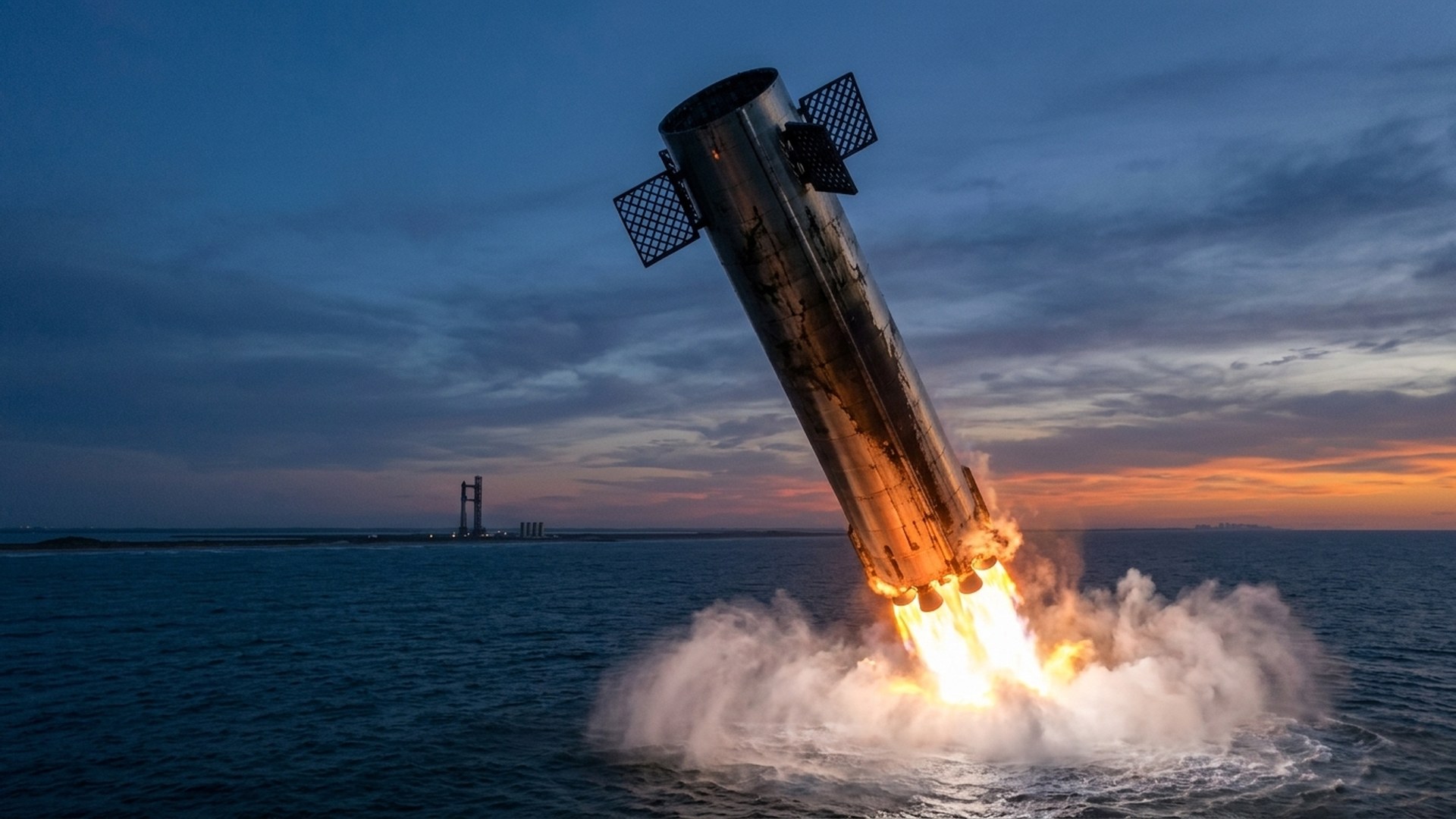
Landing adds a second reason. A booster coming home is almost empty and very light, so it needs only a small fraction of its launch thrust. A rocket with one huge engine cannot gently hover; a rocket with 33 small ones simply lights fewer of them. Super Heavy ends its flight on just the three centre engines.
Many engines are clearly not a guarantee of success either. The Soviets showed how badly a big cluster can go wrong.
So why did the Soviet N1 fail with 30 engines?
Not because 30 is too many, but because the cluster was never fired as a whole on the ground and one failure could cascade through the rest. The N1's first stage had 30 NK-15 engines, 24 in an outer ring and 6 in the middle. A control system called KORD steered it by throttling engines and shut down the opposite engine whenever one failed, to keep the thrust balanced.
- February 1969: a fire was misread as a pump problem, and KORD shut down the whole first stage after 68 seconds.
- July 1969: a turbopump exploded just after liftoff; the blast cut propellant lines and the rocket fell back onto its pad.
- June 1971: an uncontrolled roll grew beyond what the steering could correct, and the rocket broke apart after 48 seconds.
- November 1972: after the six centre engines were switched off at 90 seconds, a pressure shock burst feed lines, a fire started and one engine exploded.
Every one of those problems could have shown up in a full-stage test firing, which the 30-engine stage never got. SpaceX had to solve the same problems, just in a different order.
How does Super Heavy keep 33 engines under control?
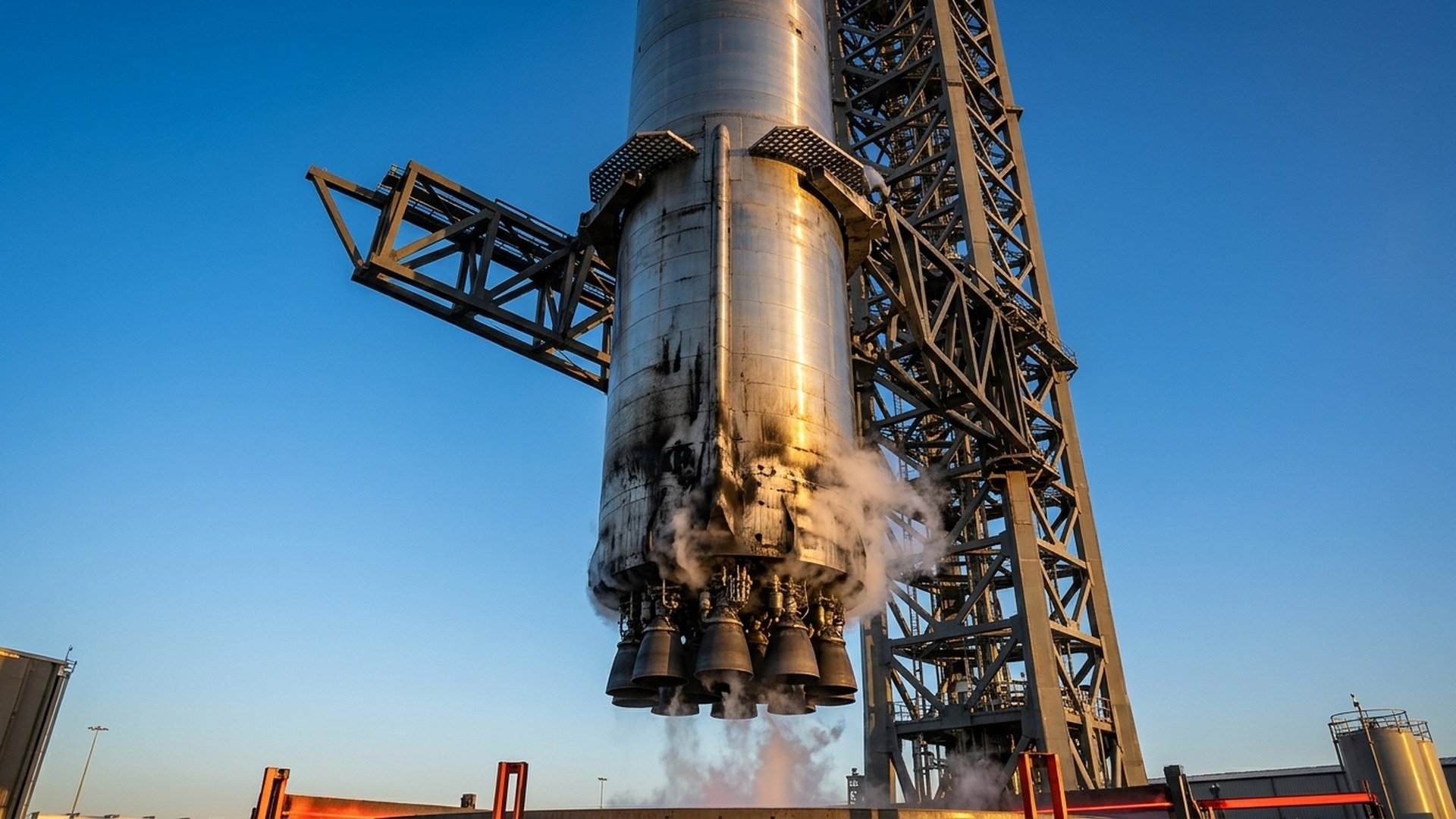
By testing the whole cluster on the ground, isolating each engine and letting software decide which engines to use when. Before a booster flies, SpaceX normally lights all 33 engines at once on the launch mount in a static fire, the step the N1 skipped. The engines sit in two groups: 20 fixed engines in an outer ring and 13 in the middle that can swivel to steer. Shielding between engines is meant to stop one engine's failure from spreading to its neighbours.
With the Raptor 3, every engine can be relit in flight, and all of them restart for the boostback burn that sends the booster home. For landing, the inner 13 light up and then all but the centre three shut down again. In August 2025, during Flight 10, SpaceX switched off one of those three centre engines on purpose; a spare from the middle ring took its place and the booster still made its planned hover over the Gulf of Mexico.
Redundancy only counts if the rocket can actually lose an engine in a real flight and keep going.
What happens when a Raptor fails in flight?
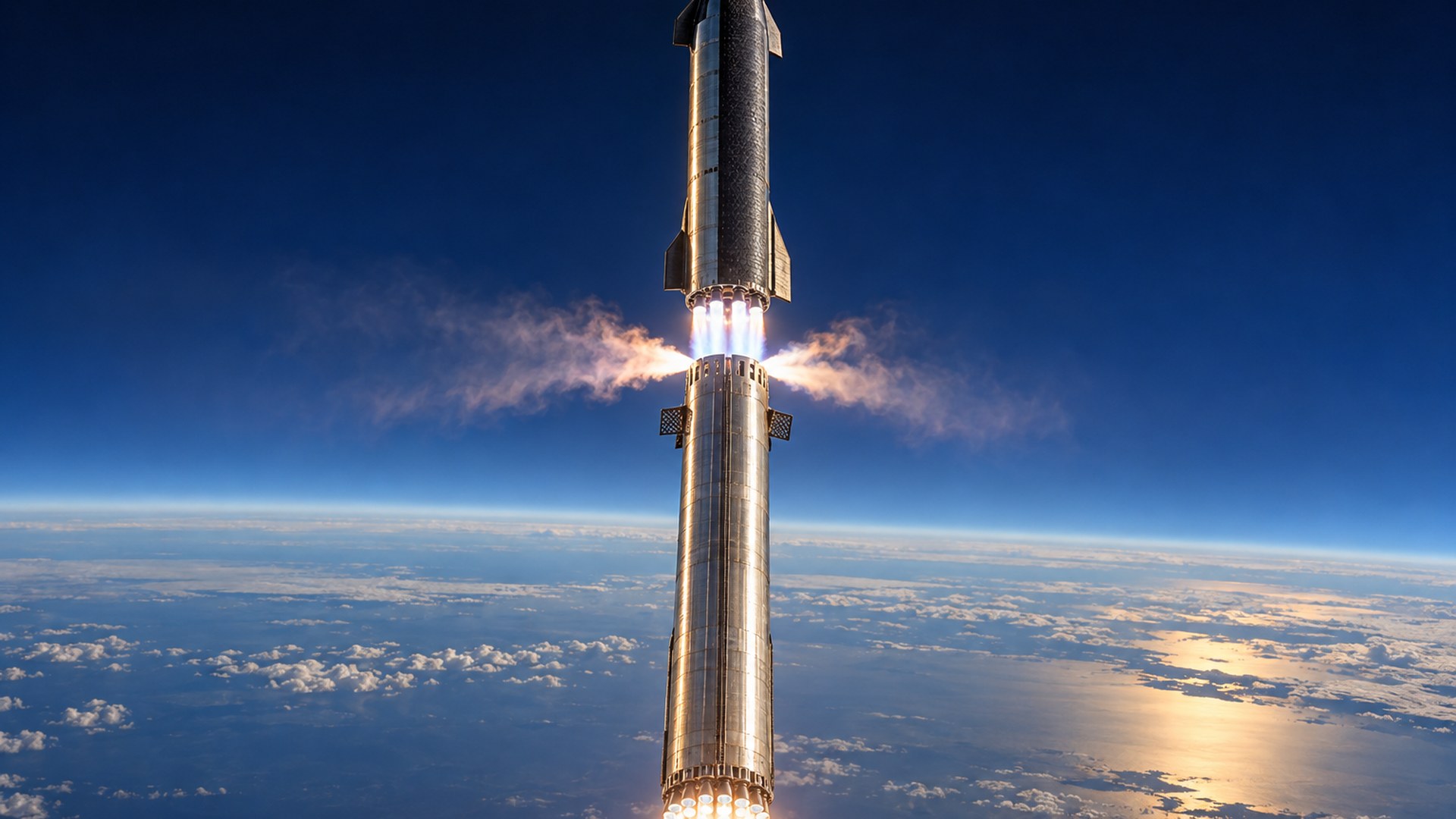
Often the rocket carries on, as long as the failure stays contained and enough engines are left for the job. On Flight 14 in September 2026, one of the six engines on the upper stage shut down during the climb. Flight controllers checked that enough hardware was left for the later deorbit burn, approved a short extra burn, and Starship reached orbit for the first time with 26 Starlink V3 satellites on board. A single-engine stage would simply have fallen short.
It is not magic, though. Super Heavy boosters have been lost during test flights, including one where a blocked oxygen filter led to an engine failure. Redundancy buys margin; it does not replace good engines. The real argument for 33 small engines turns out to be about building them, not just about surviving with them.
Why do small engines suit a reusable rocket?
Because an engine you build by the hundreds gets cheaper, better and easier to replace with every unit. Each Starship stack needs more than 30 engines, so SpaceX builds Raptors like a production line, not like museum pieces. The improvement shows: the first Raptor pushed about 185 tonnes of force at 2,080 kg, the Raptor 3 about 280 tonnes at 1,525 kg. A faulty engine can be swapped on its own, and the same engine family, in a sea-level and a vacuum version, powers both the booster and the ship.
Tesla fans will recognise the logic. Tesla builds its battery packs from thousands of small cylindrical cells rather than a few giant ones, for much the same reasons: mass production, consistent quality and a pack that tolerates one weak cell. With the Tesla-SpaceX merger talks, the two companies' habit of solving big problems with many small, identical parts is more than a coincidence of style.
Those principles are now being tested on the hardest goal yet, catching both halves of the rocket.
What does this mean for the next Starship flights?
The engine count is no longer the open question; reliability over many reuses is. Flight 15 was planned for no earlier than 13 November 2026 with Booster 22 and Ship 42, and both stages were meant to be caught by the tower, a first. For a catch, the booster has to restart its engines twice and the ship has to relight its engines after hours in orbit. Every restart is another chance for one engine to misbehave, and another chance for the other engines to cover for it.
The lesson from half a century of big rockets is simple. The N1 did not fail because it had 30 engines. It failed because those 30 engines had never been tested together. Super Heavy fires all 33 on the ground before it flies, and that, more than the number itself, is the difference.
Sources (4)
Images are illustrations; some are made with AI.