 3 min
How Starlink works: satellites, laser links, dishes and ground stations explained
A plain-language guide to how SpaceX's Starlink gets internet from space to your home, phone or car, why it is faster than older satellite services, and what that means for Tesla.
Starlink now has around 13.6 million subscribers and roughly 11,100 satellites in orbit. Tesla's Cybercab carries a Starlink antenna, and Elon Musk says all cars will have Starlink one day. But how does internet from space actually reach a dish, a phone or a car? Here is the system, piece by piece.
1. Satellites that fly low
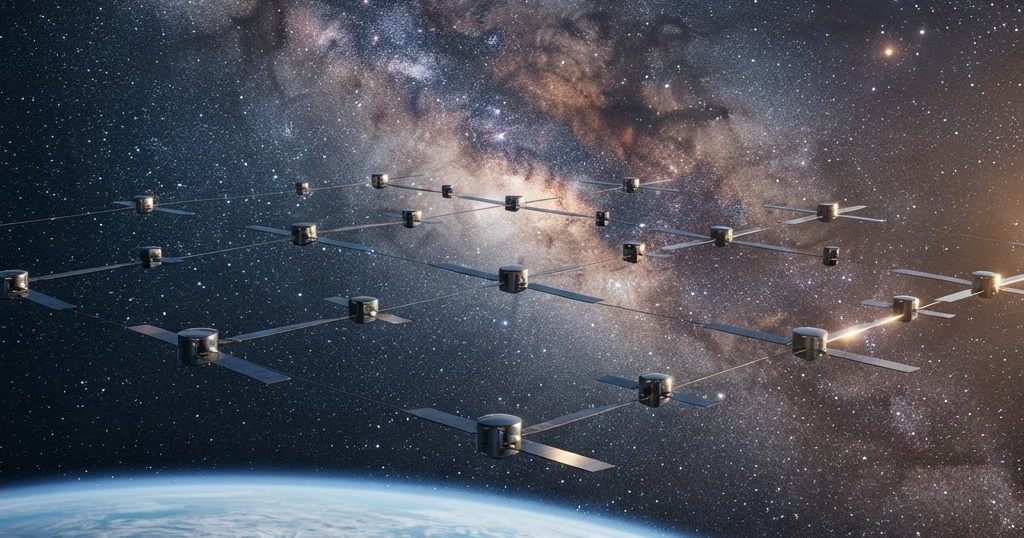
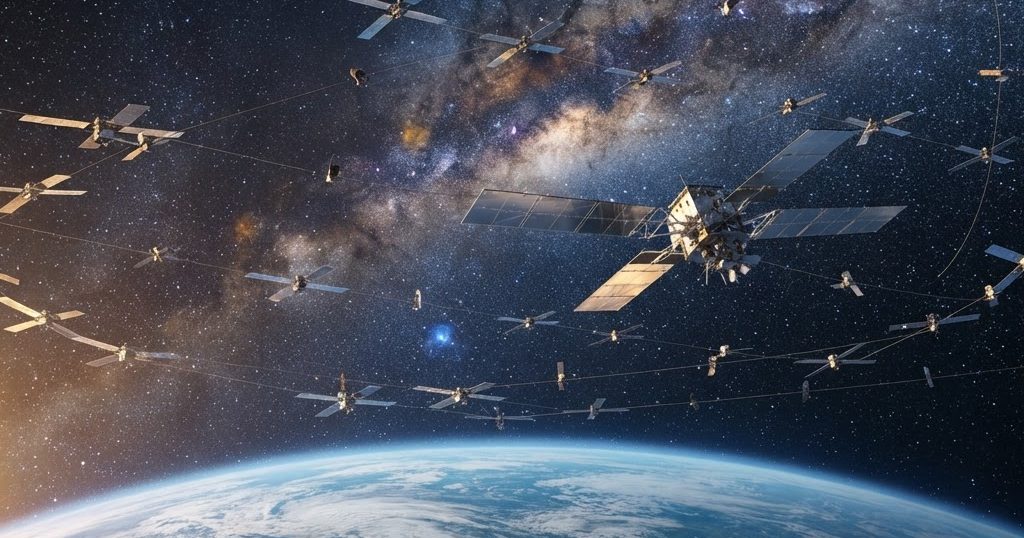
Traditional satellite internet uses a few large satellites in geostationary orbit, about 36,000 km above the equator. Starlink takes the opposite approach: thousands of smaller satellites in low Earth orbit, a few hundred kilometres up. The first batch flew at about 550 km. During 2026 SpaceX is moving those satellites down to about 480 km, which it says reduces collision risk because there is less debris below 500 km.
Flying low has one big advantage: delay. A signal to a geostationary satellite and back takes at least 477 milliseconds. For Starlink, the hop to a satellite is about 25 to 35 milliseconds, which makes video calls and online gaming practical. The downside is that each satellite only sees a small patch of Earth and races across the sky in minutes, so you need very many of them, and the connection is handed from one satellite to the next all the time.
2. Inside a satellite
- Phased-array antennas: flat antennas that steer their beams electronically, with no moving parts, to serve users in the Ku and Ka radio bands.
- Laser links: satellites pass data to each other by laser, so traffic can travel through space to a distant ground station, for example over oceans.
- Electric thrusters: Hall-effect thrusters running on krypton or argon raise the satellite to its working orbit and keep it there.
- Size: the current V2 Mini satellites weigh about 800 kg. The new V3 generation is much larger and can only be launched by Starship.
A satellite works for roughly five to seven years. It is then steered down and burns up in the atmosphere, typically within about a year.
3. Ground stations
The internet itself still lives on the ground. Gateways, typically clusters of nine 2.86-metre dishes in a fenced area, link the satellites to fibre networks and data centres. Where no gateway is in reach, the laser links carry data across the constellation until it can come down.
4. The dish
The user terminal is itself a phased-array antenna, a flat panel that tracks satellites electronically. The standard dish is about the size of a pizza box; the Starlink Mini, launched in 2024, fits in a backpack and delivers up to 100 Mbps. Separately, Starlink's direct-to-cell service connects ordinary LTE phones straight to satellites, starting with text messages through partners such as T-Mobile, though with far less capacity than a mobile mast.
Where Tesla fits in
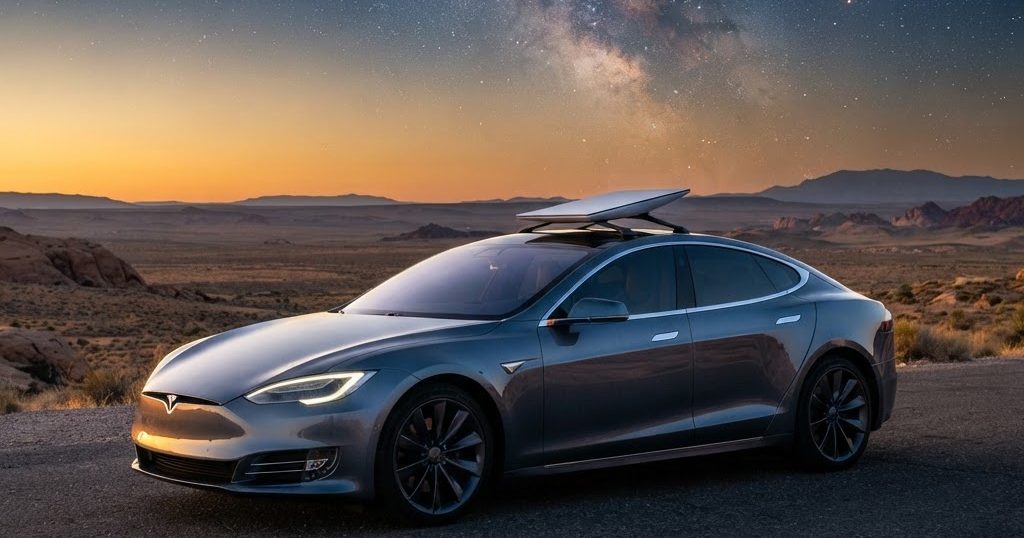
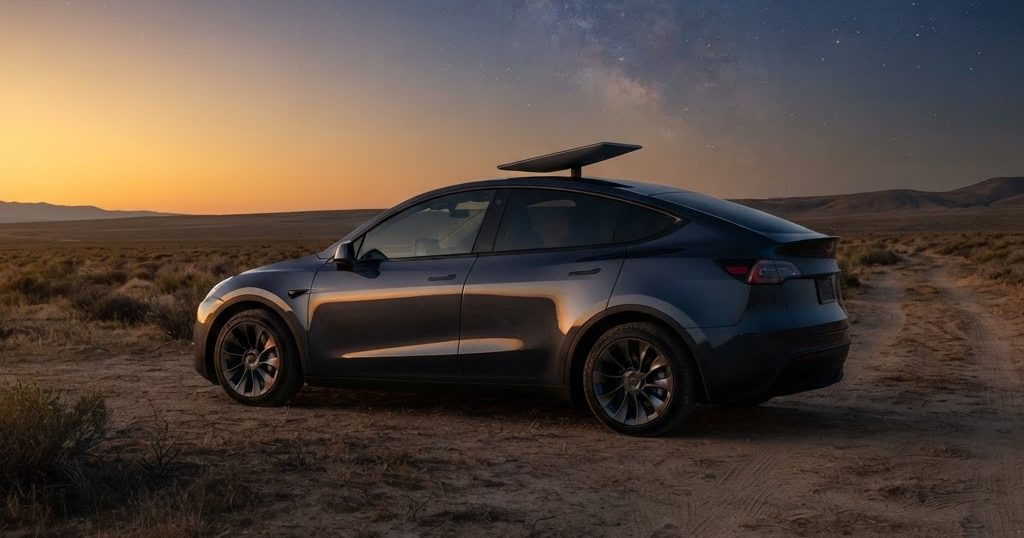
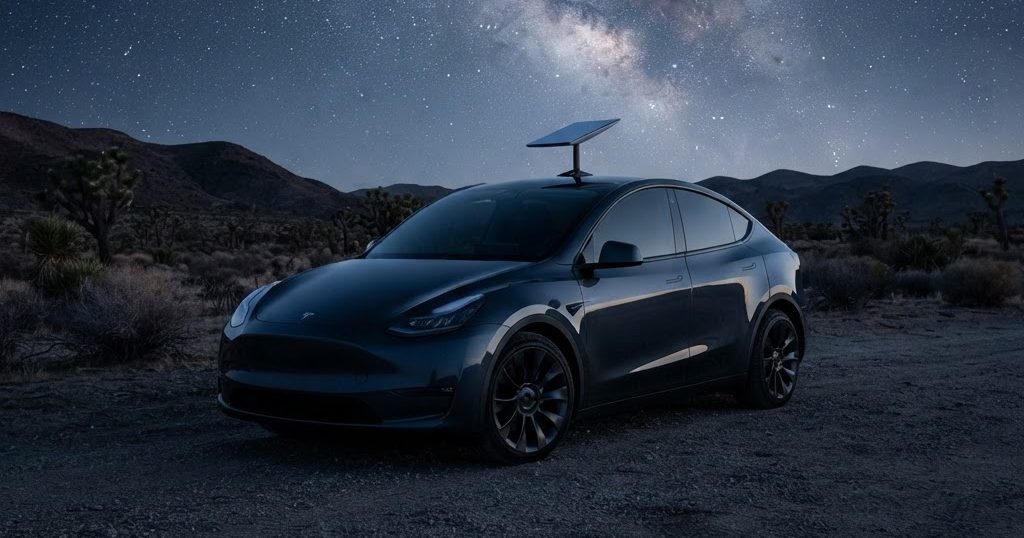
Cars are the hardest case for this system: they move, have metal roofs and need a small antenna. The Cybercab is the first Tesla with a Starlink antenna built in, at the rear of the car, alongside 5G. According to Tesla, the car does not need a connection to drive safely, but robotaxis use one for navigation, customer support and fleet management, and Musk says Starlink can keep them online when mobile coverage disappears.
That only works at scale if the network has spare capacity. This is why the next generation matters: SpaceX's 26 first V3 satellites added about 26 terabits per second, and Musk is aiming for a hundredfold increase in bandwidth over three years. That is a target, not a promise kept.
Why it matters
Starlink's design trades a few expensive satellites for thousands of cheap, short-lived ones that need constant launches. That only makes sense for a company with its own reusable rockets, which is why Starlink and SpaceX are inseparable, and why any future Starlink in Tesla cars depends on how fast Starship flies.