Today's rules block a Cybercab without a wheel
Tesla's Cybercab is touring Europe, but nobody can ride it. How European type approval works, why driverless cars are capped at 1,500 a year, and what has to change first.
In November 2026 Tesla sent the Cybercab on a tour of Europe. The gold two-seater opens at Auto Zürich and then visits 12 stops in nine countries, from Düsseldorf and Prague to Berlin, Brussels and Vienna, until mid-January. Visitors can walk around it, take photos and look inside. What they cannot do is ride in it. In Austin, Texas, paying passengers have been riding Cybercabs since September 2026. In Europe the same car stays parked, because a car with no steering wheel and no pedals runs into a rulebook that was written for human drivers.
Why can't the Cybercab simply drive on European roads?
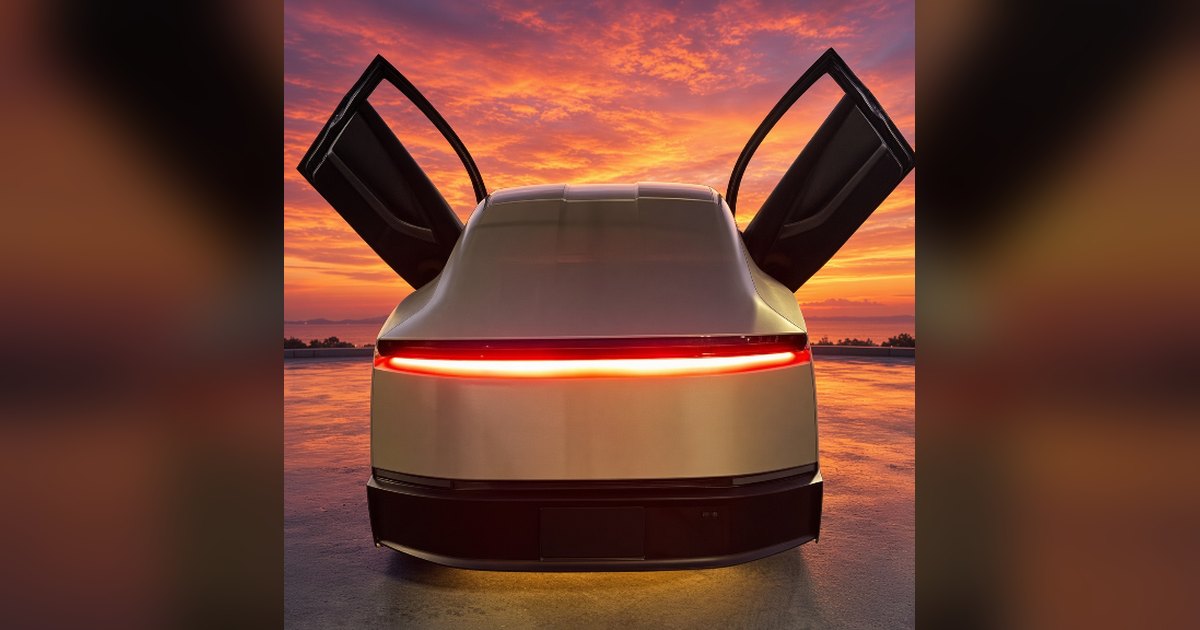
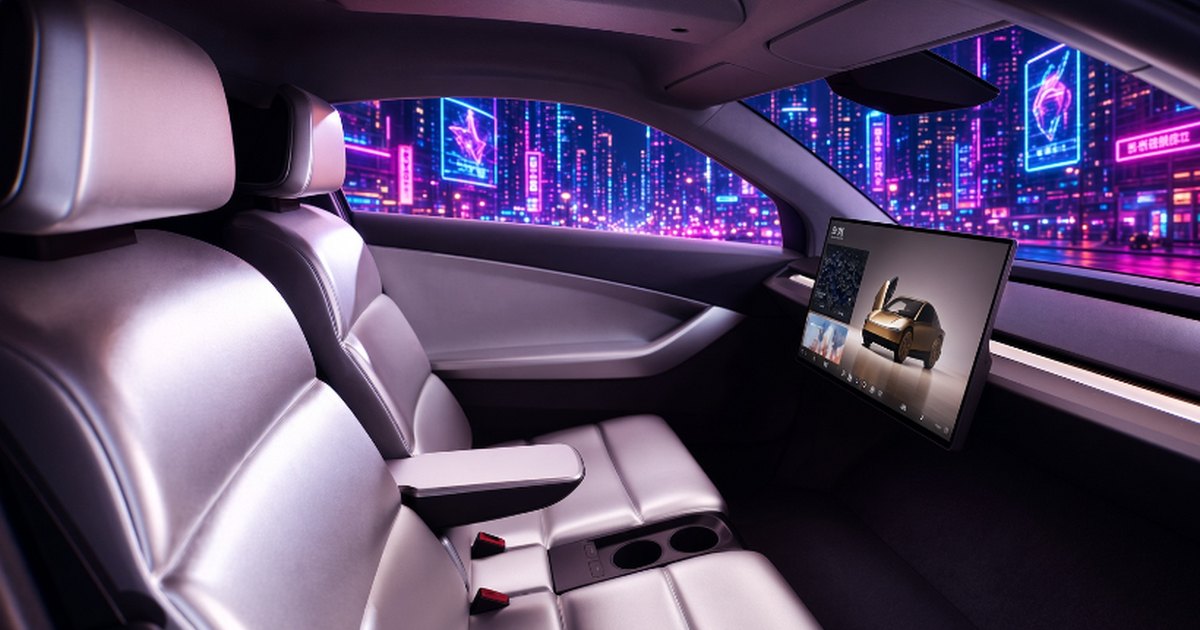
Because no European authority has approved it, and Europe does not let a car onto public roads without approval first. The Cybercab was built for one job: driving itself. It has two seats, a screen, butterfly doors and nothing to steer or brake with. There are no side mirrors and no rear window either. Tesla started production at Gigafactory Texas in April 2026 and uses the car in its paid Robotaxi service in Austin. In Europe, Tesla has not announced Cybercab rides, sales or a date for an application. The car on tour is a showpiece. The real difference lies in how the two sides of the Atlantic decide what is allowed on the road.
How does Europe decide which cars may drive?
In Europe a car must be approved before it is sold; in the US the maker certifies its own car. The European system is called type approval. A national authority, such as Germany's KBA or the Dutch RDW, checks a car type against a long list of technical rules before it may be registered anywhere in the EU. Many of those rules are harmonised through the UN vehicle forum in Geneva, and for decades they assumed a driver with a steering wheel, pedals and mirrors. In the US the maker declares that its car meets the federal safety standards, and the regulator checks afterwards. That is how the Cybercab reached American roads: Tesla certified it itself. Even there it is not fully settled, because the US safety regulator NHTSA opened an investigation into that self-certification in September 2026. Europe has no such shortcut, and its rulebook long had no page for a car without controls.
So is there already a legal path for driverless cars in Europe?
Yes, but it is narrow: small numbers in fixed areas. Since 2022 the EU has had a regulation, numbered 2022/1426, for approving the driving system of fully automated vehicles. It covers three cases:
- vehicles that carry passengers or goods within a defined area;
- vehicles on a fixed route between fixed start and end points, like a shuttle;
- cars that park themselves in designated car parks.
The catch is volume. The approval is meant for small series, capped at 1,500 vehicles per type per year across the whole EU. On top of that, each country decides where such vehicles may operate. Germany moved first, with a 2021 law that allows level 4 vehicles to drive with nobody on board in approved areas, as long as a remote "technical supervisor" monitors them and can switch them off. Driverless shuttle projects around Darmstadt and Volkswagen's MOIA ride-pooling trials in Hamburg show how this is being tested. For a pilot, 1,500 cars a year is plenty. For the city-wide robotaxi fleets Tesla talks about, it is far too few. Many people also mix up this hurdle with a much smaller one.
Doesn't EU approval for FSD open the door?
No. Approving FSD and approving the Cybercab are two different things. FSD (Supervised) is now approved in ten EU countries, with Latvia the latest, and a vote on EU-wide approval is expected in December 2026. But FSD Supervised is driver assistance: a person sits behind the wheel, watches the road and stays responsible. The Cybercab has no wheel and nobody to take over, so the system itself has to be the driver. That calls for a different kind of approval, of the car and its driving system, followed by permission to operate in a city. A common mistake is to read the FSD vote as the start of robotaxis in Europe. It is a step, but the bigger hurdle comes after it. That bigger hurdle has started to move as well.
What has to happen before you can ride a Cybercab in Europe?
New global rules, an application from Tesla and a city that says yes. In June 2026 the UN vehicle forum WP.29 adopted the first international regulation for fully driverless automated driving systems. It demands that such a system is at least as safe as a competent human driver. The forum also updated about ninety existing vehicle rules so they still work for cars without traditional driver controls. The EU, the UK, the US, China, Japan and Canada endorsed it. How quickly the EU turns this into approvals for robotaxis built in large numbers is still open. After that, Tesla would have to apply, prove the Cybercab's safety to an authority such as the KBA or RDW, and win operating permits city by city. Musk has called the Cybercab the most likely next major product for Gigafactory Berlin, but that is a statement, not a plan with dates. Until then, what the tour offers is limited.
What does this mean for you?
For now, the Cybercab in Europe is something to look at, not to ride. If you visit a stop on the tour, you will see a car designed for a legal world that Europe is only starting to build. Three things are worth watching: the EU-wide vote on FSD, the first European approvals under the new driverless rules, and whether Tesla files an application for the Cybercab itself. Until all three move, a Cybercab ride in Europe remains a promise. Once they do, the gold two-seater on display could leave the showroom and pick you up.
Sources (4)
- Not a Tesla App: Tesla Cybercab goes on tour in Europe, cities and dates
- KBA: EU type approvals for motor vehicles with a fully automated driving function in small series
- Connected Automated Driving: UNECE adopts first-ever global rules allowing fully autonomous vehicles
- CMS: Autonomous vehicles law and regulation in Germany
Images are illustrations; some are made with AI.