Fans and nitrogen thrusters would lift the Roadster
The new Tesla Roadster drove upside down and flipped over a Semi. Here is how its suction fans and SpaceX-style nitrogen thrusters do it, and why it can only stay up for seconds.
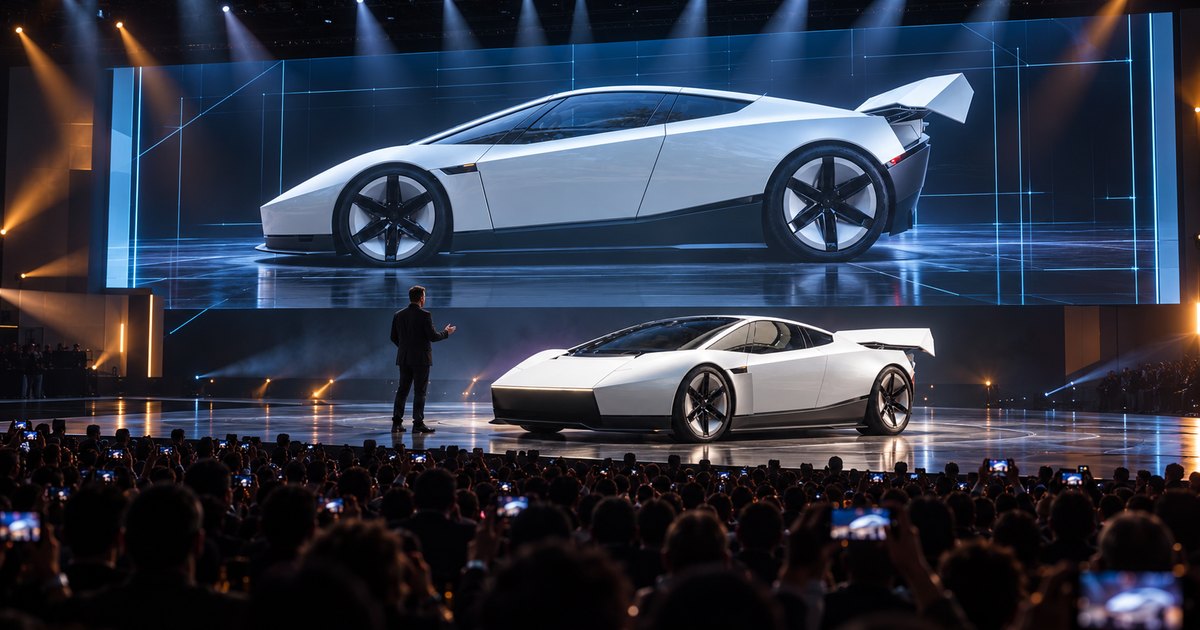
Tesla's new Roadster drove up a curved ramp until it hung upside down, let go, rolled upright in midair and landed on its wheels. Minutes later it jumped a row of Tesla vehicles, a Semi among them, and did a flip on the way. Tesla's verdict afterwards: "So…yes, it can fly." The demo took place at a SpaceX test site near Waco, Texas, in October 2026. The car has no rotors, no jet engine and no fuel tank, so what held it up is not obvious at all.
How does a car stay on a ramp upside down?
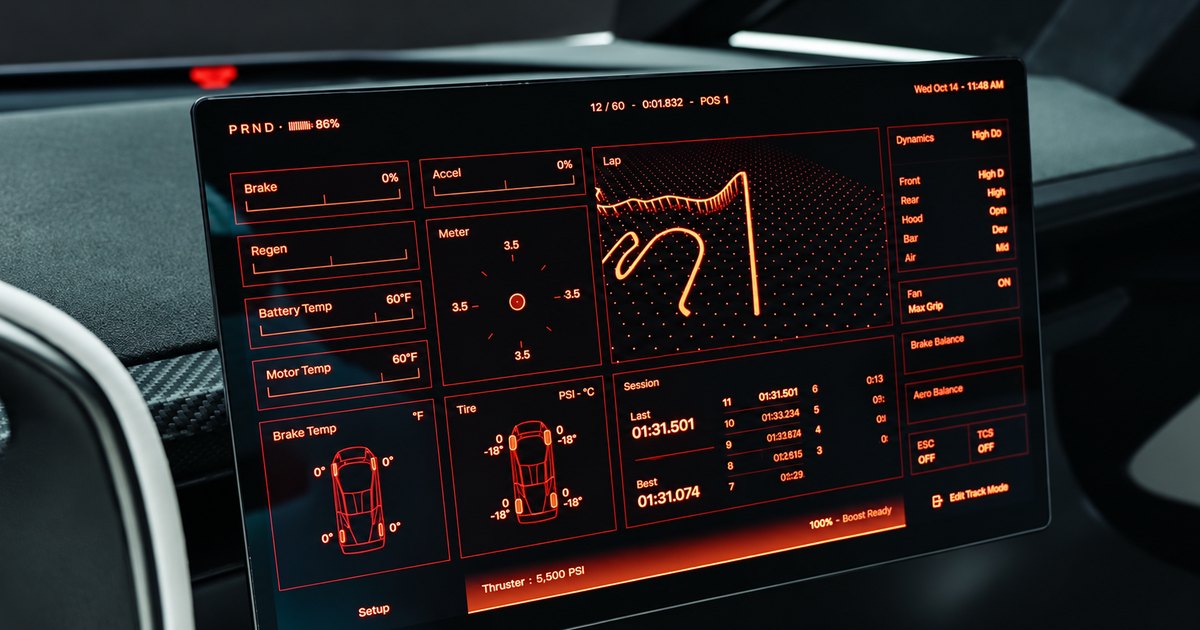
With suction, not with rockets. At the back of the Roadster sit four fans of about 20 kW each, according to Tesla's vice president of vehicle engineering, Lars Moravy. They pull air from under the car while skirts drop down to seal the gaps, so the pressure under the floor is lower than the pressure on top. That difference presses the car onto the surface. Moravy says the system can pull up to 2 g.
Turn the car upside down and the sum is simple. Gravity pulls it away from the ramp with 1 g; the fans press it towards the ramp with up to 2 g. What remains is roughly 1 g pressing the tyres onto the surface, enough to keep driving. Wings could not do this at low speed: below about 50 mph they make almost no downforce, while fans work even when the car stands still. Holding on is one thing, though. Lifting a car of close to two tonnes off the ground takes far more force.
So what actually lifts the Roadster into the air?
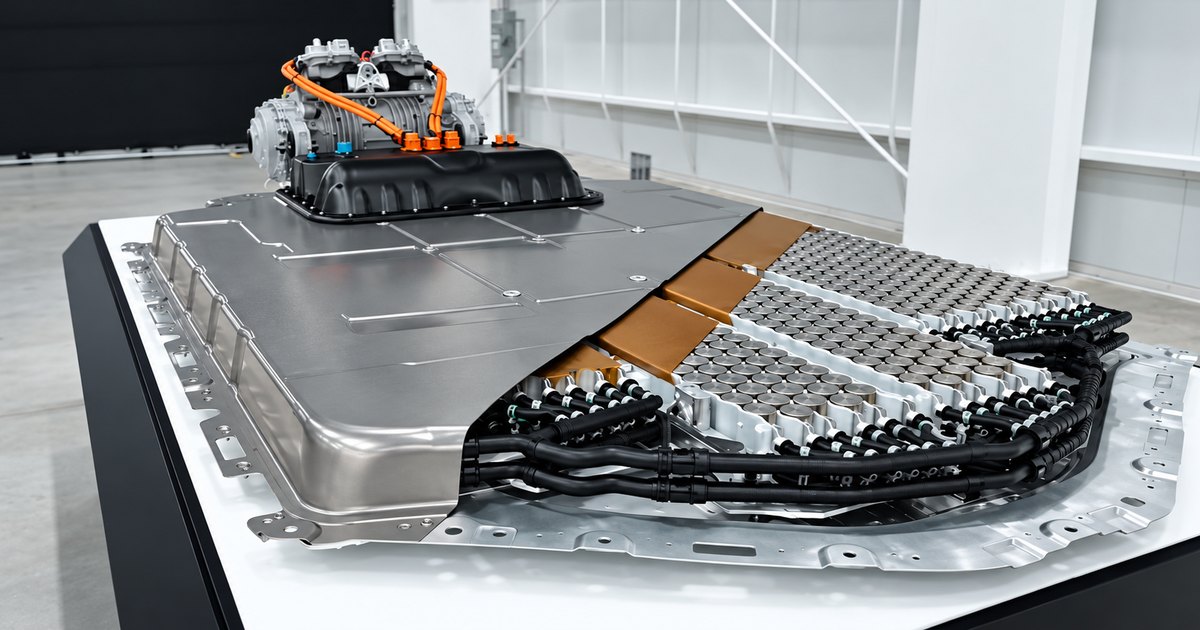
Compressed nitrogen, blown out through nozzles. Behind the seats sits a 200-litre carbon-overwrapped pressure tank. The version that flies adds another 400 litres, 600 litres in total, filled with nitrogen at up to 10,000 psi, roughly 680 times normal air pressure. Open a valve and the gas rushes out of a nozzle; the gas goes one way and the car goes the other. Nothing burns. Moravy says Tesla chose nitrogen because it did not want to put fuel in a car.
This is a cold gas thruster, an old piece of space technology. Satellites use it for small corrections, NASA's Manned Maneuvering Unit let astronauts fly free on nitrogen jets, and SpaceX uses cold gas thrusters to help steer Falcon 9 boosters back to Earth. On the Roadster, nozzles sit at the rear, in each corner and at the front for turning; reports put the total at about ten. A satellite thruster pushes with a few newtons, however, and a car needs vastly more.
How much push does it take to lift a car?
Moravy says the system makes more than 80 kN, over three times the car's weight. He expects the Roadster to weigh just under 1,700 kg, but for his math he used a deliberately high 2,500 kg, gas and thrusters included. To hover, the thrusters must push up as hard as gravity pulls down: about 24.5 kN for 2,500 kg. Over 80 kN is more than three times that.
That spare force is the point. It lets the car climb, slow its own fall and, in Moravy's words, still have "spare air to flip". British motoring journalist Tom Ford had written that "the physics are off" and that a car could not brake and rotate in the air like that. Moravy's reply on X was "simple math really". The force adds up. The real limit sits in the tank.
So how long can the Roadster stay in the air?
Seconds, not minutes. Tesla has not published a flight time, so here is our own rough estimate. The flying version reportedly carries about 250 kg of gas, and a nitrogen cold gas thruster blows it out at roughly 700 metres per second. Multiply the two and you get the total push the tank can deliver. Spent at full power, 80 kN, that is gone in about two seconds; just hovering a 2,500 kg car would last about seven. In reality it is less, because the pressure and the push drop as the tank empties. Motor1 describes the system as good for a blast of about five seconds.
Then comes the wait. "Current fill times are like two to six hours," Moravy said; Tesla hopes to get that under half an hour. So the Roadster does not fly like a plane or a drone. It jumps: a short, controlled burst, a landing and hours at a filling station most owners will not have. That makes the question of what buyers actually get a fair one.
What will Roadster buyers really get?
Three versions, and only the top one is built to fly.
- Performance: the road car, with the suction fans but no thrusters. Target: 0 to 60 mph in under 1.6 seconds.
- Thrust: adds rear thrusters that push the car forward, not up. A live run at the event did 0 to 60 mph in 0.81 seconds.
- Rocket: a single-seater with thrusters all around, invite only and not approved for public roads.
Reservations cost $50,000 for Performance and $250,000 for Thrust, and Musk says production starts in 2028. None of the flying has been tested independently, and Tesla's own Q3 update still lists the Roadster as "design development". Moravy's answer to the doubters: "we don't show things that we can't do in production." The Roadster does not defy gravity; it spends a tank of nitrogen in a few seconds to beat it, and then it has to wait.
Sources (4)
Images are illustrations; some are made with AI.