The Tesla Semi needed nine years to arrive
Promised for 2019 with 500 miles of range and sports-car acceleration, the Tesla Semi was delayed by battery shortages, proved its range in a 1,076-mile day and now heads for Europe. The story of the truck, and the one promise still open.
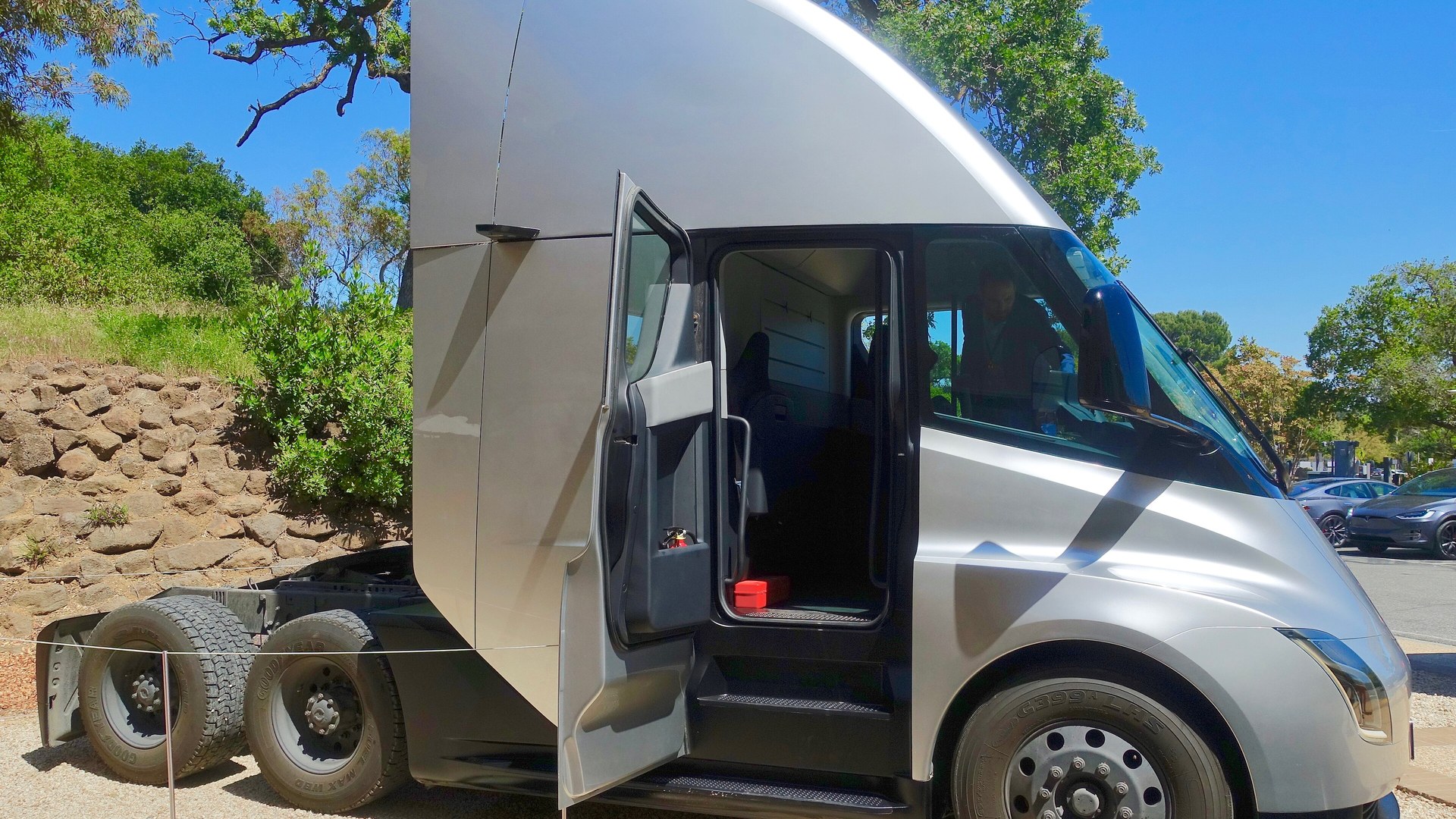
This week the Tesla Semi makes its first public appearance in France, at a trucking conference in the seaside town of Deauville. The European version has cameras instead of side mirrors, no light bar on the nose and an estimated 550 km of range with a full 40-tonne load. But it was first shown on a stage in Hawthorne, California, in November 2017, with production promised for 2019. Tesla needed about nine years to get from that promise to a dedicated truck factory, and European customers still wait until 2027.
What did Tesla promise on that night in 2017?
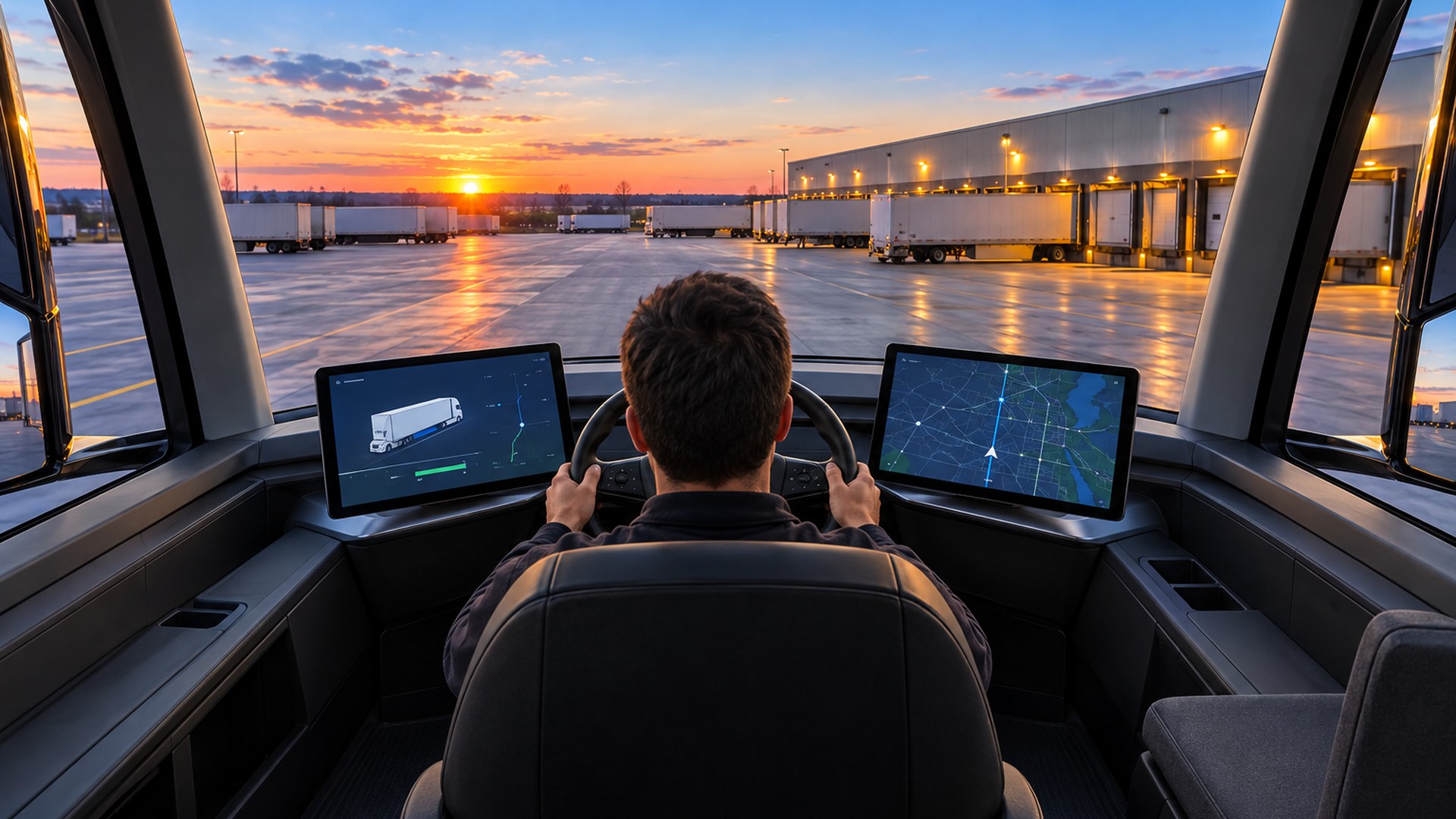
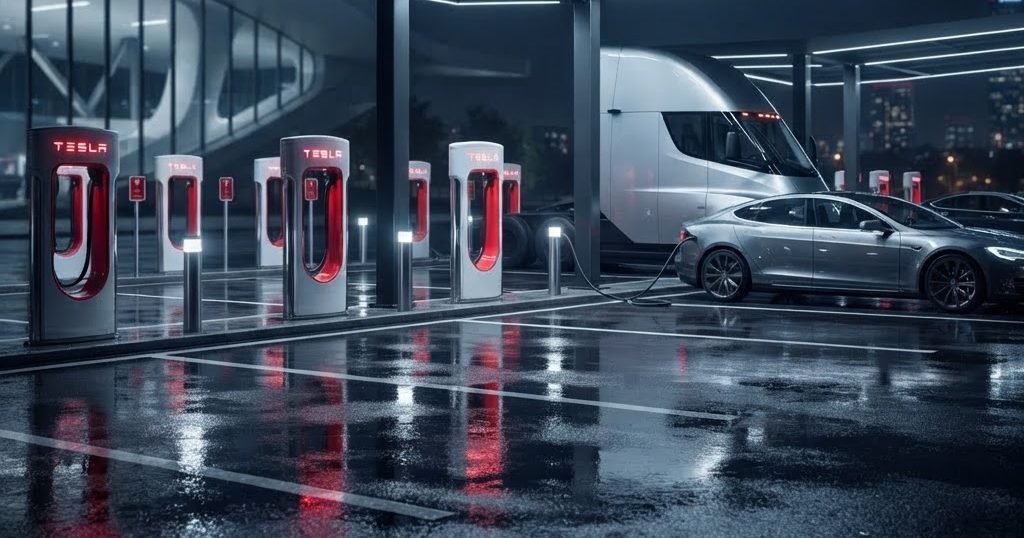
A heavy truck that would sprint like a sports car and haul like a diesel. Tesla rolled the prototype onto a stage in Hawthorne, home of its design studio and the SpaceX rocket factory, and Elon Musk listed the claims: up to 500 miles (800 km) on one charge at a full 80,000 pounds, 0 to 60 mph in about 5 seconds empty and about 20 seconds fully loaded, and 65 mph up a 5 percent grade, where most diesel trucks slow to about 45. The driver sat in a single seat in the middle of the cab, "like you're in a race car", Musk said. A new Megacharger would add about 400 miles in 30 minutes, Enhanced Autopilot would be standard and Musk promised the truck would not break down for a million miles. Reservations cost $5,000, with planned prices of $150,000 and $180,000.
Many people in trucking did not believe the range. A battery big enough for 500 miles with a full trailer would be enormous and heavy, and Tesla did not yet have the cells to spare.
So why did 2019 become 2022?
Because Tesla did not have enough batteries for both its cars and its trucks. A long-range Semi carries a pack of about 822 kWh, roughly ten times the battery of a long-range Model 3. In April 2020 Tesla moved the start to 2021, citing production delays and the pandemic. In July 2021 it moved again, to 2022, blaming the global chip shortage and the limited supply of its new 4680 cells. In between, Musk wrote to staff in May 2020 that it was "time to go all out" on volume production. Customers waited.
When the first trucks finally arrived, in December 2022, a few deliveries did not yet prove the claims from the stage.
Did the Semi really keep its 500-mile promise?
In tests, yes. On November 27, 2022, Musk posted that the Tesla team had just completed a 500-mile drive with a Semi weighing 81,000 pounds. Four days later, at Giga Nevada, PepsiCo received the first production trucks out of an order of 100. The best test came in September 2023, in Run on Less, a public electric-truck trial by the North American Council for Freight Efficiency. A PepsiCo Semi from Sacramento drove 1,076 miles in a single day. It left just after midnight with a 95 percent charge, covered about 372 miles before its first stop and finished its last stretch seconds before midnight. Charging took only about one tenth of the day.
The truck worked. The trouble was that a small fleet at a few customers is a showcase, not a business.
How did a pilot truck become a factory?
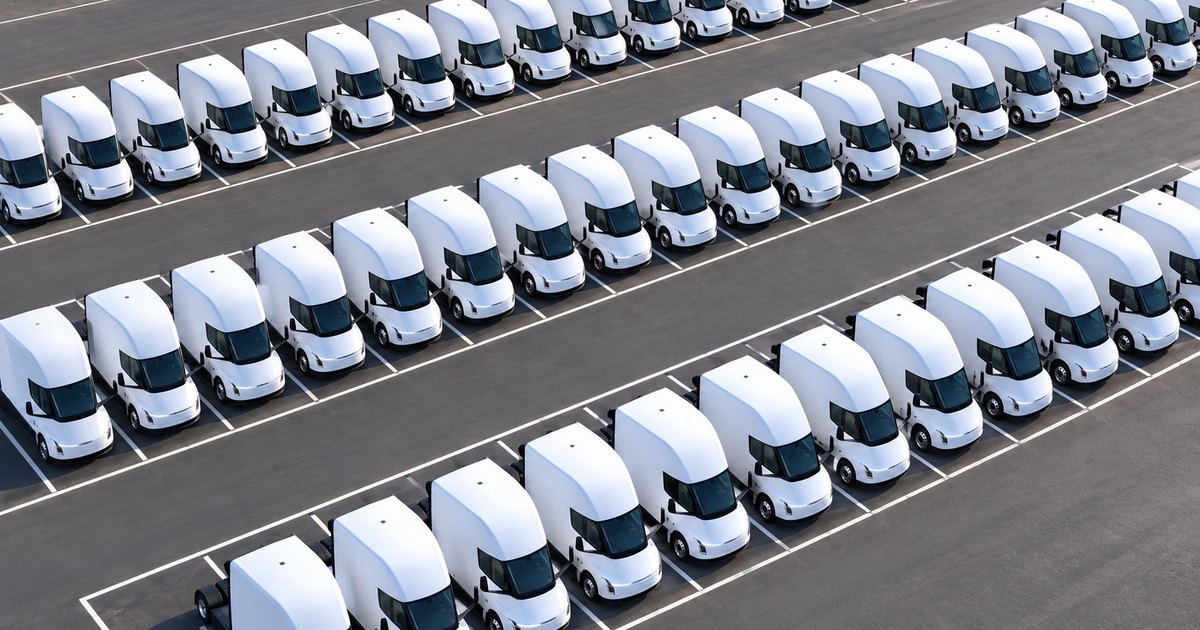
Tesla built a separate Semi plant next to Gigafactory Nevada. Volume production started there in 2026, and in September Tesla celebrated the opening of the plant, which is designed for up to 50,000 trucks a year, with deliveries to its first series customers. Reported prices are well above the $150,000 of 2017. Tesla still has to show it can fill the factory, and Tesla has told investors the Semi will stay a very small share of its vehicles for now.
The next test is Europe, where trucks are built to different rules and the rivals are already on the road.
What changes for the European Semi?
Shorter range on paper, a different face and cameras instead of mirrors. Tesla showed the European version in September 2026, ahead of the IAA Transportation show in Hannover. Its estimated 550 km assumes a 40-tonne combination, heavier than the American test load. It charges at up to 800 kW and can add about 60 percent in 30 minutes, about 330 km during a typical rest stop. Demonstrations with fleets are planned for the first half of 2027, deliveries before the end of 2027. European truck makers such as Mercedes-Benz, MAN and Volvo already sell electric heavy trucks, so Tesla arrives as a challenger, not a pioneer.
There is one more promise from 2017 that has not been kept: the self-driving truck.
So is the Semi the start of trucks that drive themselves?
Not yet: today a person drives every Tesla Semi. The 2017 truck came with Enhanced Autopilot and talk of trucks driving in convoys, but at the 2022 delivery event Tesla did not mention Autopilot at all. On the earnings call in July 2026, Musk said Tesla expects to get self-driving working on the Semi "probably around the end of this year or early next year", while the cars and the Cybercab come first. That is a statement, not a fact; his self-driving deadlines have often slipped. Other companies, such as Aurora in Texas, already haul freight with no driver on board.
That is why the Semi is such a good Tesla story. The date was wrong by years, but the hardest promise, 500 miles with a full load, turned out to be real. A truck that once looked like a stage show now rolls out of its own factory and heads for Europe. Whether it ever drives itself is the next chapter.
Sources (5)
- Overdrive: Tesla unveils all-electric, semi-autonomous big rig with re-imagined truck design
- Engadget: Tesla finally delivers its first production Semi
- InsideEVs: Tesla Semi logs over 1,000 miles on a single day in independent test
- Drive Tesla Canada: Tesla unveils European Semi with cameras for side mirrors, deliveries start next year
- Electrek: Musk says Tesla Semi self-driving within a year
Photos: Steve Jurvetson from Menlo Park, USA, CC BY 2.0, Wikimedia Commons; Steve Jurvetson from Menlo Park, USA, CC BY 2.0, Wikimedia Commons. Other images are illustrations; some are made with AI.