Launch damage made SpaceX skip the booster catch
On Flight 6 a Super Heavy booster was minutes from the second tower catch ever when the launch itself damaged the tower. Why SpaceX sent the booster into the sea instead, and how that caution paid off.
On November 19, 2024, a Super Heavy booster was minutes away from the second tower catch in history, and the tower it was flying back to could no longer be trusted. The launch itself had damaged it. Booster 13 was on its way, the arms were open, and the whole world was watching. SpaceX now had a few seconds to choose between a spectacular catch and a 70-metre rocket that might hit the one tower its whole programme depended on.
Why did this second catch matter so much?
Because one catch can be luck, and two would start to look like a method. Five weeks earlier, on October 13, 2024, Booster 12 had come home on Flight 5 and slid into the tower's two giant arms, nicknamed the chopsticks. Nobody had ever caught a rocket like that before. Super Heavy has no landing legs at all, so the plan for a fully reusable Starship only works if those arms can catch it again and again.
Flight 6 was supposed to show exactly that. It drew a crowd: Donald Trump, then president-elect, watched the launch at Starbase together with Elon Musk. Booster 13 and Ship 31 lifted off at about 4 p.m. local time. The booster burned for about two and a half minutes, let the ship go and turned back towards Texas. Then the problem on the ground came to light.
So what went wrong at the tower?
The rocket's own liftoff had damaged the tower that was supposed to catch it. SpaceX's flight summary said that "automated health checks of critical hardware on the launch and catch tower triggered an abort of the catch attempt." In January 2025, before the next flight, SpaceX added that sensors on the chopsticks had been damaged at launch. Musk gave the short version a day after the flight: the team had "lost comms to the launch tower computer."
Observers on the Everyday Astronaut webcast also spotted a damaged communications and lightning mast on the tower, most likely hit during liftoff. That is the price of launching the world's most powerful rocket right next to the structure that has to catch it: 33 engines blast that tower every time. The booster was on course. The tower could no longer tell anyone whether it was safe to catch it.
Why not just try the catch anyway?
Because a failed catch could destroy far more than one booster. Musk wrote that the catch "would probably still have worked, but we weren't sure, so erred on the side of caution." The reasoning is simple once you look at what stands at the pad. A booster that hits the tower could wreck the arms, the launch mount and the tank farm next to it, the only place where SpaceX could launch a full Starship at the time. A lost booster costs one rocket. A lost tower stops every flight for months.
SpaceX's commentator Kate Tice had said it before launch: a catch is never guaranteed, and the safety of the teams, the public and the pad comes first. "We are accepting no compromises in any of those areas," she said. So the computers made the call that the arms could not, and Booster 13 needed somewhere else to go.
What happened to Booster 13?
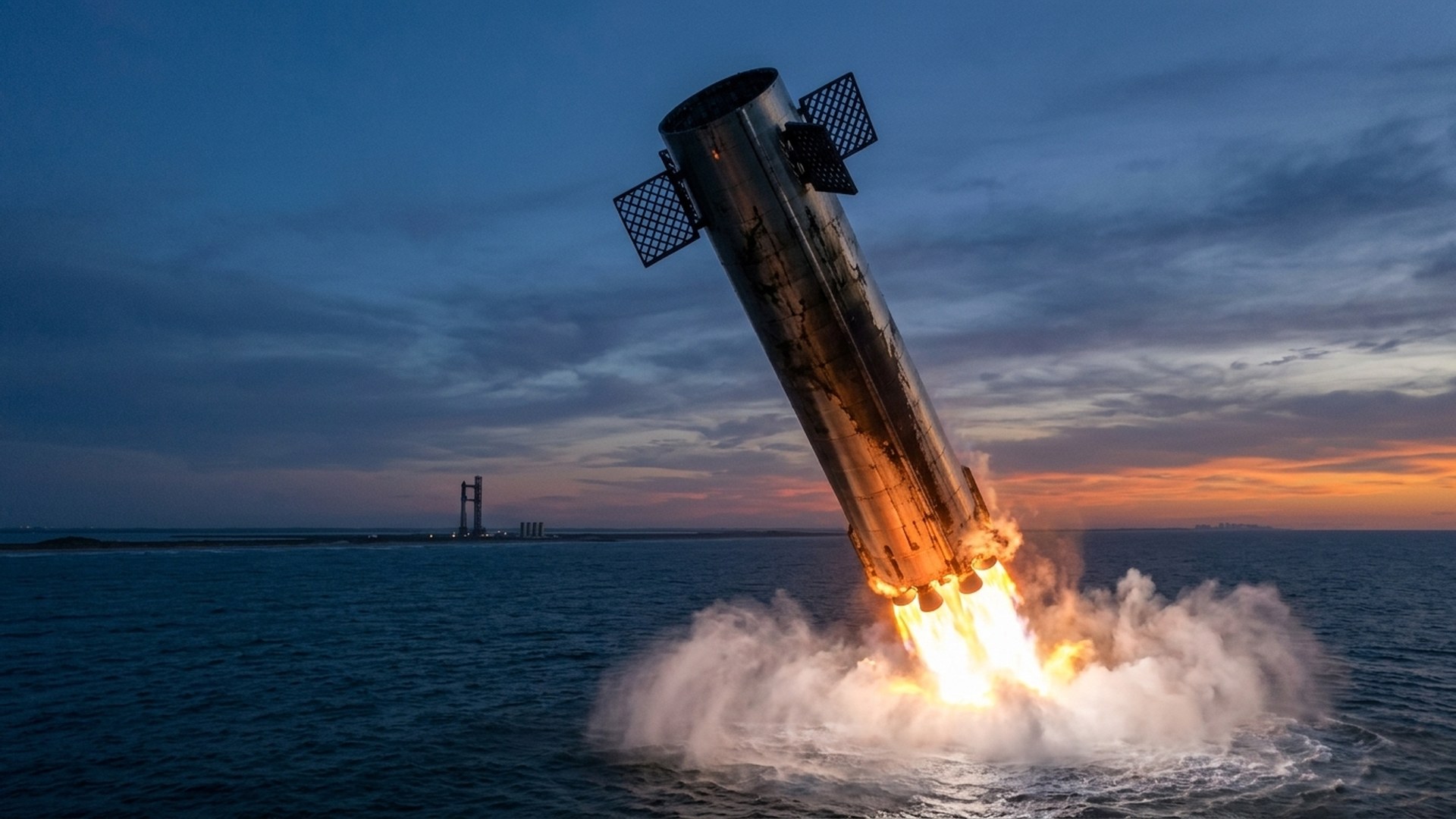
It flew a pre-planned escape route into the Gulf of Mexico. Instead of heading for the tower, the booster steered offshore, lit its engines for a landing burn and came down softly on the water, as Flight 4's booster had done that June. It did not survive long: after it tipped over, its tanks broke up in the water. Those are the explosions viewers still ask about when they watch replays.
The rest of the flight went well. Ship 31 relit one of its Raptor engines in space for the first time, survived re-entry and made a controlled splashdown in the Indian Ocean in daylight. It even carried Starship's first payload: a toy banana. Still, the headline of the day was the catch that did not happen, and the open question was whether the arms would get another chance.
So did the caution pay off?
Yes: the tower that was spared caught the next booster. On January 16, 2025, Flight 7's Booster 14 flew back and was caught by the same arms. Four months later, on May 27, 2025, that same booster launched again on Flight 9, with 29 of its 33 engines flying for the second time. It was the first Super Heavy ever to be reused, which is the whole point of catching it.
The lesson of Flight 6 is now built into every catch. A booster is hardware that can be replaced; the tower is the bottleneck for everything that follows. SpaceX's latest attempt, Flight 15 on November 13, 2026, goes further still and aims to catch both halves of Starship with the tower arms. Every one of those attempts depends on the same rule that sent Booster 13 into the sea: when the tower is not sure, the rocket goes somewhere else.
Sources (4)
- Universe Today — Starship's Booster (and Donald Trump) Make a Splash With Sixth Flight Test
- SpacePolicyOnline — No Catch This Time, But IFT-6 Advances Starship Development
- Tesla Oracle — Elon Musk tells the reason behind the Flight 6 Starship booster catch abort
- Spaceflight Now — SpaceX launches first flight-proven Super Heavy booster
Images are illustrations; some are made with AI.