Google opens Gemini 4 Carbon
Google said on 10 November 2026 that Gemini 4 Carbon is available to developers, companies, scientists and consumers.
Google said on 10 November 2026 that Gemini 4 Carbon is available to developers, enterprises, scientists and consumers. The post is by Koray Kavukcuoglu. He calls Carbon the company’s strongest model for cyber work and for long-horizon agentic work. The introductory price is the same as Gemini 4 Argon: 2 dollars per million input tokens and 10 dollars per million output tokens until 30 November 2026. After that date the post lists 4 dollars and 20 dollars.
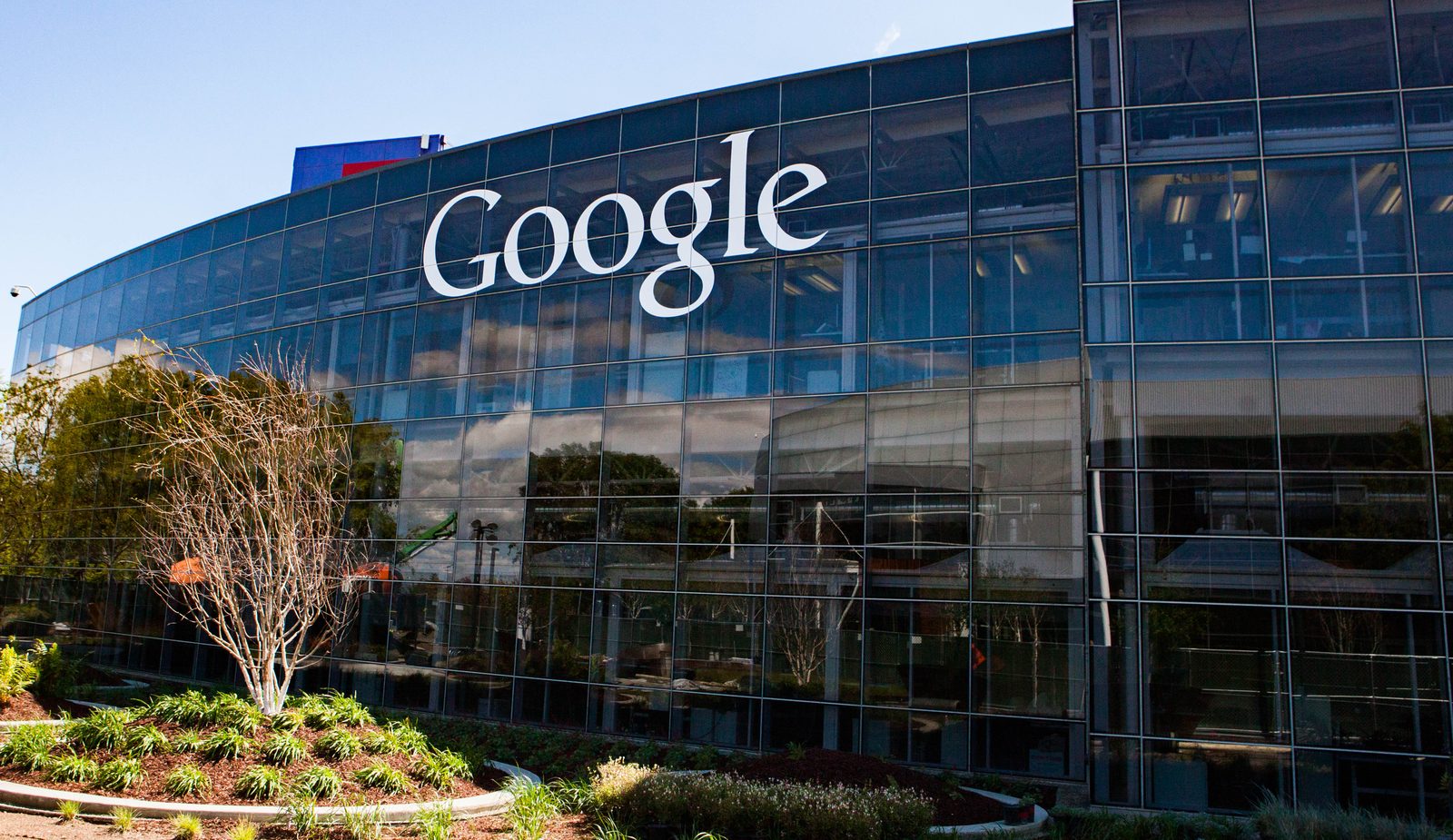
The picture is the Google logo on the glass of the company’s headquarters in Mountain View. It is not a photograph of the Carbon launch, and it is not a data centre.
What is actually on the price card?
Two rates, and a date when the lower one ends. A token is the unit Google uses to bill the API. The post does not translate those rates into the cost of a chat, a coding task or a month of use. It does say the opening rate matches Argon, the model Carbon is priced against inside Google’s own list. The change on 30 November is written as a schedule, not as a guess. Anyone comparing a bill from the first three weeks of the month with a bill from December is comparing two prices Google has already printed.
The same post says the API is in AI Studio and in Gemini for business. It says Carbon is rolling out to Google AI Ultra in Antigravity, to the Gemini app and to AI Mode. “Rolling out” is not the same sentence as “available today” for those consumer surfaces. Developers are the group the post puts on the API now.
Which outside tests does Google name?
Three, plus a cost line that is Google’s own reading. The post says Carbon ranks first on CursorBench 4.0, on Perplexity WANDR and on Zapier AutomationBench, at more than twice a lower cost per task than the next external model. It does not print the raw scores, the name of that next model, or the date the leaderboards were read. A first-place claim on a company blog is a claim. It becomes a result other people can check only when those boards are public and the run can be repeated.
Two other items sit on the same page. One is a Fairwind Program for cyber work. The other is a /swarm preview inside Google Antigravity. The post also says signal-protocol code proofs, done with AlphaProof Code and Carbon, took weeks rather than years. It does not publish the proof, the reviewers, or the earlier estimate those years refer to.
So where does that leave Grok?
On a different price card, with no shared test in either write-up. SpaceXSI’s Grok 4.7 page still calls that model its most capable for coding and knowledge work. It prices Grok 4.7 from 2 dollars per million input tokens and 6 dollars per million output tokens. A fast variant is listed at twice the speed and twice the price. The page says the model is in Cursor, in Grok Build and on the API. Google’s post does not mention Grok. SpaceXSI’s page does not mention Carbon. Putting the two on one ranking would invent a contest neither company published.
What a reader can compare, without leaving those two pages, is the sticker. Carbon’s opening input rate matches Grok 4.7’s opening input rate, at 2 dollars. Carbon’s opening output rate is 10 dollars, against 6 dollars on the Grok card. From 30 November the Carbon card moves to 4 and 20. That is a comparison of published prices. It is not a comparison of errors, speed or cyber skill.
What should we watch for next?
Whether the intro price and the first-place lines are still the ones on the page in December. The checks are narrow because the source is narrow:
- Price: 2 and 10 dollars are scheduled to end on 30 November 2026.
- Rank: first place is Google’s reading of three named benchmarks, without the scores.
- Access: the API is the part described as open now. The apps are described as a rollout.
Until someone outside Google repeats CursorBench, WANDR and AutomationBench on the same settings, Carbon is the company’s account of a release on 10 November, at a price that changes at the end of the month.
Sources (1)
Photos: Anthony Quintano, CC BY 2.0, via Wikimedia Commons. The Google logo on the company's headquarters in Mountain View. Not a photograph of the Gemini 4 Carbon launch. Other images are illustrations; some are made with AI.