Starlink's new satellites are raising their orbits
All 26 Starlink V3 satellites launched on Starship Flight 15 are healthy and have started climbing toward their working orbits, Starlink engineering lead Michael Nicolls said on 14 November 2026.
All 26 Starlink V3 satellites that Starship released on Flight 15 are healthy, and they have started the climb to their working orbits. Tesla North reported on 14 November 2026 that Michael Nicolls, who leads Starlink engineering, said the spacecraft had stayed in continuous contact since minutes after deployment on 13 November, and that they began raising themselves that morning. They are not carrying customer traffic yet.
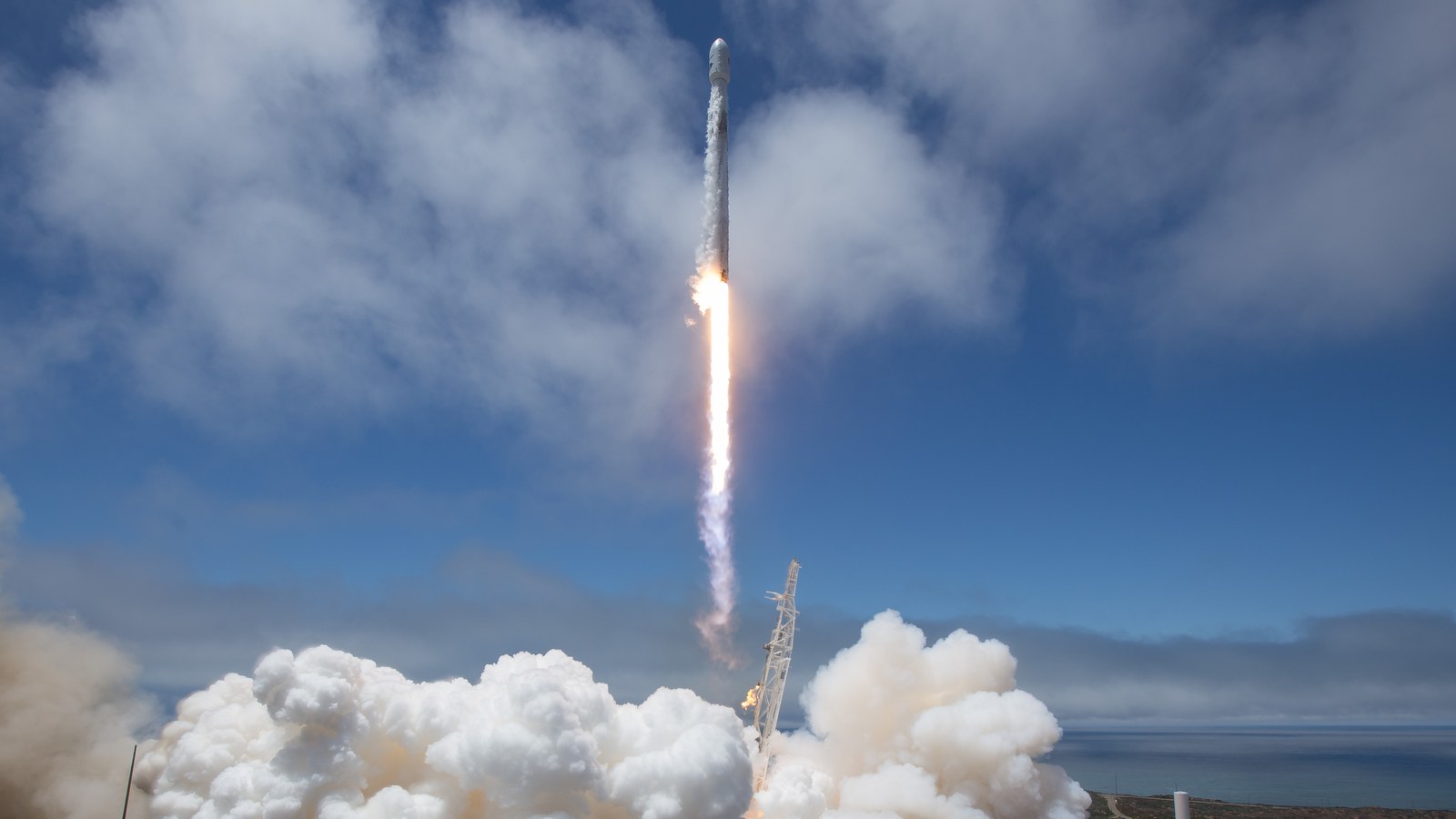
The picture is a NASA photograph of a Falcon 9 launching the GRACE-FO mission in 2018. It is not Starship Flight 15 and not one of the new V3 satellites.
How many V3 satellites are up?
Fifty-two, in two batches of 26. Tesla North says SpaceX has now delivered 52 production V3 satellites: 26 on Flight 14 in late September, and 26 on Flight 15. It also says Starlink’s own space-safety update treats the September batch as the first V3 deployment. The 14 November health note covers the new arrivals. Those 26 are still on the way to the altitudes where they will work.
So when could they serve customers?
SpaceX’s Flight 15 overview puts it at a few weeks, after checks. Tesla North quotes that overview: the satellites could begin serving customers as soon as a few weeks after launch, once they have raised their orbits and finished on-orbit checks. A few weeks is a plan on a mission page. It is not a date when a dish in a yard will jump in speed.
The same report summarizes Starlink’s published V3 specifications. Each satellite is designed for 1 terabit per second of downlink and 160 gigabits per second of uplink, which Tesla North describes as roughly 10 times the downlink and 22 times the uplink of a V2 satellite. Those figures are the capacity of the satellite, shared across everyone it serves. They are not the speed of one home connection. V3 is also listed with 2,048 beams in each direction, against 192 downlink beams and 144 uplink beams on V2.
What should we watch for next?
Whether the 26 finish the climb and pass the checks. The open points are narrow:
- Orbits: Nicolls said the raising had begun. He did not say the satellites had arrived.
- Service: a few weeks is SpaceX’s own window, not a measured result.
- The fleet: 52 V3 satellites is the deployed total Tesla North reports. The older V2 fleet is still what most dishes use today.
Until Starlink says these 26 are in service, the news is a healthy batch on the way up.
Sources (1)
Photos: Bill Ingalls, NASA, public domain. A Falcon 9 launching the GRACE-FO mission in 2018. Not Starship Flight 15 and not a V3 satellite. Other images are illustrations; some are made with AI.