A household socket supplies about 1300 watts
Tesla's Gen 2 Mobile Connector manual rates the ordinary household adapter at 1.3 kW on a 120-volt socket. Electrek reported the same 1.3 kW ceiling.
An ordinary North American household socket, used with Tesla's Gen 2 Mobile Connector and the NEMA 5-15 adapter, supplies about 1.3 kW. Tesla's owner's manual for that connector, published 30 April 2019, lists the ordinary household adapter at 1.3 kW on a 120-volt socket. Electrek, on 16 April 2022, described the included household adapter as having a maximum output of 1.3 kW. That is the whole rate. It is not a slow setting of a fast charger. It is what that plug is allowed to draw. A night on a household socket therefore adds a small amount of energy, and a driver who needs a full battery by morning needs a different outlet.
What does 1.3 kW add overnight?
About 13 kWh in ten hours, because 1.3 times 10 is 13. That product is arithmetic from the manual's 1.3 kW figure, not a separate Tesla measurement of a particular car. Electrek's report of the same 1.3 kW ceiling is what makes the starting number a shared fact rather than a single document. Ten hours is a long parked night, and 13 kWh is still a modest slice of a modern traction battery. The manual does not convert the figure into miles, and this article will not invent a miles-per-hour claim. Electrek wrote that the included connector gave charging speeds between two and three miles of range per hour. That range is Electrek's wording alone, so it is not repeated here as a measured rate. The solid shared number is the power, 1.3 kW.
Which adapter is the household one?
The NEMA 5-15, the plug that fits a normal 120-volt socket. Tesla's manual says the Mobile Connector includes two adapters in the set it describes, one for a standard 120-volt household outlet and a second for a 240-volt outlet, and it says the connector detects the attached adapter and sets the current from that. Electrek's 1.3 kW sentence matches the household adapter the manual describes, not a higher-power plug. A different adapter would be a different rate, and this article does not import the manual's other rows, because Electrek does not restate them. Plugging the household adapter in and expecting a fast home charger is the mix-up both sources argue against. The manual points to a 240-volt outlet for more speed. Electrek points to a level 2 station. The shared ceiling on the ordinary socket stays 1.3 kW.
So what is the step up from that socket?
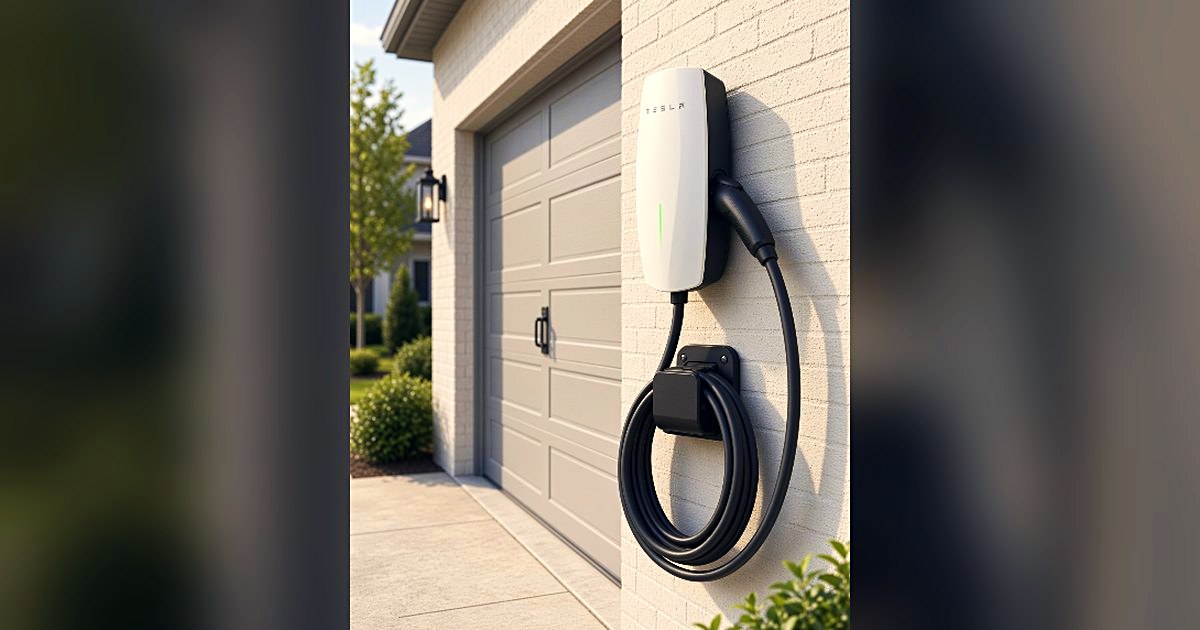
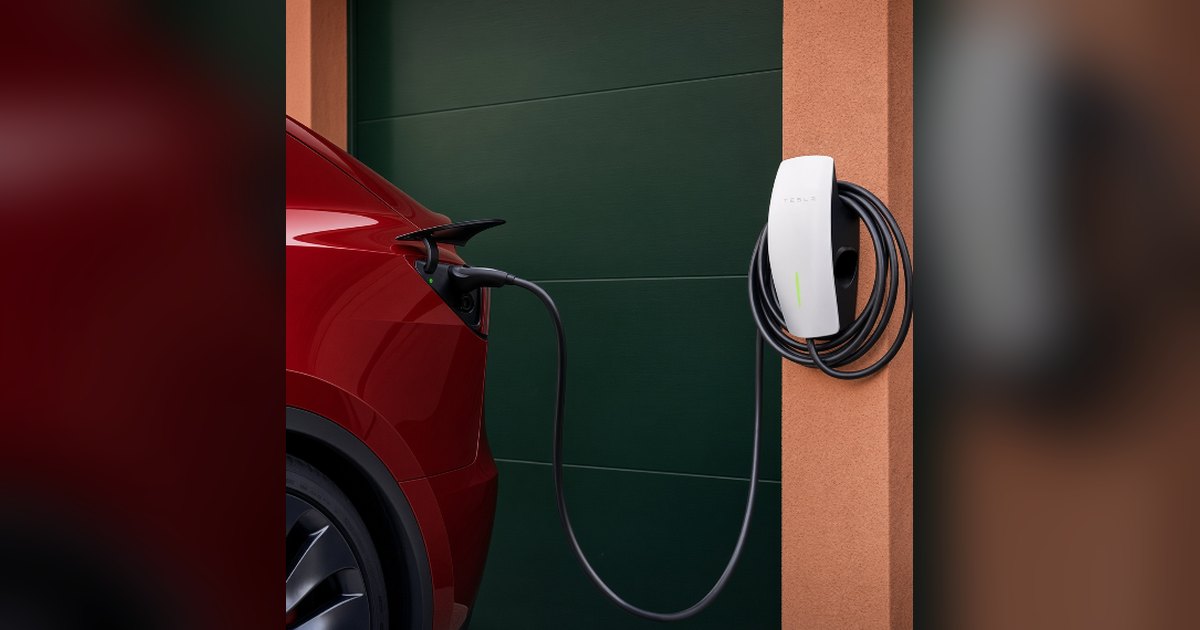
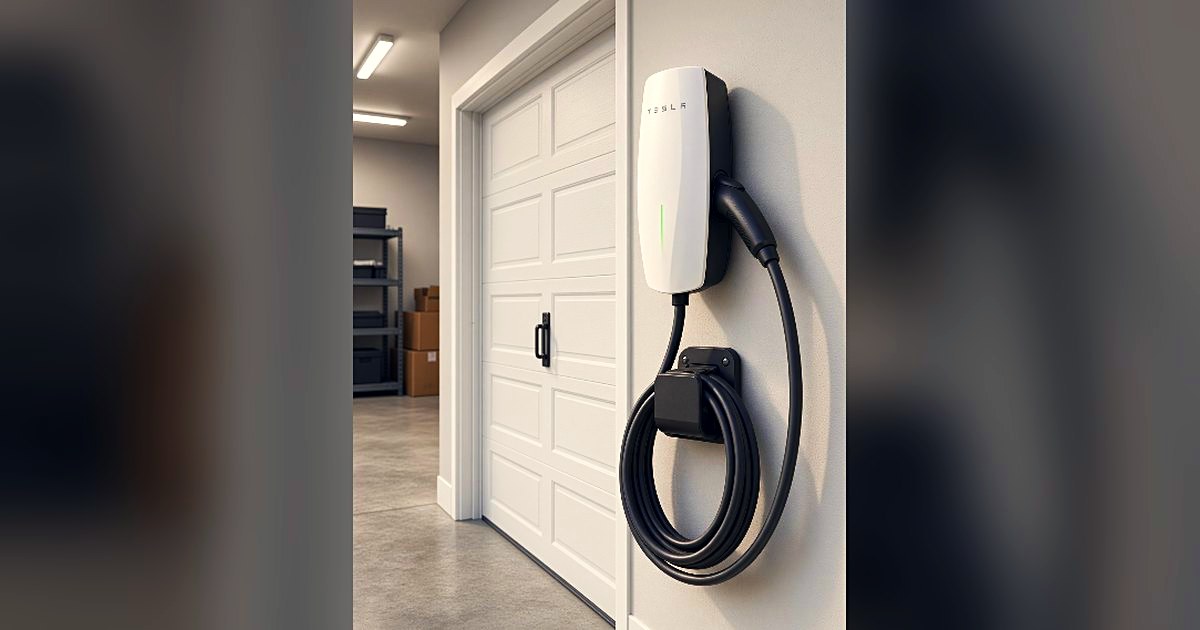
A higher-power home install, not a longer session on the same plug. Tesla's manual says a 240-volt outlet is the faster choice and that an electrician should install one where the car parks. Electrek, describing the household adapter's 1.3 kW ceiling, wrote that anything better means installing a level 2 charging station at home. The two sources agree on the direction. The household plug is the slow case, and a proper home charger is a different piece of hardware on a different circuit. They do not agree on a second kilowatt figure in the passages used here, so this article does not add one. Leaving the car on 1.3 kW for more hours multiplies the same small rate. It does not turn the socket into the level 2 station Electrek points to.
Which number is safe to repeat?
1.3 kW, because the manual and Electrek both state it. The manual ties that power to the ordinary household adapter. Electrek states the same maximum for the included connector. Other rows in the manual's adapter table, and the warnings printed next to them, appear in that document alone. They are not repeated by Electrek, so they are not used as shared facts here. A single manual can still be right. It cannot, on its own, put an extra number into an article that requires two sources. The household story that survives that rule is short. The plug tops out around 1.3 kW, and a driver who needs more has to change the outlet, not the clock.
When is the household socket the wrong tool?
Whenever the car needs more than a thin overnight top-up. At 1.3 kW, the ten-hour figure of about 13 kWh is the scale of the tool. Tesla's manual points drivers who want more toward a 240-volt outlet. Electrek's confirmation that the household adapter tops out at 1.3 kW is the check on that ceiling. A Wall Connector on a proper circuit is a different product, with its own breaker and its own maximum, and it is not what a 5-15 adapter can imitate. The household socket remains useful as a slow feed. It does not become a home charging setup by leaving the car plugged in longer. The energy per hour stays 1.3 kWh.
Affiliate disclosure: if you buy through a link on this page, TrendingTesla may earn a commission from Amazon.nl or AliExpress, at no extra cost to you. How this works.
Sources (2)
Images are illustrations; some are made with AI.