Tesla's wall charger also fits other cars
Tesla's Universal Wall Connector charges NACS cars and, with a built-in J1772 adapter, other electric cars. Its top output is 11.5 kW.
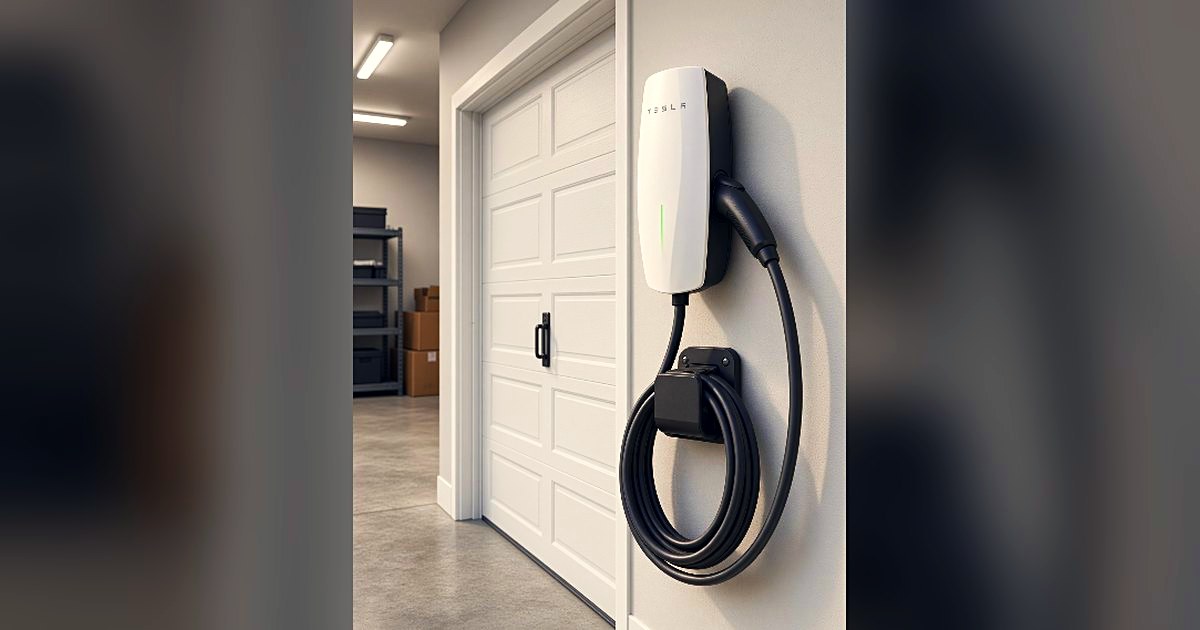
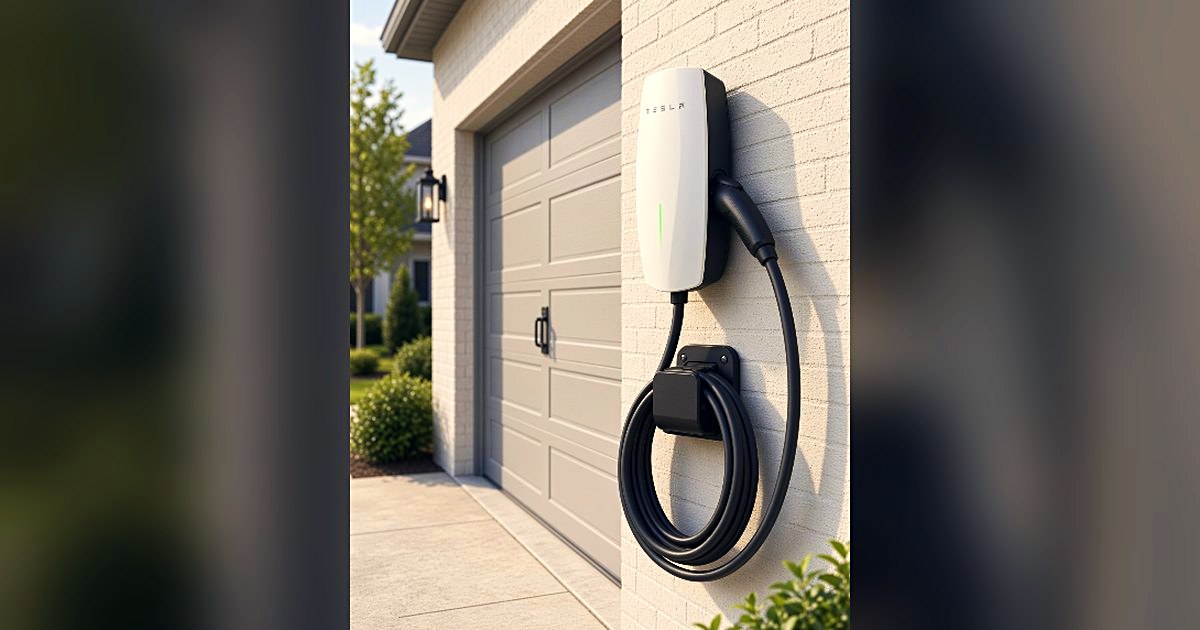
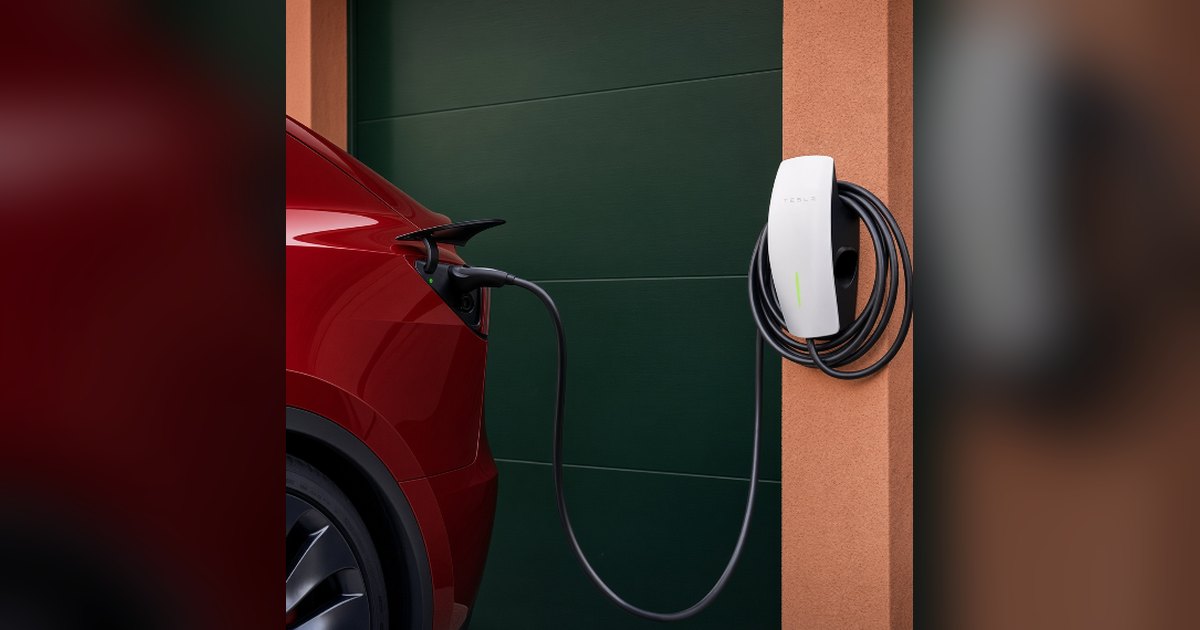
Tesla's Universal Wall Connector is a home charger for more than a Tesla. Electrek reported on 15 August 2023 that the unit looks like Tesla's ordinary wall charger and adds an integrated J1772 adapter, the plug used by many other electric cars in North America. InsideEVs, three days later, described the same built-in adapter and said a first install charged a Chevrolet Bolt, which uses J1772 rather than Tesla's NACS inlet. A household that parks two different electric cars can use one hardwired box. The open question is the circuit in the wall, because the charger's top rate is not what every panel can supply.
What does the adapter actually do?
It stays on the handle for a J1772 car and comes off for a NACS car. Electrek compared the idea to Tesla's Supercharger Magic Dock, moved down to home charging. InsideEVs said the adapter attaches to the NACS plug when a non-Tesla car needs it. Qmerit, reviewing the product on 22 October 2026, described the same two-position connector. None of those accounts says the box converts power to a fast DC charge. It is still an AC wall charger. A driver who expected Supercharger speed from a garage wall will not get it from this hardware.
So how much power can it deliver?
11.5 kW at 48 amps, and less when the breaker is smaller. Tesla's installation manual lists a maximum of 48 amps and 11.5 kW at 240 volts, on a 60-amp breaker. Electrek, InsideEVs and Qmerit each state that same 11.5 kW and 48-amp ceiling. Tesla's manual says the output can be set lower than that maximum. Qmerit lists the adjustable range as 12 to 48 amps, which is the same span the manual allows. The manual's intermediate kilowatt rows are not repeated by the other reports, so they are not listed here. The manual adds that some Tesla vehicles draw less than the charger allows, because the car's onboard charger sets a ceiling of its own. A 48-amp setting on a panel that was not built for it is an electrician's problem, not a software toggle the driver should guess at.
What else is fixed on the hardware?
A 24-foot cable, Wi-Fi, and power sharing across up to six units. Tesla's specification page lists a cable of 24 feet, which is 7.3 metres, on a 200 to 240 volt single-phase supply, with a current range of 12 to 48 amps. Electrek and InsideEVs both reported the 24-foot cable at launch. Electrek also listed Wi-Fi, over-the-air updates, and power sharing with up to six Wall Connectors. Qmerit lists Wi-Fi and power sharing for up to six units as well, and it rates the enclosure for indoor or outdoor use. Sharing power across several boxes only helps if the electrician sizes the supply for the group. Six nameplates do not create six times 11.5 kW out of a small panel.
What did it cost when Tesla launched it?
595 dollars, with deliveries that were due to start in October 2023. Electrek and InsideEVs both reported that launch price and that October start. Electrek also said the ordinary NACS-only Wall Connector was cheaper, and it put a four-year warranty on residential use. Qmerit, writing in October 2026, lists a four-year warranty and a price of 600 dollars. This article does not treat 595 and 600 as the same figure. The 595 dollars is the 2023 launch price in two reports. The 600 dollars is one later review. A buyer should read the current Tesla listing rather than either old number. The product's job did not change with that later tag. It is still one AC charger with two plug faces.
What should an owner check before buying one?
The plug on each car, and the breaker the electrician can actually fit. InsideEVs and Electrek agree the point of the universal unit is a garage with mixed inlets. Tesla's manual agrees the top rate needs a 60-amp breaker and that a smaller breaker means a lower programmed output. Qmerit lists the unit as hardwired only, which matches a charger that is commissioned to a breaker rather than plugged into a socket. The remaining limit sits in the car. Tesla's own note says some vehicles draw less than 48 amps, so a second electric car in the same garage may charge more slowly than the box allows even when the panel is large enough.
Affiliate disclosure: if you buy through a link on this page, TrendingTesla may earn a commission from Amazon.nl or AliExpress, at no extra cost to you. How this works.
Sources (5)
- Electrek — Tesla launches the Universal Wall Connector, 15 August 2023
- InsideEVs — First use of the Tesla Universal Wall Connector, 18 August 2023
- Tesla — Universal Wall Connector installation manual, product specifications
- Tesla — Universal Wall Connector circuit breaker and maximum output
- Qmerit — Tesla Universal Wall Connector review, 22 October 2026
Images are illustrations; some are made with AI.