SpaceX relaunched from one pad after 32 hours
SpaceX flew two Falcon 9 rockets from SLC-4E at Vandenberg 32 hours, 3 minutes and 21 seconds apart, its fastest turnaround from one pad. NROL-136 lifted off on 22 November 2026 after USSF-317 on 20 November.
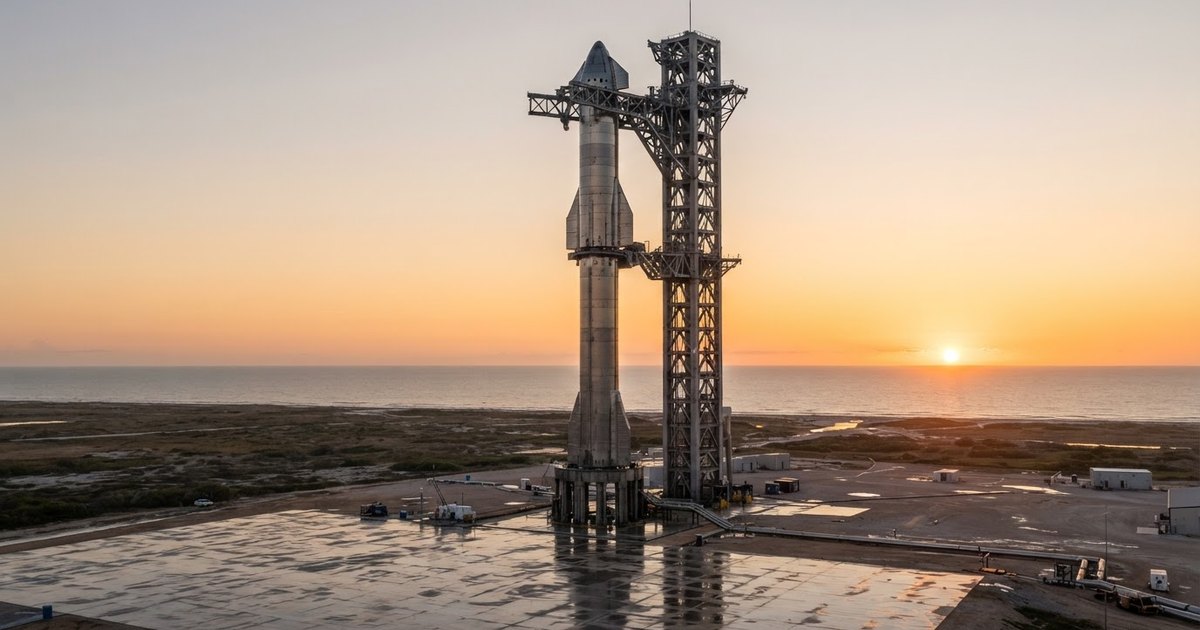
SpaceX launched two Falcon 9 rockets from the same pad 32 hours, 3 minutes and 21 seconds apart. That gap, between USSF-317 and NROL-136 at SLC-4E on Vandenberg Space Force Base in California, is the company's fastest turnaround between launches from one pad. USSF-317 left on Friday 20 November 2026 at 8:20 p.m. Pacific time. NROL-136 left the same pad on Sunday 22 November 2026 at 4:23 a.m. Pacific time, 12:23 UTC, for the US National Reconnaissance Office. The photographs on this page are earlier Falcon 9 rockets at Vandenberg, plus illustrations of a Falcon 9 on a pad and of a booster coming down. They are not photographs of these two missions. The clock is the record. Which booster flew, and where it landed, is a separate fact.
How long was the gap between the two launches?
32 hours, 3 minutes and 21 seconds, from one liftoff on SLC-4E to the next. Space.com reports that figure in a quote from Kiko Dontchev, SpaceX's vice president of launch. Spaceflight Now and Next Spaceflight report the same gap. The three accounts call it SpaceX's fastest turnaround between launches from one pad. Both rockets used SLC-4E at Vandenberg. The first launch was Friday night. The second was early Sunday. A new interval only means something next to the record it replaced.
So what record did this pair beat?
The previous company record was 45 hours, from Pad 40 at Cape Canaveral. Space.com and Spaceflight Now both place that older mark on SLC-40 in Florida. Vandenberg had a slower number of its own. Spaceflight Now times the previous SLC-4E turnaround, in June 2026, at 55 hours, 48 minutes and 21 seconds. This pair beat that SLC-4E mark by more than 23 hours. Next Spaceflight puts the improvement at about 23 hours. Two launches from one pad can still be two different rockets.
Did the same booster fly both missions?
No. The missions used different boosters. The USSF-317 booster was on its 11th flight and landed on the droneship Of Course I Still Love You. SpaceX's launch page for USSF-317 and Tesla North both give that flight count and that ship. The NROL-136 booster was on its 14th flight and landed at Landing Zone 4 at Vandenberg about 7.5 minutes after liftoff. SpaceX's page for NROL-136, Space.com and Tesla North report the 14th flight and the landing at LZ-4. A reused pad and a reused booster are two different kinds of reuse. The launch team has already named the clock it wants next.
So what did Kiko Dontchev say is next?
He said the team arrived with several hours of margin, and that the next goal is a 24-hour turn. On X on 22 November, Dontchev wrote that the team "got there with several hours of margin. Next goal… the 24 hr turn!" Space.com quotes that post. Spaceflight Now covers the same record. A goal he names is his statement about what comes next. It is not a 24-hour turn that has already happened. The second flight in this pair still carried a payload, and almost none of that payload is public.
What did NROL-136 carry?
A satellite for the National Reconnaissance Office's proliferated architecture in low Earth orbit, the fourth such launch of the year. Spaceflight Now and Space.com both place NROL-136 in that constellation. The payload details are classified. The public record stops at the customer, the orbit and the count for the year. This account adds no spacecraft count, no payload name and no mass. The first flight of the pair is still a time, a pad and a landing.
When did USSF-317 leave the pad?
Friday 20 November 2026 at 8:20 p.m. Pacific time, from SLC-4E, with the booster on its 11th flight landing on Of Course I Still Love You. SpaceX's launch page and Tesla North both give that evening, that pad in California and that droneship. NROL-136 then used the same pad on Sunday at 4:23 a.m. Pacific time. The boosters were not the same vehicle. The gap of 32 hours, 3 minutes and 21 seconds is the pad record. The 24-hour turn Dontchev named is still a goal he stated.
Sources (6)
Photos: SpaceX, CC0, Wikimedia Commons; U.S. Air Force photo by Airman 1st Class Ian Dudley, Public domain, Wikimedia Commons. Other images are illustrations; some are made with AI.