Neuralink enrolled 21 people in its trials
On 28 January 2026 Neuralink said 21 people were enrolled in its trials worldwide. Reuters reported the same figure the same day. The company also said it had no serious device-related adverse events.
Neuralink said on 28 January 2026 that 21 people were enrolled in its clinical trials worldwide. The company's own update, titled Two Years of Telepathy, calls them a growing crew of 21 Neuralnauts enrolled in trials. Reuters reported the same day that Neuralink said it now had 21 total participants enrolled in trials worldwide, as the company marked two years since it officially began testing on humans. The number is an enrollment figure published by the company and repeated by Reuters. It is not a later census, and it is not a count of devices sold.
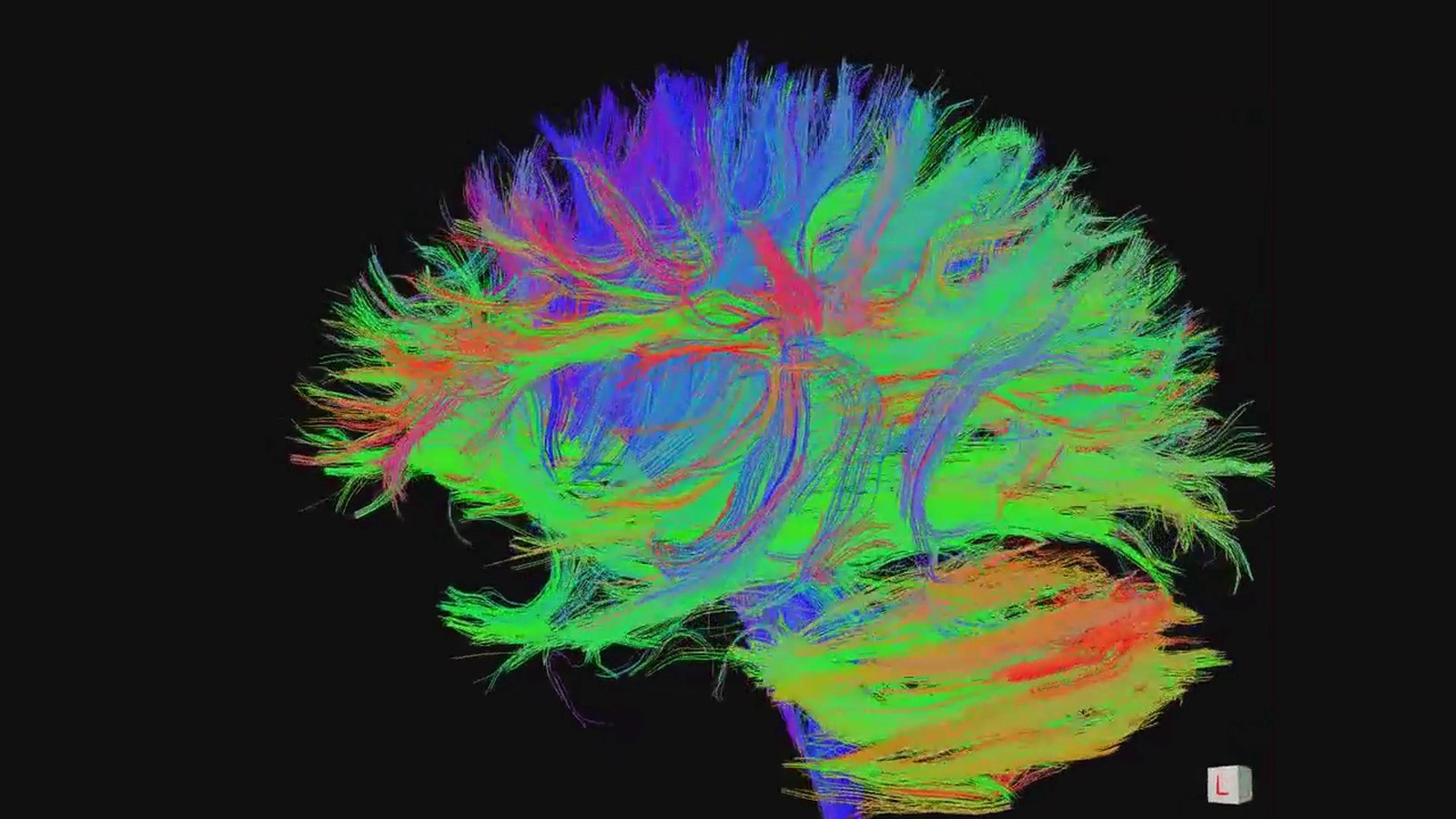
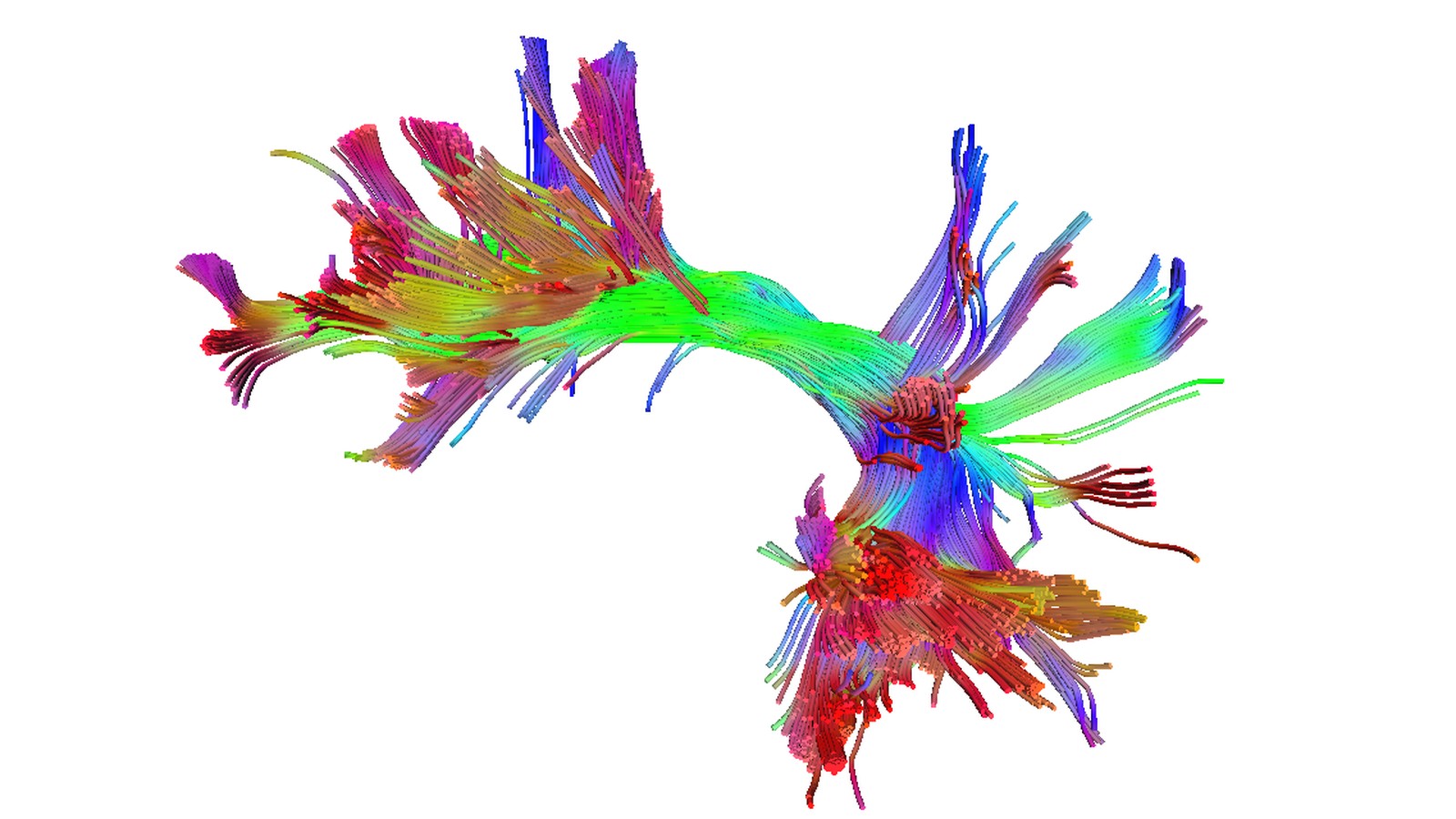
The pictures are diffusion images of nerve fibers in a human brain, from research shared under Creative Commons licences. They are not scans of anyone in the trial.
What does enrolled mean here?
People in the trials, in the company's wording and in Reuters' wording. Neuralink's page says 21 Neuralnauts are enrolled in trials worldwide. Reuters says 21 total participants are enrolled in trials worldwide. Both texts use enrolled, and both place the group inside trials rather than in a product on sale. Reuters adds that the company was completing two years since it officially began testing on humans, and that the trials began in 2024. The company's headline, Two Years of Telepathy, is the same span counted back from January 2026. A reader can hold the 21 as the company's enrollment statement that day. Treating it as the number of implants in the world on a later date would add a claim these two texts do not make.
What is the trial trying to do?
Let someone with paralysis control a computer from neural signals. Neuralink's update says its first product, Telepathy, aims to let people with paralysis control computers, phones and robotic limbs with their thoughts. It says Telepathy records activity from brain regions tied to the muscles of the hands and arms and turns those signals into digital commands. Reuters describes the implant as designed to help people with conditions such as a spinal cord injury, and it says the first patient has used it to play video games, browse the internet, post on social media and move a cursor on a laptop. The shared core is the purpose. A person who cannot move in the ordinary way is the user the trial is built for, and the output the reports describe is control of a computer, not a treatment that either text calls approved. The anatomical detail about hand and arm regions is the company's page. Reuters does not repeat that sentence, so it stays the company's description.
What did both texts say about harm?
The company said it had no serious device-related adverse events on its record. Neuralink's update says it aims to maintain its current record of zero serious device-related adverse events, while working with regulators and hospitals on later devices. Reuters reports that the company said it was working with regulatory bodies and hospital sites to deliver improved devices and to maintain that same record of zero serious device-related adverse events. The zero is the company's statement, printed by the company and reported by Reuters. It is not an independent audit printed in either document. A record the sponsor describes is still a sponsor's record. The two texts do not list the events they would have counted, and they do not name a regulator's sign-off that would turn the sentence into an approval.
What did Reuters add that the update's headline does not?
That the 21 were enrolled, and that human testing had officially begun in 2024. Reuters says the implant's first patient had used it for games, browsing, posting and a cursor. The company's page describes the aim of Telepathy and the participants as partners in the trials. Reuters also says the US Food and Drug Administration initially rejected Neuralink's application in 2022, and that trials began in 2024 after the company addressed safety concerns. That 2022 rejection is in the Reuters report. It is not a sentence in the passages of the company update used here, so this article attributes it to Reuters alone and does not treat it as a second-sourced finding. The double-sourced lines remain the enrollment of 21 and the company's statement of zero serious device-related adverse events. The FDA history can be read in Reuters. It is not confirmed on the company page this piece quotes.
What should a later count have to do?
Say whether it is counting enrollment, implants, or people still using the device. The 28 January 2026 figure is specific because both the company and Reuters call it enrollment in trials. A later headline that uses a different verb is a different measurement. This article does not extend 21 past that day. Neuralink's update and the Reuters report also do not print a list of names next to the number 21. Until a later company update and a second outlet describe the same later total in the same words, the public enrollment marker from that January day stays 21 people enrolled in the trials.
Sources (2)
Photos: jgmarcelino, CC BY 2.0, via Wikimedia Commons. Diffusion tractography of nerve fibers in a human brain, from a 3-tesla MRI. Not a scan of a trial participant; Fang-Cheng Yeh, Timothy D. Verstynen, Yibao Wang, Juan C. Fernández-Miranda and Wen-Yih Isaac Tseng, PLoS ONE (2013), CC BY 2.5, via Wikimedia Commons. Tractography panel of the arcuate fasciculus. Not a scan of a trial participant. Other images are illustrations; some are made with AI.