One Neuralink user reached 75 words a minute
On 28 October 2026 Neuralink said one participant with ALS reached 75 words a minute in the first week, at a 5.8 percent word error rate. The figure is the company’s own report, not a paper.
Neuralink said on 28 October 2026 that one participant with ALS reached 75 words a minute in the first week of its speech work. Tesla North and Inside BCI both quote the same post on X. The wording they report is that Neuralink is enabling speech to text and voice at conversational rates in participants with ALS, and that one participant achieved 75 words per minute at a 5.8 percent word error rate on a 125,000-word vocabulary in that first week. Neither report says Neuralink named the person. Inside BCI, writing on 29 October, also said the company had not said how many people contributed, had not described the task, and had not published a paper or a blog post with the result.
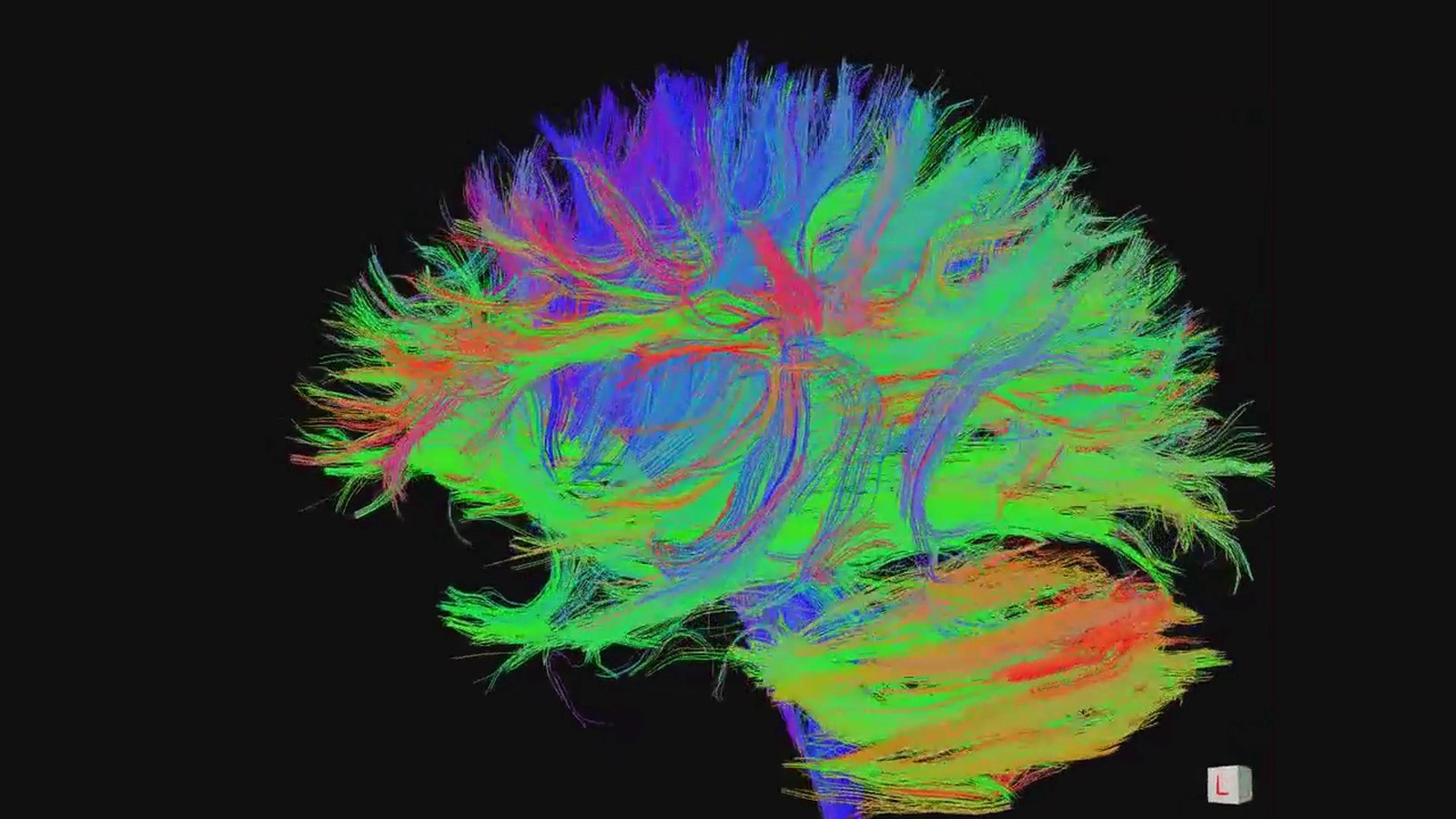
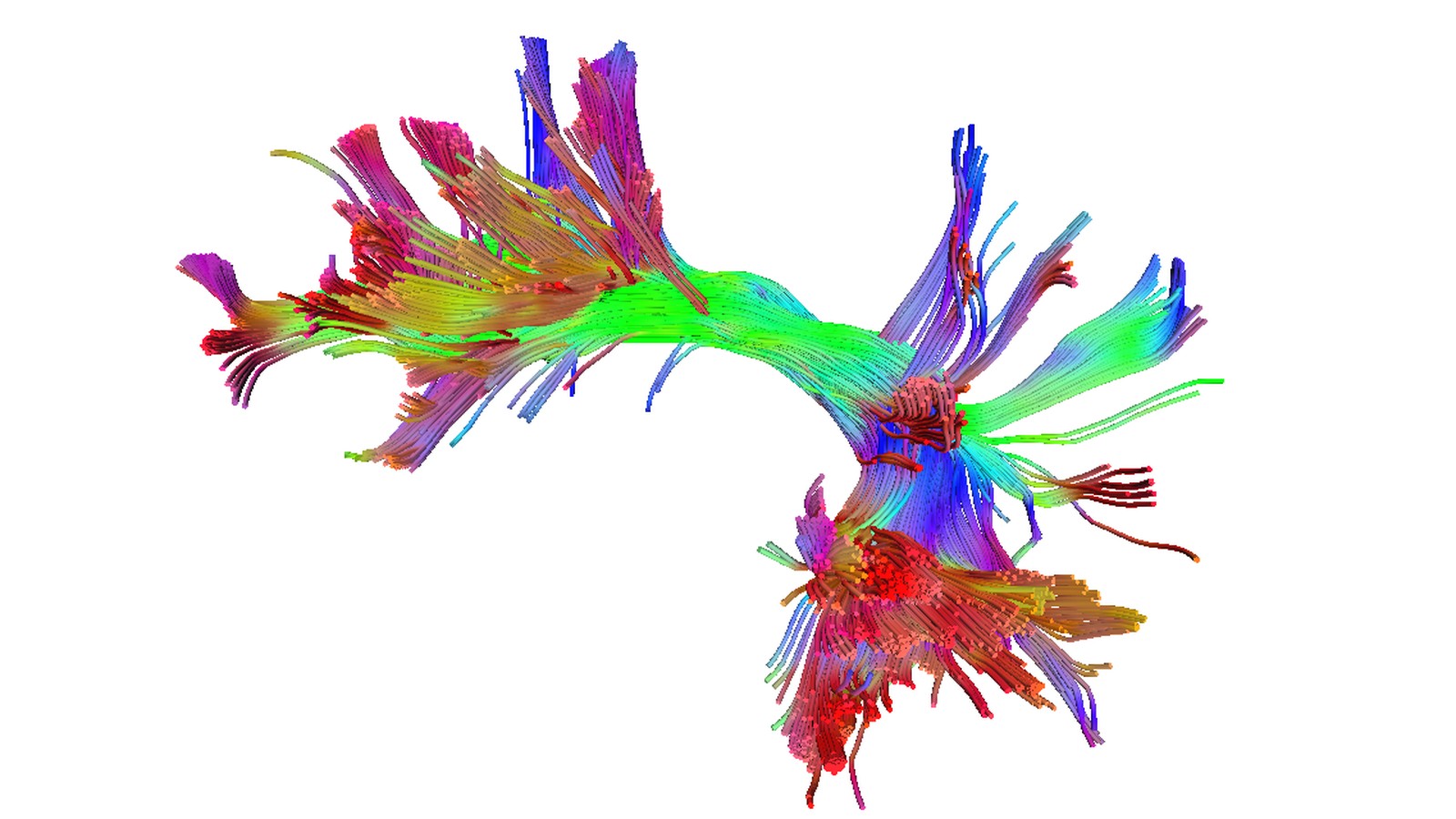
The picture is a diffusion tractography of the arcuate fasciculus, a pathway the brain uses for language, from research by Fang-Cheng Yeh and colleagues. It is not a scan of the participant Neuralink described.
What is actually known about the 75?
It is one company-reported result, for one person, in week one. Word error rate is the share of words the system gets wrong, so 5.8 percent is the figure Neuralink attached to that test. The posts that quote Neuralink do not say whether 75 words a minute was a peak or an average, whether the sentences were prompted, or whether the rate held after the first week. Treating it as a typical result would add claims the company did not make in the text those outlets reproduced.
So how does that sit next to Neuralink’s speech page?
The page gives a median, and the median is lower. On its speech restoration page Neuralink says its median participant decodes speech at roughly 50 words a minute, about six times faster than typing with an eye-gaze system. The same page puts approximate rates at about 8 words a minute for eye gaze, about 50 for the speech implant, and about 150 for natural conversation, and it says individual results vary. It also says speed and accuracy improve as the decoder learns a person’s patterns over the first several weeks. The 75-word figure and the 50-word median answer different questions. One is a single first-week report. The other is what Neuralink says is typical on the page.
The page describes the method in plain terms. The implant reads the speech motor cortex. Participants attempt or imagine speaking. A decoder turns those patterns into words, shown as text on a phone or computer, and the words can be spoken in a voice rebuilt from earlier recordings of that person. Neuralink says decoded text appears in its iOS app.
Where does the NEALS meeting fit?
Neuralink points to a meeting abstract, and the abstract list does not contain the number 75. On 23 October Neuralink’s updates page listed a research item titled “Real-Time Communication Restoration in ALS with a Fully Implanted Speech Brain-Computer Interface,” under Muscle & Nerve. The listing says early speech restoration data were shared at the 25th annual meeting of the Northeast ALS Consortium. The meeting’s poster list includes that title as abstract 220. The list we read gives titles, not the speed, the error rate, or an author name. The 75-word claim still rests on Neuralink’s 28 October post, as quoted by Tesla North and Inside BCI.
What is the VOICE study?
A recruiting speech study, listed at one US hospital. Neuralink’s speech page says the VOICE study is recruiting at UT Southwestern Medical Center in Dallas, under NCT07224256. It calls VOICE its first study of the N1 implant for speech, looking at safety and at whether people with severe speech impairment can turn attempted speech into text or synthesized voice. The page says it is looking for adults with severe speech impairment and impaired upper-limb function from ALS, primary lateral sclerosis, spinal cord injury, or stroke, who are at least 22 and have a consistent caregiver. The same page says the devices are investigational and have not been approved by the FDA or other regulators.
What should we watch for next?
A published method, and a number that is not only a first week. The open questions are the ones the company left closed:
- The task: whether the 75 words a minute came from prompted sentences or from speech the participant chose.
- The cohort: how many VOICE participants are decoding speech, which Neuralink did not say in the post as quoted.
- Durability: whether a later update gives a rate after the first week, closer to the monthly measure Inside BCI says the trial uses for speech.
- A paper: whether the NEALS abstract, or a later journal article, prints the same 75 and 5.8 percent with a method.
Until that exists, 75 words a minute is Neuralink’s report of one first week, set beside the company’s own median of roughly 50.
Sources (5)
- Tesla North — Neuralink says one ALS patient hit 75 words a minute in week one, 28 October 2026
- Inside BCI — Neuralink says an ALS patient reached 75 words a minute, 29 October 2026
- Neuralink — Speech restoration
- Neuralink — Updates, 23 October 2026 research listing
- NEALS 2026 — poster abstract list, item 220
Photos: Fang-Cheng Yeh, Timothy D. Verstynen, Yibao Wang, Juan C. Fernández-Miranda and Wen-Yih Isaac Tseng, PLoS ONE (2013), CC BY 2.5, via Wikimedia Commons. Tractography panel of the arcuate fasciculus, a language pathway, cropped from the figure. Not a scan of the participant. Other images are illustrations; some are made with AI.