Tesla starts rolling out FSD v15 to testers
On 21 November 2026 Tesla said on X that FSD (Supervised) v15 is starting to roll out, first to Early Access Program members in software update 2026.38.6.11. Tesla claims 25 times better handling of safety-critical cases, a figure that is not independently verified, and the driver still has to pay attention.
Tesla has started rolling out FSD (Supervised) v15. On 21 November 2026 the company said on X that v15 "is now starting to roll out", and that the update is "upgrading every part of the end-to-end driving network". The first builds are for testers. The wide rollout is still a statement, and it sits on a later date.
Who gets the first FSD v15 builds?
Members of the Early Access Program, in software update 2026.38.6.11. The release notes for that update list FSD (Supervised) v15.0.1, and they list the build for cars with HW4. Tesla has previously told investors that AI4, the same computer as HW4, is enough to run v15. Which vehicles get the update first is still unstated. Musk said earlier on 21 November that the wide rollout would come in December. A month he names is his statement about timing.
An Early Access build and a wide release are two different steps. What Tesla says the new driving network handles better is a claim of its own.
So what does the 25 times claim cover?
Tesla claims "25x better handling of safety critical cases". The release notes attribute that figure to the critical intervention rate improving 25 times. They tie the change to an upgraded vision encoder shared by FSD, Robotaxi and Optimus, trained on millions of internet videos. The 25 times figure is Tesla's claim. It is not independently verified.
A rate in the release notes leaves the next move on the road still to be seen. The new screen view is where Tesla says that plan becomes visible.
What is Tesla Reality View?
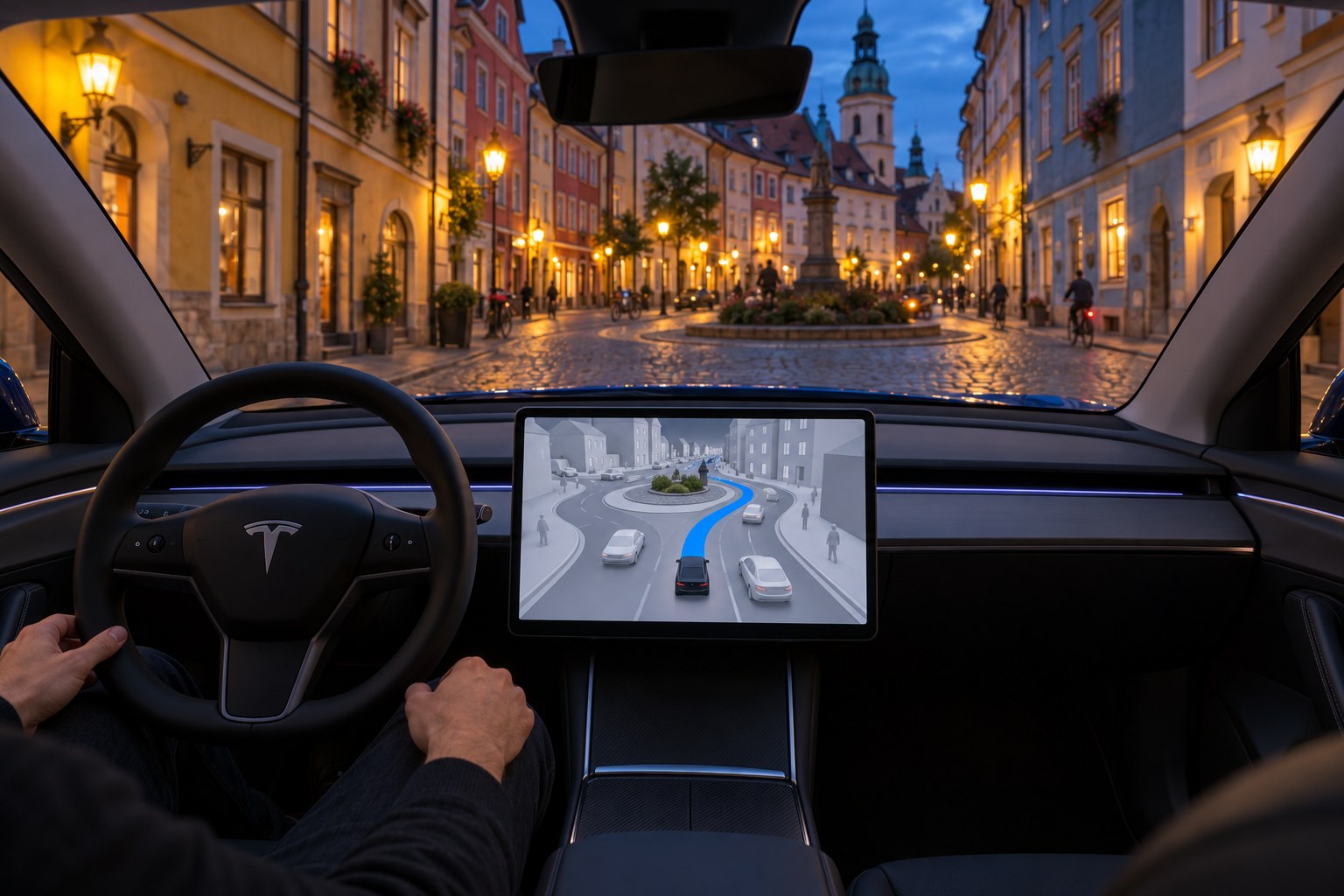
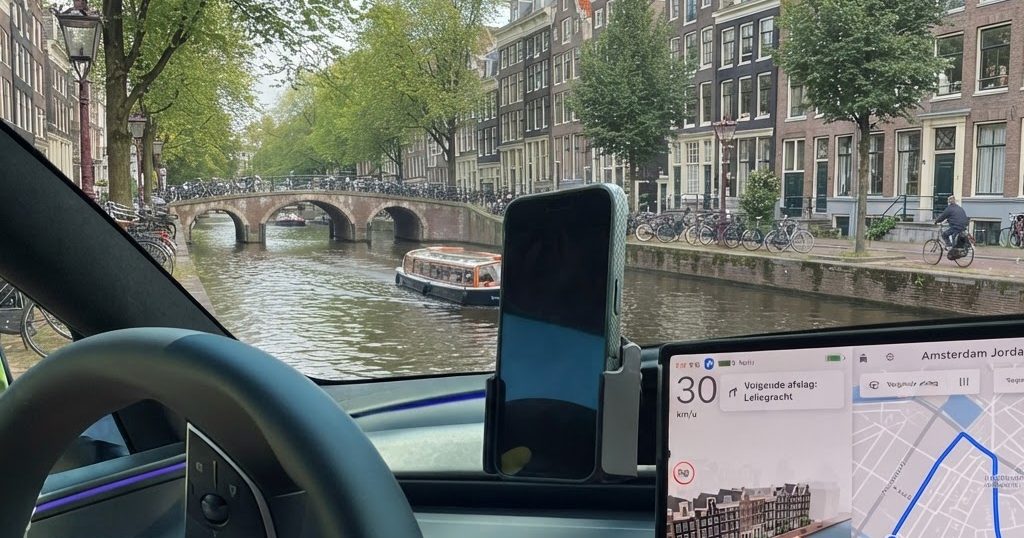
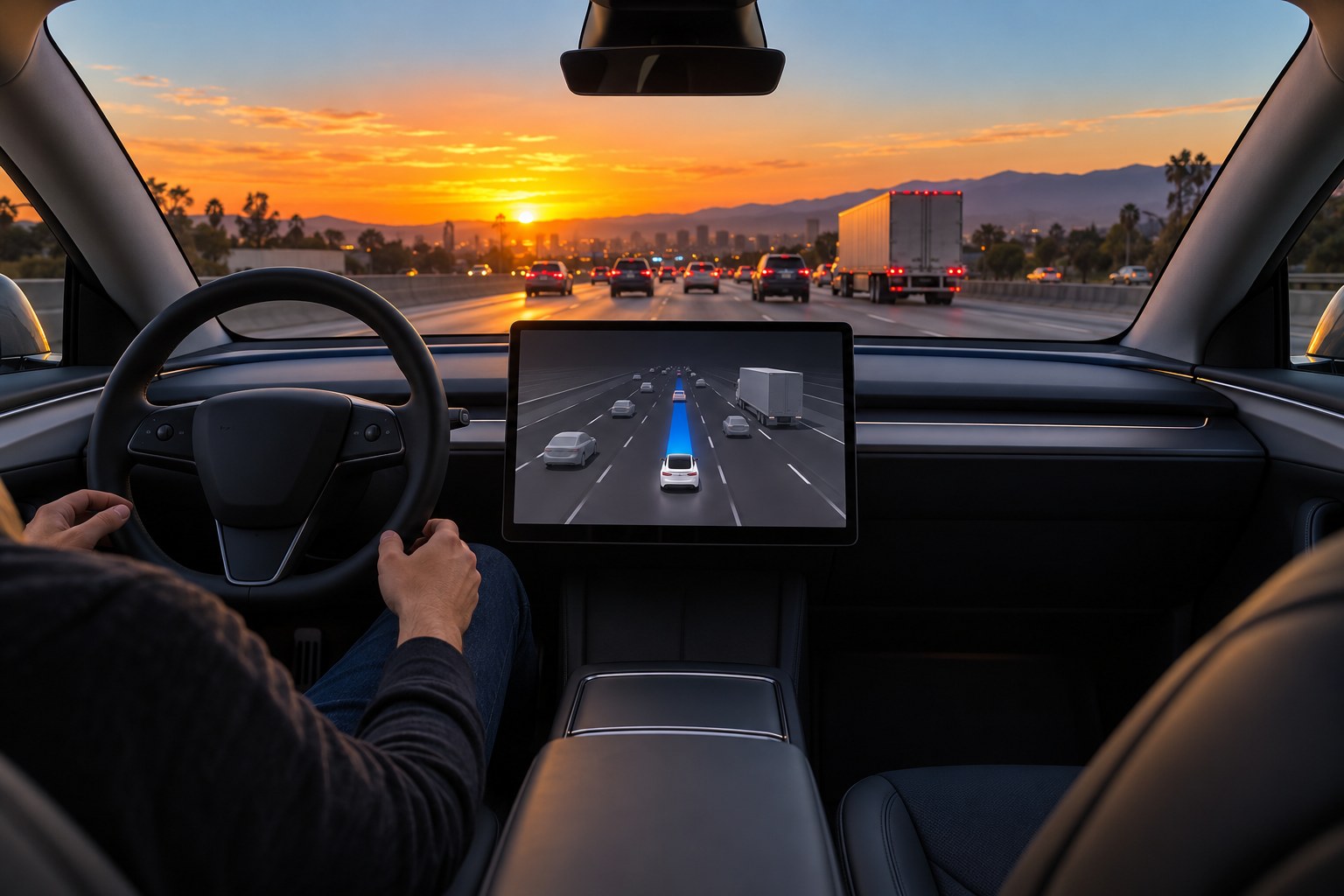
A real-time generative visualization, streamed from a virtual camera above the car. Tesla calls it Tesla Reality View. The driver can see what FSD plans to do, and can control that view. The options are fullscreen, the map, a split view or quiet mode. Upcoming turns show in the visualization. The pictures on this page are library illustrations of a Tesla driving screen.
A picture of the plan still leaves the route to be chosen. Navigation is a separate part of v15.
So how does v15 choose the start, the end and a parking spot?
Navigation for the start and the end of a trip now learns end-to-end from the route preferences of the fleet. Later releases of v15 expand that learning to the entire route. Parking-spot choice uses the driver's own parking history, and the map can show more than one parking option. The middle of the route waits for one of those later releases.
Route and parking are two lines on a longer list of changes to how the car drives.
What else changes in everyday driving?
Detection, speed, driver monitoring, speed cameras and a mode for a bike rack. Tesla says detection of road signs, small animals, debris, potholes and deep standing water is better, and that speed handling is more natural in school zones and in bad weather. Driver monitoring works more often when the driver wears a hat or sunglasses, and it is less strict in the higher-speed driver profiles.
- Speed Camera Slowdown: FSD can slow for a speed camera it detects. Pressing the accelerator cancels that slowdown, and so does raising the speed profile. Cancel it twice at the same camera and the car saves that camera and stops slowing there.
- Bike Rack Mode: FSD (Supervised) can run with a bike rack or a hitch accessory. In this mode the car pulls over near the destination and will not reverse. Autopark, Summon and the backup chimes are off.
Those modes change what the car will attempt on the trip. The person in the driving seat still has the road to watch.
Does the driver still have to pay attention?
Yes. This remains the supervised system, and the driver must pay attention. The build keeps the name FSD (Supervised). Version v15.0.1 leaves that duty in place. December, the month Musk named for a wide rollout, remains his statement about timing. Which vehicles receive software update 2026.38.6.11 first is still unstated.
Sources (5)
Images are illustrations; some are made with AI.