Alibaba launches Qwen4-Max
Alibaba Cloud unveiled Qwen4-Max in Hangzhou on 16 November 2026. The company says it has 2.4 trillion parameters and a 1 million token context.
Alibaba Cloud unveiled Qwen4-Max in Hangzhou on 16 November 2026. The company says the model has 2.4 trillion parameters in total and activates 71 billion of them per token. It calls that 25 percent fewer active parameters than Qwen3.8-Max. The press note says the model has native vision and a context of 1 million tokens. It is on the QwenCloud Token Plan and on the API. An implicit cache hit on input is listed at 0.075 dollars per million tokens. Smaller open-weight Qwen4 models are described as coming soon.
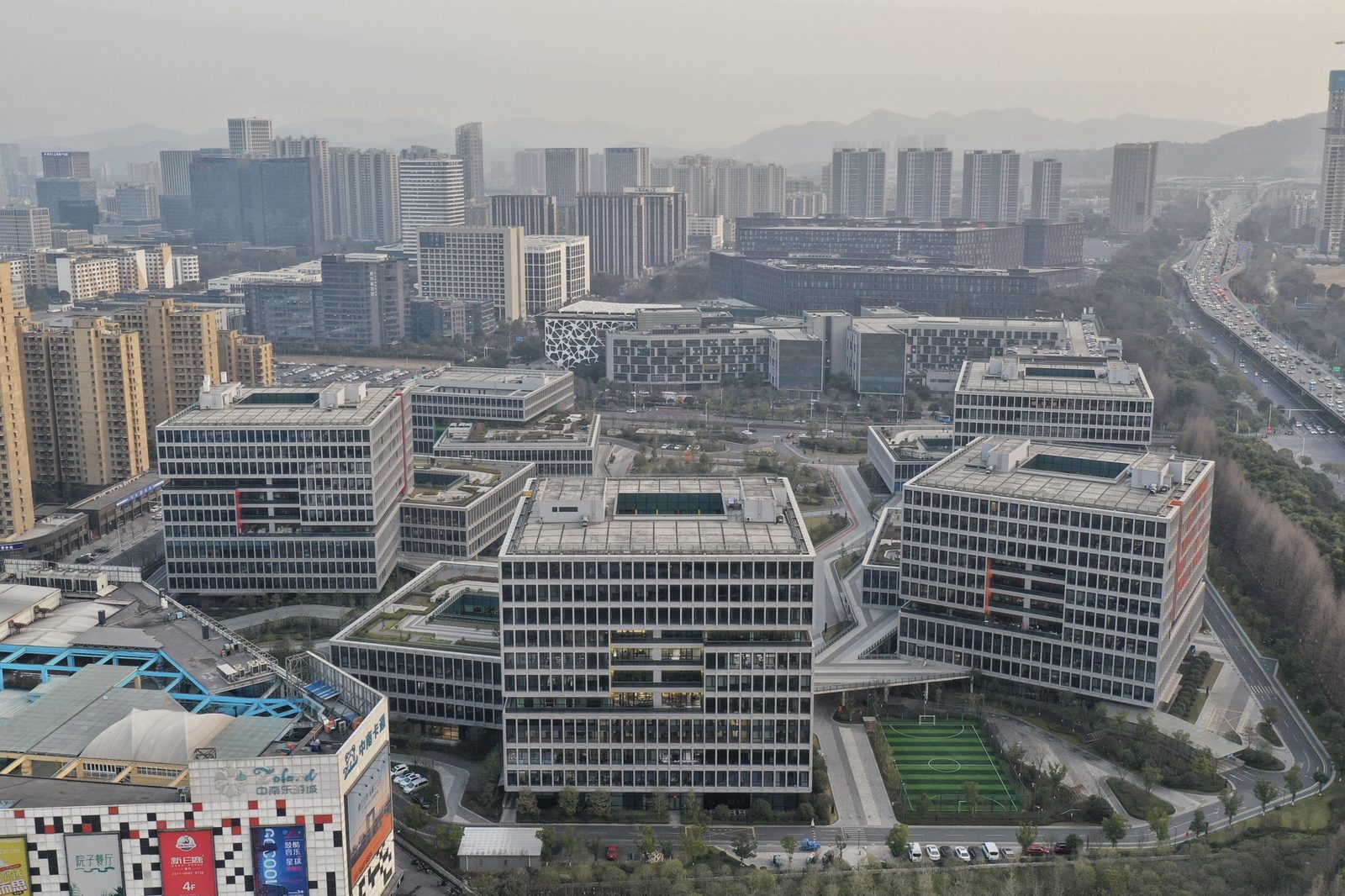
The picture is Alibaba Center in Binjiang, Hangzhou, photographed in 2021. It is not a photograph of the 16 November announcement.
What do the size numbers describe?
A total, and a smaller number that actually runs on each token. Alibaba’s note separates 2.4 trillion parameters, the whole model, from 71 billion activated per token. The second number is the one the company says is 25 percent below Qwen3.8-Max. A reader cannot check that percentage without Qwen3.8-Max’s active count, which the note does not print beside the claim. Native vision means the note presents image input as part of the model, not as a separate tool. A 1 million token context is the window the note states. It does not say how much of that window a typical call uses, or what it costs to fill it.
The cache line is the most specific price on the page. An implicit cache hit at 0.075 dollars per million input tokens is a rate for repeated input the system has already seen, on Alibaba’s description. It is not a rate for a fresh prompt, and the note does not print the uncached input price next to it in the passage this piece relies on. “Soon” for the smaller open-weight models is not a download link and not a date.
Which scores does Alibaba actually cite?
One outside rank, and a cost comparison with its own last model. The note says Qwen4-Max is sixth on Code Arena. It does not print the score, the five names above it, or the day the board was read. On Work360 the note says the model beats Qwen3.8-Max while using 35 percent fewer tokens at High effort, and at about 60 percent lower average cost per task. Both of those lines compare Alibaba with Alibaba. They are not a ranking against Claude Fable 5.2, Gemini 4 Carbon or Grok.
So what can be said about Grok without inventing a race?
Only what each company printed about itself. SpaceXSI’s Grok 4.7 page still calls that model its most capable for coding and knowledge work, from 2 dollars per million input tokens and 6 dollars per million output tokens, with a fast variant at twice the speed and twice the price, in Cursor, Grok Build and the API. Alibaba’s note does not mention Grok. The Grok page does not mention Qwen. Sixth on Code Arena is not a sentence about Grok. The Work360 savings are not a sentence about Grok. The one number a reader can put beside Grok’s card without leaving the sources is Alibaba’s cache-hit rate of 0.075 dollars, which is a different product from Grok’s ordinary input rate of 2 dollars. Comparing a cache hit with a full input price would mix two kinds of charge.
What should we watch for next?
Whether the smaller weights appear, and whether Code Arena still shows sixth. The public claims stop at the press note:
- Size: 2.4 trillion total and 71 billion active is Alibaba’s description, including the 25 percent line against its own previous model.
- Price: 0.075 dollars per million tokens is the cache-hit rate they printed.
- Open weights: “soon” is not a file anyone can download today.
Until those smaller Qwen4 weights are posted, Qwen4-Max is a hosted model with a Hangzhou announcement on 16 November, judged by Alibaba against Alibaba.
Photos: Charlie Fong, CC BY-SA 4.0, via Wikimedia Commons. Alibaba Center in Binjiang, Hangzhou, in 2021. Not the 16 November 2026 Qwen4-Max event. Other images are illustrations; some are made with AI.